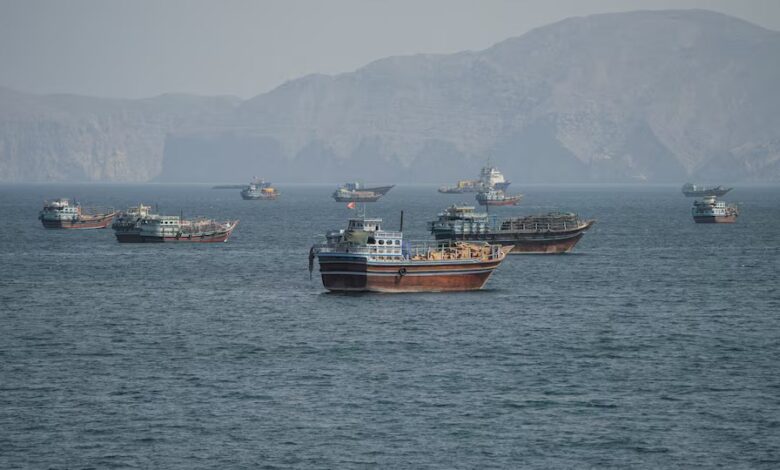
A tanker caught fire after a small boat reportedly attached two explosive devices to its hull while it was sailing through the Strait of Hormuz, raising fresh concerns over maritime security and the safety of international oil shipments.
The incident occurred on Thursday, October 29, about 25 nautical miles northeast of Khasab, Oman, according to the United Kingdom Maritime Trade Operations (UKMTO).
In an advisory issued on Friday, October 30, UKMTO said the explosions triggered a fire in the vessel’s engine room, temporarily disabling the tanker.
The crew were reported safe, while the fire was subsequently extinguished. The vessel also continued its journey towards its next port of call, with no environmental impact reported.


EXPLOSIVES ATTACHED TO TANKER’S HULL
Maritime security sources said that the vessel was approached by a small boat before two explosive devices were attached to its hull.
The tanker, identified as the Panama-flagged Louise 1, sustained damage to its engine room following the explosions.
The attack temporarily disrupted the vessel’s operations, although the crew managed to avoid casualties.
Authorities have not established who was responsible for the incident.
According to Reuters, the attack represents the first known successful limpet-mine strike in the Strait of Hormuz since the United States-Iran war began in February.
READ RELATED STORY
Iran says Strait of Hormuz will remain closed until conditions are met
Three oil tankers hit by unknown projectiles in Strait of Hormuz
RISING THREATS TO COMMERCIAL SHIPPING
The latest incident comes amid repeated attacks and security threats involving commercial vessels navigating the Strait of Hormuz.
The strategic waterway, which connects the Persian Gulf to the Gulf of Oman, is one of the world’s most important maritime routes for transporting crude oil and other petroleum products.
Approximately one-fifth of global oil consumption normally passes through the strait, making any disruption a significant concern for international energy markets.
The waterway has experienced heightened security tensions since the outbreak of the conflict between the United States and Iran in February.
Iran has restricted maritime movements through parts of the strait, while the United States has maintained pressure on Tehran and supported efforts to protect commercial shipping.
RESPONSIBILITY FOR ATTACK REMAINS UNCLEAR
Although the attack has heightened concerns about the security of international shipping, responsibility for the incident remains uncertain.
Iranian authorities have separately claimed that several tankers caught fire after striking mines while attempting to navigate what Tehran described as unauthorised routes through the strait.
The United States military, however, has maintained that mines along the primary transit routes have been cleared.
The latest attack has further complicated efforts to restore confidence among shipping companies operating in the region.
Maritime security experts have warned that the use of small boats to deploy explosives presents a significant challenge because such vessels can approach commercial ships without immediately attracting attention.
With the Strait of Hormuz remaining a critical route for global energy supplies, continued attacks could increase shipping insurance costs, disrupt oil transportation and place additional pressure on international energy markets.