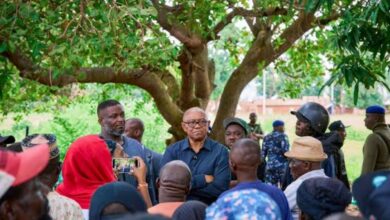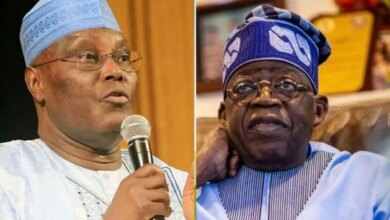
The opposition’s plan to present a single presidential candidate against President Bola Tinubu in the 2027 general election appears to have suffered a major setback, following the reluctance of key politicians to abandon their individual ambitions.
A chieftain of the G-100 political pressure group, Umanu Elijah, has declared that the proposal to unite opposition parties behind one presidential candidate is no longer realistic, saying those involved have failed to demonstrate the willingness to make the necessary sacrifices.
Elijah made this known during a telephone interview on Sunday.
He maintained that the inability of opposition politicians to reach an agreement on a common candidate had effectively brought the consensus arrangement to an end.
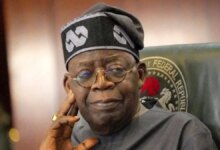
According to him, several political actors who were expected to participate in the proposed coalition have continued pursuing their individual presidential ambitions.
He noted that their activities have shown little indication that they are prepared to step aside for another candidate, regardless of the need to build a united opposition against the ruling All Progressives Congress (APC).
“The sole candidacy thing is dead and buried. The candidates are not ready to make concessions. You can see what the Allied Peoples Movement is doing. They are going about their campaigns, and none of these candidates is talking about single candidacy.”
The G-100 had been working towards bringing major opposition parties and influential politicians together under a common political arrangement.
Its objective was to prevent the opposition vote from being divided among several candidates, a situation that could give the APC an advantage during the election.
G-100 was convened by Salihu Lukman, a former Director-General of the Progressives Governors’ Forum.
The group emerged as part of broader efforts to encourage cooperation among opposition politicians and develop a common strategy for challenging the ruling party.
Its position has been that individual opposition parties could face difficulties defeating the APC if they approach the 2027 election separately.
Consequently, it advocated a broad-based coalition that would bring together political interests across party lines.
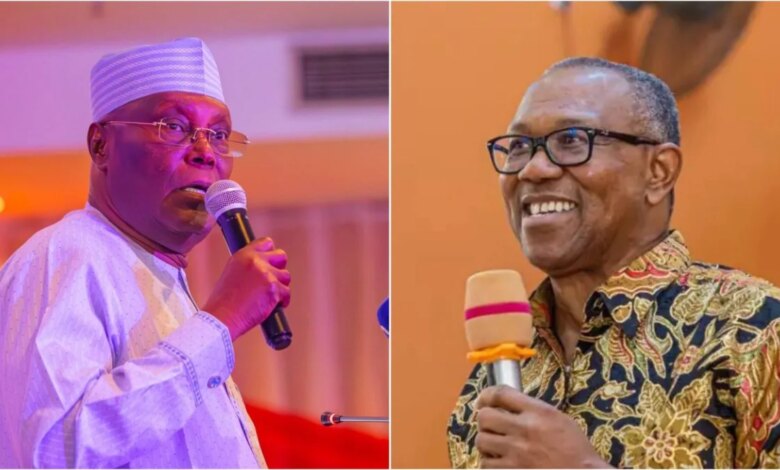
As part of the initiative, the group reportedly held consultations with prominent political figures, including former Vice President Atiku Abubakar, former Anambra State Governor Peter Obi and Oyo State Governor Seyi Makinde.
The consultations were aimed at exploring areas of agreement and identifying a possible presidential candidate who could enjoy the support of the various opposition groups.
However, the discussions have yet to produce an agreement on who should emerge as the candidate or which political platform should be adopted for the proposed arrangement.
The situation has become more complicated as political parties and their presidential hopefuls continue to strengthen their structures and engage in mobilisation activities ahead of the next general election.
Among the parties whose activities have attracted attention are the African Democratic Congress (ADC) and the Allied Peoples Movement (APM).
Apart from Atiku and Obi, other prominent politicians whose political ambitions have featured in discussions around the opposition arrangement include Makinde and Adewale Adebayo of the Social Democratic Party (SDP).
Obi, who is associated with the Nigeria Democratic Congress (NDC), is among the major opposition figures whose political participation could influence any attempt to build a united front.
Atiku, a former vice president and presidential candidate of the Peoples Democratic Party (PDP), has also remained a prominent figure in opposition politics.
Makinde, on his part, has been mentioned among political leaders whose participation could strengthen the proposed coalition, while Adebayo has also maintained his presence in the opposition political space.
Bringing these politicians together would require extensive negotiations, particularly over the presidential ticket, party structures, political influence and the distribution of responsibilities within any proposed alliance.
The failure to reach an understanding on these issues could leave the opposition with multiple presidential candidates in 2027.
Such an arrangement would mean that parties seeking to challenge Tinubu would have to compete against one another while also attempting to defeat the ruling APC.
The development also raises questions about the future of Lukman’s coalition-building initiative, which was established on the belief that opposition parties needed to put aside their differences to present a stronger challenge in the next general election.
Although Elijah has declared the single-candidate proposal unsuccessful, it remains unclear whether the group will completely abandon its coalition efforts or explore other forms of cooperation among opposition parties.
Meanwhile, efforts to obtain Lukman’s reaction to the latest development were unsuccessful.
He reportedly did not answer telephone calls or respond to WhatsApp messages sent to him concerning Elijah’s comments.
The G-100 convener’s position on the latest assessment of the coalition project is therefore yet to be established.