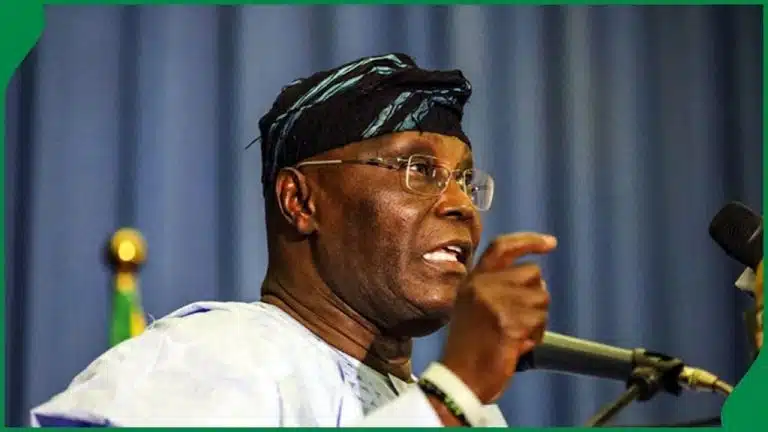
Former Vice-President Atiku Abubakar has challenged President Bola Tinubu to account for his campaign promise of steady electricity, questioning whether the administration’s multitrillion-naira debt programme and planned subsidy withdrawal will deliver more reliable power or simply leave consumers with higher energy costs.
Atiku, in a statement issued on Sunday by Phrank Shaibu, Director of Strategic Communication of the African Democratic Congress (ADC) Presidential Campaign Council, accused the All Progressives Congress (APC) of using legislation, committees and financial interventions to deflect attention from persistent electricity shortages.
He said households and businesses were still spending heavily on alternative power while paying electricity bills for a service they could not depend on.

The former vice-president also questioned the government’s plan to phase out electricity subsidies from 2027, despite assurances that there would be no immediate tariff increase. He demanded clarification on how the withdrawal would affect household bills and called for a new pricing framework that would protect consumers and make electricity charges reflect actual supply.
His concern comes amid an ongoing restructuring of Nigeria’s electricity market. The Minister of Power, Joseph Tegbe, announced in July that the Federal Government planned to end power-sector subsidy payments from 2027. He also ruled out an immediate tariff increase.
The administration’s debt programme has also attracted scrutiny. The Federal Government has raised approximately ₦1.23 trillion through two bond issuances under its power-sector debt reduction initiative. The funds are intended to settle verified outstanding obligations owed to electricity generation companies for power supplied over several years.
Atiku questioned whether settling those debts would translate into improved electricity supply, arguing that debt repayment was not the same as constructing new generation infrastructure.
That distinction is important. Clearing arrears can improve the finances of generation companies and help them meet obligations to gas suppliers and other service providers. However, it does not automatically repair transmission bottlenecks, resolve gas shortages or guarantee that more electricity reaches homes and businesses.
The government’s own power-sector programme is intended to address financial constraints, but consumers will ultimately measure its impact through supply and service quality.
READ RELATED NEWS UPDATES:
The ADC campaign statement also highlighted the different electricity tariff bands, from A to E, and cited a Band A rate of about ₦209.50 per kilowatt-hour before value-added tax. Atiku said consumers across the categories faced the same frustration when electricity supply failed despite the bills they received.
He further raised concerns about the proposed five per cent surcharge on certain fossil fuels under the Nigeria Tax Act, including petrol and diesel. He noted that the government had said the charge was not yet active and would require a ministerial order.
Atiku recalled Tinubu’s campaign pledge in 2022: “If I don’t give you constant electricity for four years, when I come back for a second term, don’t vote for me.”
He said Nigerians should assess the President against that commitment, rather than campaign explanations from the ruling party.
Atiku also promised to work with state governments and regulators to replace the existing tariff-band arrangement with what he called a fairer and more affordable system.
The political dispute exposes a practical question facing electricity consumers: can the government settle the sector’s accumulated debts, withdraw subsidies and reform tariffs without passing additional costs to households whose power supply is still unreliable?
The answer will depend on measurable improvements in generation, transmission and distribution, not financial announcements alone.
For More News Updates, Visit New Daily Prime News