Belgium is preparing for widespread air travel disruption on Monday, November 23, as air traffic controllers join a nationwide strike against the federal government’s austerity measures, forcing airports to suspend regular commercial flight operations.
The country’s air navigation service provider, Skeyes, announced that it would suspend regular air traffic control services at Belgian airports and within the airspace under its responsibility between 7 a.m. and 9 p.m. local time.
The company said anticipated staffing levels would be insufficient to guarantee the safe handling of normal air traffic during the period, limiting operations to emergency and other safety-critical flights.
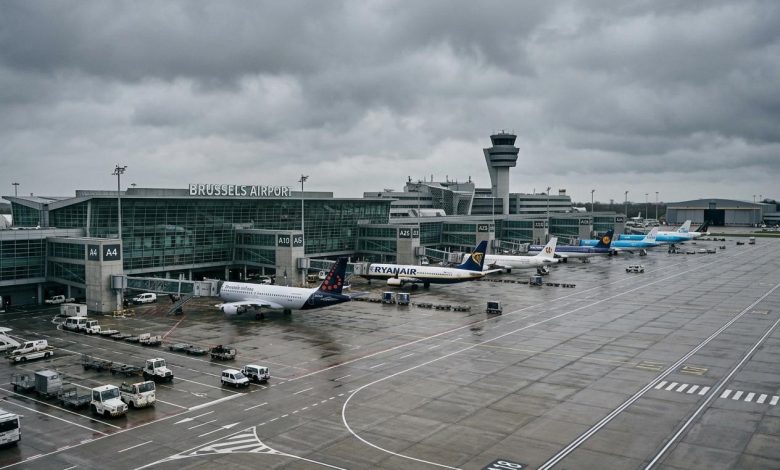
Brussels Airport, the country’s largest international aviation hub, had expected approximately 59,500 passengers across 429 scheduled flights, comprising 213 departures and 216 arrivals.


The airport confirmed that all arriving and departing flights within the affected period would have to be cancelled, leaving thousands of passengers facing disrupted travel plans.
Brussels South Charleroi Airport will also be affected, as commercial aircraft will be unable to take off or land during the suspension of regular air traffic control services.
The disruption is part of a broader nationwide demonstration organised by Belgium’s major trade unions against the federal government’s economic and social reforms.
AIRLINES CRITICIZE LATE ANNOUNCEMENT
The announcement has drawn criticism from airlines and airport operators over the short notice given before the planned disruption.
Brussels Airlines expressed disappointment over the timing of the decision, saying it had expected almost no disruption at Brussels Airport just hours before receiving confirmation of the suspension.
The airline said it “deeply regrets this extremely late communication of this decision”, highlighting the operational difficulties created by the sudden change.
The Board of Airline Representatives in Belgium, which represents approximately 25 airlines, described Monday’s action as the 11th strike affecting Belgian airspace in 11 months.
The repeated disruptions have raised concerns about the reliability of the country’s aviation network and the financial consequences for airlines, airport operators and passengers.
Brussels South Charleroi Airport also criticised the late announcement, warning that the decision would have serious consequences for passengers, airlines and airport employees.
Passengers scheduled to travel on Monday have been advised to contact their airlines for information about cancellations, refunds and alternative travel arrangements.
READ RELATED NEWS
UK sends military aid to Belgium after suspected Russian drone attacks
Cyber-attack disrupts Heathrow, Brussels Berlin airports
TRADE UNIONS CHALLENGE GOVERNMENT’S ECONOMIC POLICIES
The aviation disruption is part of a wider nationwide protest against the economic and social policies of Prime Minister Bart De Wever’s coalition government.
Belgium’s major trade unions, including ACV-CSC, ABVV-FGTB and ACLVB, are opposing proposed spending cuts and reforms that they argue could place additional financial pressure on workers and households.
Their concerns include changes to pensions, social security, employment conditions and public services, as well as the potential impact of the government’s economic policies on workers’ purchasing power.
The unions argue that ordinary workers and vulnerable households should not bear a disproportionate share of the financial burden associated with government spending reductions.
The demonstration is expected to attract thousands of participants in Brussels, where protesters will demand changes to the government’s proposed reforms.
GOVERNMENT’S SAVINGS PLAN UNDER SCRUTINY
The latest industrial action comes as De Wever’s government faces pressure over its efforts to achieve approximately €10 billion in savings over the coming years to address Belgium’s budget deficit.
The proposed spending reductions have generated disagreements between the government and organised labour groups, particularly over their potential consequences for public services, employment conditions and social protection.
The budget negotiations have also exposed disagreements within the governing coalition, adding to the political challenges surrounding the proposed economic reforms.
However, the government maintains that addressing the country’s public finances is necessary to ensure long-term economic stability.
PUBLIC TRANSPORTATION ALSO FACES DISRUPTIONS
Beyond aviation, the nationwide industrial action is expected to affect public transportation and other essential services.
Brussels public transport operator STIB has warned of significant disruptions to bus, tram and metro services as some employees participate in the demonstration.
Flemish transport operator De Lijn and its Walloon counterpart, TEC, are also anticipating interruptions to their services.
Belgium’s national railway operator, SNCB, is expected to maintain normal train services, although passengers are advised to check for updates before travelling.
The transport disruptions could further complicate journeys for passengers attempting to reach airports or other destinations during the demonstration.
REPEATED STRIKES RAISE CONCERNS FOR AVIATION INDUSTRY
The latest shutdown highlights the growing impact of labour disputes on Belgium’s aviation industry.
With the Board of Airline Representatives describing Monday’s action as the 11th strike affecting Belgian airspace in 11 months, concerns are mounting over the cumulative consequences for the country’s international transport connections.
Repeated cancellations can create additional costs for airlines through passenger compensation obligations, rebooking arrangements and operational adjustments.
The disruptions also affect Belgium’s position as an important European aviation and logistics hub, particularly when airport operations are interrupted for extended periods.
As the government continues negotiations over its spending plans, Monday’s demonstration is likely to intensify pressure on the coalition to reconsider aspects of its economic reforms.