Nigeria’s first confirmed case of the Bundibugyo strain has put the spotlight on a reported 12-day delay before testing, the healthcare workers among 44 identified contacts and the challenge of detecting a dangerous infection before it spreads.
Nigeria’s response to its first confirmed case of the Bundibugyo strain of Ebola is facing a critical test: whether health authorities can trace potential exposures and strengthen hospital precautions after the patient spent several days receiving medical care before the infection was confirmed.
The case involves a woman who arrived in Nigeria on October 3, 2026, and developed symptoms four days later. She sought treatment at a private hospital in Abuja on October 11, but her condition worsened before laboratory testing confirmed Ebola on October 20.
Ayoade Alakija, a Nigerian physician and co-chair of a G7 committee for investment in global health, said it took 12 days from the onset of the patient’s illness for her to be tested for the virus, raising concerns about the possibility of exposure before diagnosis.


The interval does not establish that transmission occurred in the hospital or that additional people have been infected. It does, however, highlight the difficulty of recognising an uncommon and dangerous disease when its early symptoms can resemble more familiar conditions, including malaria.
RELATED NEWS:
Hospital exposure becomes a key concern
According to the World Health Organisation (WHO), the patient was isolated and receiving medical care after laboratory confirmation. Nigeria’s Director of Public Health Laboratory Services at the Nigeria Centre for Disease Control and Prevention (NCDC), Olajumoke Babatunde, said three rounds of molecular testing identified the Bundibugyo strain.
Authorities have identified 44 contacts for monitoring. They include healthcare workers, patients, caregivers and people linked to the patient’s travel. The group also includes her husband, a Swiss national living with her in Abuja.
These individuals are being followed because of possible exposure; their inclusion on the contact list does not mean they have Ebola.
The private hospital where the woman received treatment is also receiving support to strengthen infection-prevention and control measures. Such precautions are essential because medical personnel may examine or treat a patient before the cause of an illness is known.
The investigation must establish who had meaningful contact with the patient, assess the nature and timing of any exposure, and determine whether further monitoring is necessary. Officials are also tracing passengers who travelled with her, although authorities believe she was not showing symptoms during the flight.
The speed and completeness of this exercise will be central to determining whether the infection can be contained without further transmission.
Why the strain matters
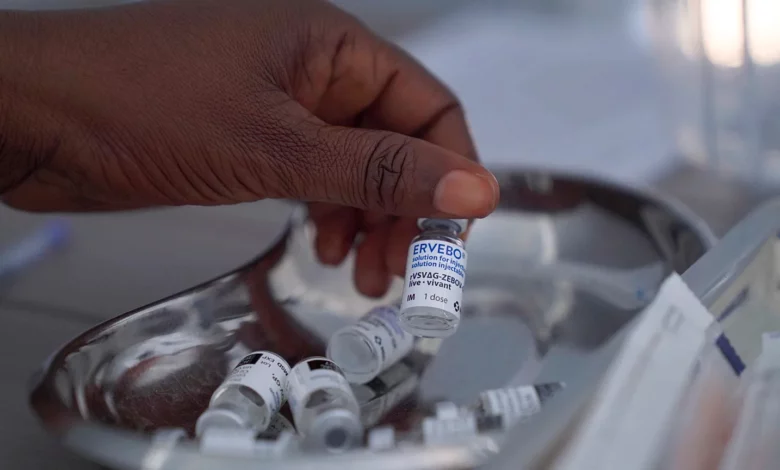
The Bundibugyo virus is distinct from other Ebola-causing viruses, including the Zaire species responsible for previous major outbreaks. According to reports on the current case, no approved vaccine or specific treatment is available for the Bundibugyo strain.
Medical care therefore focuses on supportive treatment, while early identification, appropriate isolation and infection-control measures help reduce the risk of further spread.
Ebola is not airborne. It spreads through direct contact with the blood or other bodily fluids of a symptomatic infected person, the body of someone who has died from the disease, or contaminated materials.
Sharing an aircraft with an infected person does not automatically mean someone has been exposed. Public health teams must assess the circumstances of possible contact rather than assume every fellow passenger is at equal risk.
The distinction is important as officials investigate the Abuja case and work to provide accurate information without fuelling unnecessary fear.
Nigeria’s past success faces a new test
Nigeria contained its 2014 Ebola outbreak after the virus was introduced into Lagos. That episode resulted in 20 infections and eight deaths before authorities brought the outbreak under control.
The experience demonstrated the value of coordinated surveillance, contact tracing, isolation and prompt public communication. However, past success cannot substitute for effective implementation during the current emergency.
The Federal Government has directed public and private health facilities to maintain heightened vigilance, report suspected cases promptly and strengthen infection-control procedures. The Senate has also called for emergency funding to improve disease surveillance, border screening and the availability of essential equipment.
These measures address important preparedness needs, but their effectiveness will depend on the resources available to frontline facilities and how consistently procedures are followed.
The current outbreak also extends beyond Nigeria. Kenya has reported nine cases, while the Democratic Republic of the Congo remains at the centre of the regional emergency. Uganda’s authorities have maintained that the location where Nigeria’s patient contracted the virus has not been established. Her travel history alone is insufficient to prove that she acquired the infection there.
What authorities must establish next
The immediate priorities are to complete contact tracing, monitor identified individuals and investigate the patient’s exposure history. Authorities must also provide timely updates on any additional infections and clarify whether the investigation identifies further people requiring follow-up.
Members of the public should rely on official guidance rather than unverified claims. Anyone who believes they may have had a relevant exposure should contact public health authorities, while people who develop compatible symptoms after possible exposure should seek medical guidance promptly and follow instructions before visiting a healthcare facility.
The reported delay before testing is a warning about the importance of recognising unusual illness early, not proof of a hospital breach or a wider outbreak.
Nigeria’s ability to contain the case will depend on whether health teams can turn laboratory confirmation into swift, coordinated action, protect frontline workers and identify potential transmission before additional infections emerge.
For More News Updates, Visit New Daily Prime News