Bomb threats disrupt flights across Europe as authorities investigate possible coordinated attacks

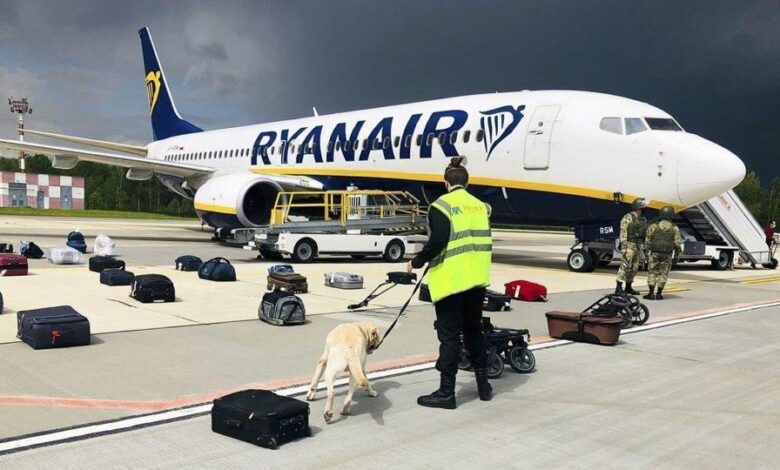
Authorities across Europe are investigating a series of bomb threats targeting passenger aircraft and a cruise ship after the incidents disrupted airport operations, forced flight diversions and triggered emergency security procedures.
At least seven flights operated by European airlines received bomb threats on Tuesday, November 3, while an Israel-bound cruise ship was also targeted in a separate incident near Greece.
The threats affected services operated by Ryanair, Wizz Air, Scandinavian Airlines and Poland’s LOT Polish Airlines, with aircraft arriving in Poland, Italy, Spain and Bulgaria.
However, all seven aircraft landed safely, and subsequent security searches found no explosives. No injuries were reported.


In an update published on Wednesday, November 4, authorities had yet to identify those responsible or establish whether the threats were connected.
The incidents have raised concerns about the vulnerability of European transport networks to deliberate security disruptions, particularly as governments continue to warn about the growing threat of sabotage and hybrid operations.
READ RERLATED NEWS
European delegates walk out as Russian minister addresses IMF meeting
US midterm elections deal major blow to Trump as Democrats capture senate
America rejects Trump? Democrats seize congress — What happens next?
AIRPORTS DISRUPTED AS FLIGHTS RECEIVE THREATS
In Poland, two flights heading to Warsaw were targeted, prompting security inspections at the country’s airports.
A LOT Polish Airlines Boeing 737 MAX travelling from London’s Heathrow Airport was diverted to Warsaw Modlin Airport following a bomb threat.
The airport was temporarily closed while passengers, luggage and the aircraft underwent security checks.
Airport spokesperson Adam Szablowski confirmed that nothing suspicious was discovered and normal operations subsequently resumed.
A separate Scandinavian Airlines flight from Copenhagen also received a threat before landing at Warsaw Chopin Airport, where authorities temporarily closed a runway to facilitate inspections.
In Italy, two Ryanair flights arriving at Rome’s Fiumicino Airport from Lisbon and Dublin were subjected to security checks following separate warnings.
The Italian Air Force deployed two Eurofighter jets to escort the Dublin flight into Rome after receiving information about a suspected threat aboard the aircraft.
Both aircraft landed safely, and searches of passengers, luggage and the planes found no explosive devices.
Spain and Bulgaria also recorded similar incidents.
A Ryanair flight from Manchester to Murcia in southeastern Spain was inspected after a bomb alert was reported.
Meanwhile, two flights heading to Sofia, Bulgaria, from Bergamo in Italy and Dublin in Ireland also received threats.
Authorities searched the aircraft after they landed and confirmed that no explosives had been discovered.
ISRAEL-BOUND CRUISE SHIP ALSO TARGETED
The security incidents extended beyond aviation after a bomb threat prompted an emergency operation involving the Panama-flagged cruise ship Crown Iris near the Greek island of Syros.
The vessel, which was preparing to sail to Haifa, Israel, was carrying approximately 1,500 passengers and crew members when an unidentified person claimed an explosive device had been attached to its hull.
Greek coast guard personnel, an explosives-detection dog and a private diver participated in the initial search.
Passengers were evacuated as a precaution while security teams inspected the vessel.
Initial examinations found no explosive device, although additional inspections were expected before the ship could resume its journey.
The incident added a maritime dimension to the security concerns surrounding the threats reported across Europe.
INVESTIGATORS EXAMINE POSSIBLE LINKS
As of Wednesday, November 4, authorities had not identified the individuals responsible for the threats, and no organisation had claimed responsibility.
Security experts have suggested several possible explanations, including copycat incidents, an individual or group making multiple threats, or attempts to disrupt critical infrastructure through hybrid operations.
Matthew Borie, co-founder and chief intelligence officer at aviation security advisory firm Osprey Flight Solutions, said the concentration of incidents across Europe raised questions about possible wider disruption efforts.
He noted that the incidents could be linked to broader geopolitical tensions but cautioned against drawing conclusions about responsibility.
European governments have previously raised concerns about alleged Russian and Iranian involvement in hybrid operations and sabotage activities.
However, no evidence has established a connection between either country and the latest bomb threats. Moscow and Tehran have denied accusations of conducting such campaigns.