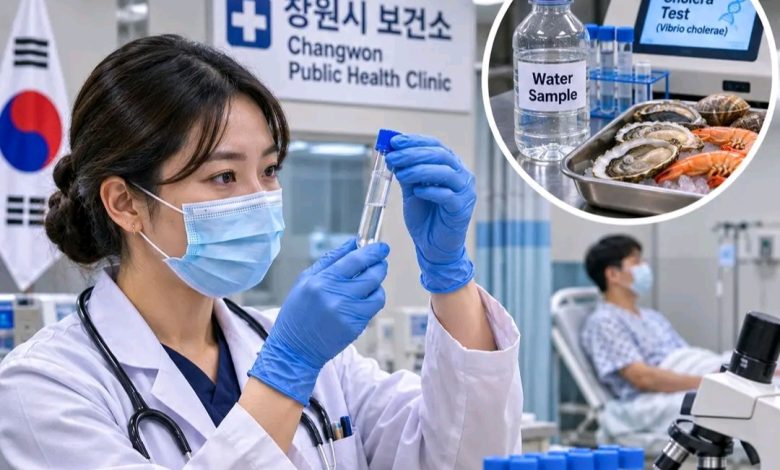
South Korea has confirmed its first cholera infection in 10 years as it prompts a fresh investigation into the source of the disease after the patient reportedly had no recent history of international travel, raising questions about how the infection was acquired locally.
The Korea Disease Control and Prevention Agency (KDCA) confirmed the case on Friday after laboratory tests identified the infection in a patient who sought emergency treatment in Changwon, a southeastern port city, earlier this month.
The patient developed vomiting and diarrhoea but recovered and was discharged from hospital on Tuesday, the agency disclosed. Health officials are now examining the patient’s movements, possible exposure to contaminated food or water and contacts to determine how the bacterium entered the person’s system.
Investigators are particularly examining the case because the patient had not travelled abroad in the two months preceding the illness. The absence of recent overseas travel has prompted authorities to investigate possible local sources of contamination rather than immediately attribute the infection to an imported case.


The confirmed infection marks South Korea’s first reported cholera case since 2016, when three infections were suspected to have been associated with contaminated seafood. The country recorded a considerably larger outbreak in 2001, when at least 162 people contracted the disease.
Cholera is an acute intestinal infection caused by the bacterium Vibrio cholerae. It is commonly transmitted through the consumption of food or water contaminated by the faeces of an infected person. Poor sanitation and inadequate access to clean water can facilitate its spread, particularly in communities where water supplies and food-handling practices are compromised.
The disease can cause sudden, severe diarrhoea and vomiting, resulting in rapid loss of fluids and electrolytes. While many infections are mild or produce no symptoms, severe cases can lead to dehydration, shock and death if treatment is not administered promptly. Rehydration, particularly with oral rehydration solution or intravenous fluids in severe cases, is central to treatment.
RELATED NEWS:
South Korean health authorities have advised residents to exercise caution with food and drinking water, wash or peel fruits and vegetables properly, and ensure meals are thoroughly cooked. Medical facilities have also been instructed to promptly test and report suspected cases to support early detection and prevent possible transmission.
The investigation is continuing as officials attempt to establish the precise source of the infection and determine whether other people may have been exposed. Although the patient has recovered, the case has renewed attention to the importance of sanitation, food hygiene and reliable water supplies in preventing diseases that can spread through contaminated consumables.
The discovery also illustrates why the absence of reported cases over several years does not necessarily eliminate the risk of infectious diseases. Sustained surveillance, prompt laboratory diagnosis and effective sanitation measures remain critical to detecting isolated infections before they develop into larger outbreaks.
South Korea’s health authorities have yet to disclose the suspected source of the infection or announce any additional confirmed cases linked to the patient.