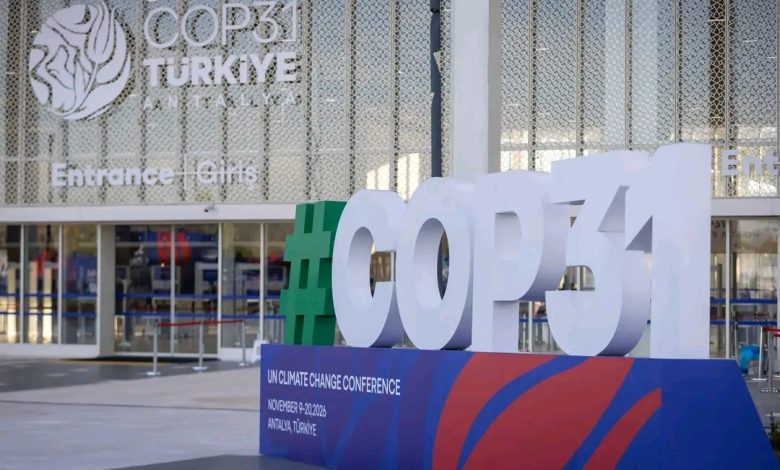
Nearly 200 countries are struggling to agree on a climate deal at COP31 in Türkiye after negotiators removed explicit commitments on transitioning away from fossil fuels and a proposed $120 billion climate adaptation funding target from a revised draft. This has intensified concerns that the summit could end without meaningful progress.
The United Nations climate conference, which was scheduled to conclude on Friday, November 20, has extended into additional negotiations as countries remain divided over the future of oil and gas, financing for vulnerable nations and how to respond to the growing consequences of global warming.
A review of the revised negotiating document by New Daily Prime shows a significant reduction in the text’s scope. The latest draft, released on Thursday, was trimmed to nine pages containing 80 paragraphs, down from the 18-page version with 144 paragraphs published earlier in the week.
The deletions have intensified criticism from environmental advocates and developing countries, who fear that the final agreement could dilute commitments already reached at previous climate summits.

Among the most contentious omissions is an explicit reference to transitioning away from fossil fuels, a commitment countries adopted at COP28 in Dubai under the UAE Consensus. The agreement had called for a just, orderly and equitable transition away from fossil fuels in energy systems to achieve net-zero emissions by 2050.
The latest draft also dropped a proposed $120 billion annual climate finance target for adaptation, although it still calls for climate adaptation financing to be tripled without specifying the amount or a clear funding framework.
READ RELATED NEWS:
Developing countries face funding uncertainty
The financing dispute has exposed a longstanding divide between wealthy nations, whose industrialisation has contributed substantially to historical emissions, and poorer countries facing disproportionate climate risks despite contributing comparatively little to global pollution.
Developing countries require substantial financial assistance to protect communities against flooding, droughts, rising temperatures, coastal erosion and other climate-related disasters. They also need funding to expand clean energy infrastructure and strengthen resilience in vulnerable areas.
The African Group of Negotiators on Climate Change has identified climate finance, adaptation, climate impacts and a just transition as key priorities for the continent at the negotiations.
The absence of firm financing commitments in the revised text has heightened concerns that countries with limited fiscal capacity could struggle to address climate-related damage while financing development, infrastructure and social services.
Fossil fuel disagreement threatens climate ambition
The removal of fossil fuel language has also drawn sharp criticism from environmental organisations, which contend that continued dependence on coal, oil and gas undermines efforts to limit global warming.
Mohamed Adow, director of Power Shift Africa, warned that the conference could become the “worst COP ever” if the final agreement fails to establish a clear commitment to transition away from fossil fuels.
Panama’s Environment Minister, Juan Carlos Navarro, threatened a formal objection to the final agreement if it failed to address climate finance, limits on oil production and the need to acknowledge shortcomings in existing climate targets.
He accused the negotiations of being held hostage by a “petroleum mafia”, criticising the process for producing lengthy discussions without sufficiently ambitious outcomes.
The revised draft also encourages the deployment of technologies designed to remove greenhouse gases from the atmosphere, including carbon capture, utilisation and storage (CCUS).
However, some delegations have questioned whether such technologies can deliver meaningful reductions at scale, warning that they could be used to justify continued fossil fuel production rather than accelerate renewable energy deployment.
Uganda’s Commissioner for Climate Change and Carbon Markets, Bob Natifu, criticised the proposed approach, saying it could allow developed countries to continue producing oil and gas while placing greater pressure on developing nations to expand renewable energy.
Pressure mounts as negotiations continue
The negotiations have been complicated by the absence of the United States for the second consecutive year following President Donald Trump’s withdrawal from international climate cooperation, as well as competing global crises and economic pressures.
The United Nations has also warned that the world is on course to exceed the 1.5-degree Celsius warming threshold established under the 2015 Paris Agreement, increasing the urgency of stronger climate action.
As negotiations continues beyond the conference’s scheduled closing date, the final agreement will determine whether countries can reconcile competing economic interests with the need to limit emissions, mobilise climate financing and protect communities facing increasingly severe environmental threats.
The outcome carries particular significance for African countries. Without predictable financing and meaningful commitments from major polluters, climate adaptation, energy transition and protection against climate disasters could become increasingly difficult to fund.
For More News Updates, Visit New Daily Prime News