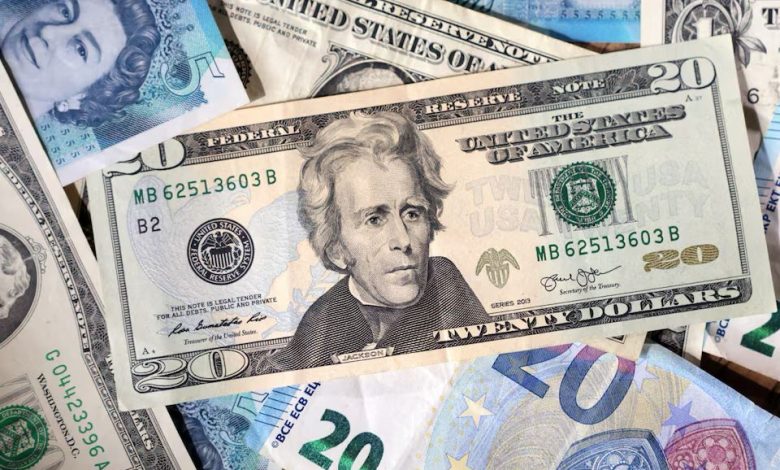
The dollar to naira exchange rate today, Thursday, 26 November 2026, begins with the latest available Central Bank of Nigeria (CBN) central reference rate at ₦1,391.75 per dollar, following a modest recovery in the Nigerian currency during Wednesday’s trading.
The figure, published for 25 November, represents an improvement of ₦1.87 from the previous day’s central reference rate of ₦1,393.62. However, the naira remained weaker than it was five trading sessions earlier, while indicative parallel-market selling quotations continued to exceed ₦1,450 per dollar.
The latest CBN reference selling rate stood at ₦1,392.25, while dealer-reported parallel-market quotations for Wednesday placed the dollar at approximately ₦1,440 for buying and ₦1,455 for selling.
Other online trackers published higher Thursday morning selling estimates of around ₦1,459 to ₦1,460. These are indicative prices rather than independently confirmed transactions.


The differences matter to businesses seeking foreign currency, Nigerian families receiving money from abroad, international students and travellers preparing for overseas payments.
Latest Dollar, Pound and Euro Exchange Rates
The latest available CBN reference quotations for Wednesday, 25 November, show modest gains for the naira against three major international currencies.
| Currency | CBN Central Rate | CBN Selling Rate | Reported Parallel Selling |
|---|---|---|---|
| US Dollar (USD) | ₦1,391.75 | ₦1,392.25 | ₦1,455 |
| British Pound (GBP) | ₦1,820.27 | ₦1,820.92 | ₦1,900 |
| Euro (EUR) | ₦1,523.96 | ₦1,524.51 | ₦1,620 |
The official reference figures are dated 25 November 2026. Parallel-market figures are indicative dealer-reported quotations, not guaranteed transaction prices.
Naira Gains in One Day but Loses Ground Over the Week
Although the latest CBN figures show an improvement against the dollar, a broader examination of recent trading reveals a different picture.
New Daily Prime’s analysis of the published CBN central reference series shows that the dollar moved from ₦1,362.73 on 18 November to ₦1,391.75 on 25 November.
This represents an increase of ₦29.02 per dollar, equivalent to approximately 2.13%.
Because the exchange rate measures the number of naira required to purchase one dollar, an increase indicates depreciation in the Nigerian currency.
The result means that Wednesday’s modest recovery had not reversed the losses recorded over the preceding trading sessions.
Five-Session Dollar Exchange Rate Trend
| Trading Date | CBN Central Reference Rate |
|---|---|
| 19 November 2026 | ₦1,376.08 |
| 20 November 2026 | ₦1,389.23 |
| 23 November 2026 | ₦1,393.51 |
| 24 November 2026 | ₦1,393.62 |
| 25 November 2026 | ₦1,391.75 |
The figures show that the naira weakened over much of the period before recovering slightly on Wednesday.
This distinction is important because a single day’s appreciation does not necessarily signal a sustained improvement in currency stability.
Why the Black Market Dollar Remains More Expensive
Despite the latest improvement in the CBN reference figures, parallel-market quotations remained higher.
Using the reported dollar selling quotation of ₦1,455 and the CBN reference selling rate of ₦1,392.25, the difference was ₦62.75 per dollar.
That represents approximately 4.51% of the CBN reference selling rate.
For an illustrative purchase of $1,000, the difference amounts to ₦62,750.
However, the calculation compares two different forms of quotation.
The CBN reference selling rate is not necessarily a price at which every individual can obtain foreign currency, while parallel-market quotations can vary between dealers, locations and transaction sizes.
The gap therefore should not be interpreted as a guaranteed trading opportunity.
Differences in foreign currency availability, demand, transaction conditions and other market factors may contribute to variations in quoted prices.
What £500 and $500 Mean for Nigerians Abroad
For Nigerians living in Britain, Europe, the United States and Canada, the exchange rate affects the value of money transferred to family members.
Using the indicative parallel-market buying quotations reported for Wednesday, the following examples show what common amounts would be worth before transaction charges.
| Amount | Illustrative Naira Value |
|---|---|
| £100 | ₦186,000 |
| £500 | ₦930,000 |
| £1,000 | ₦1,860,000 |
| €500 | ₦785,000 |
| $100 | ₦144,000 |
| $500 | ₦720,000 |
| $1,000 | ₦1,440,000 |
These calculations use reported dealer buying rates of ₦1,860 per pound, ₦1,570 per euro and ₦1,440 per dollar.
They are not actual remittance payouts.
A money-transfer provider may quote a different rate and charge a transaction fee. The final amount received can also depend on the payment method and promotional conditions.
For example, a provider offering a higher exchange rate could still deliver less money if its charges are sufficiently high.
Nigerians sending money from Britain should therefore compare the final naira amount payable to the recipient.
The same principle applies to transfers originating in Europe, the United States and Canada.
CBN Holds Interest Rate at 23% Amid Inflation Concerns
The latest foreign exchange developments follow the Central Bank of Nigeria’s decision to retain its benchmark Monetary Policy Rate at 23%.
The decision was announced after the Monetary Policy Committee concluded its meeting on 24 November.
According to the bank’s November monetary policy communiqué, the committee maintained its restrictive position despite an improvement in inflation.
Nigeria’s headline inflation rate declined to 14.06% in October.
The CBN identified potential risks from increased festive spending, election-related expenditure and developments in global energy markets.
Maintaining high interest rates can discourage excessive borrowing and help restrain demand, although it also raises financing costs for businesses and households.
The decision does not establish why the naira moved on Wednesday. Foreign exchange supply, import demand, investment flows and other factors also influence currency prices.
Dollar Trading Activity Falls Sharply
Another development attracting attention is the reduction in official interbank foreign exchange turnover.
CBN trading figures reported by financial news organisations show that turnover fell from $931.23 million on Monday, 23 November, to $164.28 million on Tuesday, 24 November.
The decline represents approximately 82.36% in one session.
Lower turnover indicates reduced trading activity, but the figures alone do not prove that foreign currency is becoming permanently less available.
A clearer assessment would require additional trading sessions and information about market demand and supply.
What the Naira’s Movement Means for Nigerian Households
A stronger naira can potentially reduce the cost of goods and services priced in foreign currencies.
Import-dependent businesses may benefit if they can obtain foreign exchange at lower prices.
However, the effect on consumers is rarely immediate.
Imported goods already purchased at higher rates may remain expensive, while transport, energy and financing costs can also affect retail prices.
For Nigerians receiving remittances, a stronger naira can reduce the number of naira received from a fixed foreign currency amount.
Nevertheless, household purchasing power also depends on local prices, transfer costs and the timing of transactions.
The economic implications therefore differ between importers, exporters, students, travellers and remittance recipients.
What Happens Next?
The next important development will be the official trading figures for Thursday, 26 November.
Market participants will be watching whether the naira maintains Wednesday’s modest gains and whether the difference between official reference rates and parallel-market quotations narrows.
Attention will also remain on foreign exchange turnover, monetary policy and developments affecting Nigeria’s external reserves.
For now, the latest available CBN reference figures show that the naira strengthened slightly against the dollar on Wednesday but remained weaker than five trading sessions earlier.
This suggests that the recovery should be assessed alongside the broader trend rather than viewed as evidence that pressure on the Nigerian currency has ended.
Related New Daily Prime Reports