A coalition of civil society organisations, community groups and trade unions has warned the Lagos State Government against criminalising residents’ daily struggle for water while failing to provide reliable public supply.
The Our Water Our Right Africa Coalition (OWORAC), a network comprising more than fifty national and regional groups and communities, declared that any attempt by state task forces to seal domestic and residential boreholes will be met with a coordinated mass action across every local government area in Lagos.
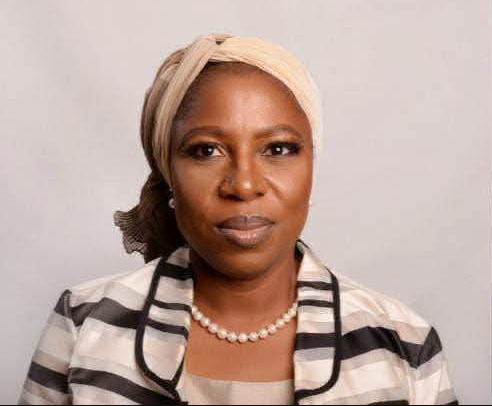
The coalition’s pushback follows growing public anxiety sparked by a statement attributed to the Executive Secretary of the Lagos State Water Regulatory Commission (LASWARCO), Oluwabukola Adeyemo, which warned that drilling boreholes and extracting groundwater without state authorisation is illegal and could attract property sealing and criminal prosecution. The Commission had also announced a dedicated reporting hotline, urging residents and community leaders to blow the whistle on unauthorised drilling and abstraction.
Reacting to the development, the groups stated that LASWARCO must urgently provide clarity on the scope of its enforcement, noting that its sweeping tone has generated deep confusion and fear across working-class neighbourhoods.

The coalition stressed that any regulatory exercise must start with an absolute and faithful acknowledgement of what the governing statute actually says. Under the Lagos State Environmental Management and Protection Law of 2017, the primary legal instrument cited by the regulator, the law explicitly distinguishes between commercial extraction and domestic survival.
“Specifically, Section 253(1) of the law provides that ‘a person may, without obtaining a licence from the Lagos State Water Corporation (LSWC), allow, construct, dig or extend any well, borehole or other work in a residential premises for the purpose of abstraction of water supply and to an extent necessary for a supply of water for the domestic purpose of a household.’
“This statutory exemption is reinforced under Section 259(2), which makes it clear that licensing requirements apply strictly to commercial and industrial abstractors, stating that the location of a borehole other than those for domestic use shall be authorised by first obtaining the appropriate licence.
“By deliberately omitting these statutory exemptions from its public threats and threatening indiscriminate crackdowns, LASWARCO has overstepped its bounds, creating needless panic among already suffering residents, while recklessly encouraging neighbours to turn on one another over water, an essential daily need,” the groups stated.
The coalition noted that the state’s aggression is especially contemptible when measured against its own utility records. Official disclosures by the Lagos Water Corporation reveal that its network accounts for barely 34,424 registered connections, representing roughly 1.03 percent direct coverage in a megacity of over twenty million people. Even by the corporation’s own generous defence that these connections serve multi-tenant plots covering about 8.3 percent of residents, over 91 percent of the population remains completely abandoned by the public grid.
“In reality, public taps across the state have been dry for decades, while massive, multi-billion-naira waterworks at Iju, Adiyan, and Ishasi rot away in an embarrassing state of operational underperformance,” the coalition remarked.
To compound this institutional neglect, Section 252 of the 2017 Law insulates the Lagos Water Corporation from paying a single naira in damages or compensation to citizens for the total failure or interruption of public water supply.
“A government that actively absolves itself of the constitutional duty to deliver water cannot legitimately turn around to criminalise and extort citizens who were forced to become their own mini-water authorities and service providers despite paying heavy taxes to the state,” the statement stressed.
The groups described domestic boreholes in Lagos as a distressing necessity promoted by state failure, noting that the burden is even heavier in ecologically blighted settlements.
“In areas like Baruwa, Iludun, and Ajegunle, where prolonged petroleum pipeline contamination has poisoned subterranean aquifers, as well as coastal corridors like Lekki, where poor drainage and the complete absence of centralised wastewater management have led to severe sewage pollution and saline intrusion, citizens cannot safely draw groundwater at all,” the coalition said. “This crisis has trapped residents in acute water poverty, forcing families to spend ruinous sums daily to purchase water from third-party vendors while the state looks away.”
Where groundwater remains usable, the statement observed that citizens continue to sustain whole neighbourhoods through communal solidarity, extending taps out to the street, sharing water with neighbouring compounds, and pooling money for electricity or fuel to keep pumps running.
“Rather than criminalising these self-funded lifelines, the state government ought to wear a garb of humility to study and support these community-led models of service delivery, learning how ordinary communities manage to share water so seamlessly without multi-million-dollar, pro-privatisation consultants and institutions dictating terms,” the coalition advised. “These organic lifelines demonstrate the capacity for cooperation and collective responsibility within our communities, even as they completely shatter the state’s worn-out propaganda that handing public water utilities over to private entities and predatory multinational water corporations is the only way forward.
The coalition drew a sharp contrast between LASWARCO’s heavy-handed threats against struggling households and its lenient treatment of industrial water extractors. The groups recalled that when LASWARCO carried out regulatory engagements with multinational giants such as Nigerian Bottling Company, Guinness Nigeria, and FrieslandCampina WAMCO in late 2024, the Commission publicly admitted it had spent more than seven years in polite diplomatic discussions despite ongoing compliance defaults.
“It is unconscionable that the state could spend years patiently negotiating with multinational corporations guzzling millions of litres for private profit, yet threaten task forces, property sealings, and criminal charges against ordinary citizens drawing water for their pots and buckets,” the statement asserted. “If anyone is depleting communal aquifers and putting our groundwater at risk of sinking, it is these mega-extractors, not families trying to survive.”
The groups also raised concerns that LASWARCO’s sweeping warning could pave the way for dismantling community water lifelines ahead of the introduction of state-endorsed private water schemes.
“We are not blind to the covert agenda underway. This aggressive threat to criminalise all boreholes is a calculated, manufactured siege designed to herd desperate residents into a captive market and bulldoze communities into forced prepaid water metering schemes. Water is a lifesaving, fundamental human right. Access to it can never be subjected to an exclusionary, pay-or-perish discriminative model,” the statement read.
To resolve concerns prompted by LASWARSCO’s threats, the coalition urged the Commission to immediately clarify that the 2017 law exempts domestic boreholes and wells, guaranteeing that residential homes will not face sealing, harassment, or prosecution.
Rather than privatising the Lagos Water Corporation, the coalition urged the state government to prioritise universal access to safe, piped public water, redirect rigorous regulatory enforcement toward high-volume commercial abstractors and industrial polluters, and rehabilitate derelict waterworks to ensure equitable distribution across all communities. Furthermore, they demanded comprehensive governance reform within the utility, institutionalising transparent management frameworks that grant workers, communities, trade unions, and civil society groups a direct say in how it is run.
Concluding the statement, the coalition called on Community Development Associations, youth councils, labour unions, artisans, market women, and neighbourhood networks across Lagos to remain vigilant, organised, and ready to actively defend their domestic lifelines.
“The state is formally put on notice that any attempt by LASWARCO or armed task forces to enter residential communities, demand illegal permits, or seal domestic boreholes will be treated as an unlawful provocation and met with immediate legal, public, and coordinated mass resistance across every community in Lagos until the social contract of universal public water delivery is fully restored.”
Signed
Adewale Ojo – Chairman, Committee for the Defence of Human Rights (CDHR), Lagos State
Dagga Tollar – Secretary, Movement for Socialist Alternative (MSA)
Miriam Ginika John – President, Advocacy Initiative for Restoring Woman and Girls Education for Promotion of Justice to Save Lives (Rowgles Advocacy Initiative)
Chief Akeem Muraina Mosunro, Baale Ifako Tuntun (Onibari 1), Ifako Ijaiye Community
Towolawi Jamiu – PRO, Oworo Youth Forum (OYF)
Adebayo Saheed Adedeji – Leadership Council, Movement for African Emancipation
Zikora Ibeh – Assistant Executive Director, Corporate Accountability and Public Participation Africa (CAPPA)
Ibrahim Oluwatobiloba – President, Voices of the Masses and Support for Credible Leadership
Balogun Hameed – Director Research, Frontline Socio-Economy Research Centre
Tunde Yusuf – Secretary, Ajegunle People’s Movement (APM)
Okechukwu Nwanguma – Executive Director, Rule of Law and Accountability Advocacy Centre (RULAAC)
Peluola Adewale – National Mobilisation Officer, Joint Action Front (JAF)
Alex Omotehinse – President, Centre for Human and Socio-economic Rights (CHSR)
Hassan Taiwo Soweto, Member of the Organising Committee, #EndBadGovernance Movement, Lagos State
Gbenga Komolafe – General Secretary, Federation of Informal Workers Organisation of Nigeria (FIWON)
Akin Okunowo – National Coordinator, Anti-Cult Alliance Movement (ACAM)
Felix Ikupolosi JP, Chairman, Iludun Town Association
Rufus Olusesan – National President, Precision, Electrical and Related Equipment Senior Staff Association (PERESSA)
James Oyewole – Chairman Baruwa Water Pollution, Baruwa Community
Oladunni Segun – Amilcar Cabral Ideological School – Movement (ACIS-M)
Mary George-Peluola – Director, Women Advocate Research Documentation Centre (WARDC)
Chinedu Bosah – National Secretary, Campaign for Democratic and Workers Rights (CDWR)
Comrade Philip Imonikhe – President, Pulp Paper and Paper Products Printing and Publishing Senior Staff Association of Nigeria
Comrade Dare Adeyemo, National Union of Nigeria Welders (NUNIWE) Chairman, Lagos State Council
Comrade Adeola Adepegba, National President, Nigeria Union of Private Cab Operators (NUPCO)