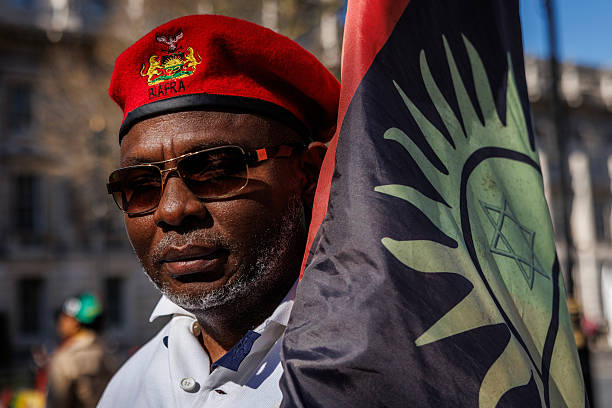
The Indigenous People of Biafra (IPOB) has renewed its demand for an international investigation into alleged killings and military attacks in the South-East, asking the United Nations to supervise the exercise.
The group made the request in a statement signed by its spokesperson, Emma Powerful, on 16 November, 2026, after accusing the Nigerian military of attacking communities in Imo State.
Group seeks independent investigation
IPOB said it had repeatedly requested an independent international investigation into alleged extrajudicial killings, military invasions and other abuses in Biafraland.
It also called for a United Nations-supervised fact-finding mission to investigate the allegations, claiming that previous appeals had received no response.

The group accused the international community of ignoring the alleged abuses, warning that its silence could encourage further attacks on civilians.
It specifically questioned the British government’s military support for Nigeria, alleging that Britain continued to arm and protect a military accused of attacking innocent people in the South-East.
READ RELATED NEWS
IPOB threatens 2027 election boycott over Kanu’s appeal delay
Obi faults govt use of force on IPOB, calls for dialogue
Troops kill 8 IPOB members, recover arms in Anambra
IPOB also asked why foreign governments and international organisations had not intervened over what it called the killing of unarmed Judeo-Christians in Biafraland.
The group directed its appeal to the United States, United Kingdom, Israel, European Union, Amnesty International, Human Rights Watch and International Criminal Court.
Imo operation prompts fresh appeal
The renewed demand came after IPOB accused Governor Hope Uzodinma and the Federal Government led by President Bola Tinubu of deploying more than 3,000 soldiers to communities in Imo State.
It alleged that the operation started on 15 November, with troops entering Mbaitoli Local Government Area and neighbouring communities in the Orlu zone, including Umuaka.
The group claimed that more than 30 armoured tanks and military helicopters supported the deployment.
It accused the soldiers of surrounding civilian settlements and carrying out aerial bombardments and ground intimidation.
IPOB questioned the reason for the operation, claiming that the affected communities had no security incident or declared war to justify the military presence.
It also alleged that the deployment was politically motivated and part of a pattern of attacks against Igbo people.
The group demanded the withdrawal of the troops, armoured personnel carriers and military helicopters from Mbaitoli, Umuaka, Orlu and other parts of Biafraland.
WHAT READERS SHOULD KNOW
IPOB also accused political collaborators and commentators of defending military actions in the South-East. It alleged that they would blame the group and its Eastern Security Network (ESN) for any destruction caused by the military operation.
The group further cited the public booing of political operatives at Prophet Odumeje’s 30th anniversary celebration in Onitsha as an example of political rejection.
For More News Details, Visit www.NewDailyPrime.news.