Iranian leaders have welcomed the defeat of President Donald Trump’s Republican Party in the United States midterm elections, describing the outcome as a rejection of Washington’s military campaign against Tehran and its economic consequences.
The Democratic Party’s victories in both chambers of Congress have dealt Trump a significant political setback, increasing pressure on his administration over the prolonged conflict with Iran, which has contributed to rising fuel prices and economic uncertainty.
Iranian officials have seized on the results, arguing that American voters have expressed dissatisfaction with the war and its financial consequences.
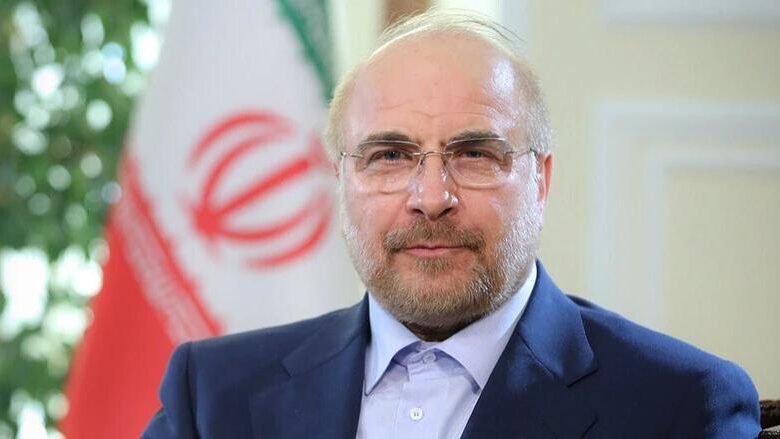
Iranian Parliament Speaker Mohammad Bagher Ghalibaf, who has also led negotiations with Washington, said the election outcome reflected public opposition to the conflict.


“Conscience or the cost of living, Americans said NO TO WAR, and we endorse this message,” Ghalibaf wrote in a post on X.
He also warned Washington against disregarding public opinion by launching further attacks on Iran.
Iran’s judiciary chief, Gholamhossein Mohseni Ejei, similarly celebrated the Republican losses, declaring that Trump had been defeated both militarily and politically.
However, despite the celebratory reactions from Tehran, Supreme Leader Mojtaba Khamenei cautioned against assuming that the change in congressional power would fundamentally alter Washington’s position towards Iran.
In a written statement released on Wednesday, Khamenei said those expecting a shift in American foreign policy following the election were mistaken.
“Those who still harbour even the slightest hope that the behaviour of the hegemonic system might change through partisan or factional shifts … are seriously mistaken,” he said.
He further warned that any renewed American attack on Iran would provoke a much wider response, suggesting that Tehran was not prepared to abandon its hard-line position.
The statement came as thousands of Iranians gathered in Tehran to mark the anniversary of the 1979 takeover of the United States embassy, an annual event characterised by anti-American demonstrations.
The election results have also raised questions about Trump’s next steps in the conflict, which began with US and Israeli attacks on Iran in February 2026.
The war has disrupted international shipping, particularly through the strategically important Strait of Hormuz, a major route for global oil supplies.
READ RELATED NEWS
Oil prices fall as Iran war resolution hopes grow
Iran threatens Trump with ‘New Weapons’ after midterm defeat
Trump’s political future at stake as democrats fight to take control of congress
Iran’s actions in the waterway and attacks on energy infrastructure across the Gulf have contributed to volatility in international oil markets, increasing pressure on governments and consumers.
The economic consequences have become an important issue in American domestic politics, with rising petrol prices and concerns about the cost of living featuring prominently in the midterm election campaign.
Trump acknowledged that the conflict had contributed to his party’s poor electoral performance, although he continued to defend the military campaign.
Vice President JD Vance also attributed the Republican defeat partly to the war, arguing that the conflict had become a significant political liability for the administration.
Meanwhile, concerns remain that Trump’s electoral setback could increase the possibility of further military action rather than accelerate negotiations.
Two senior Iranian sources indicated that Tehran remained on high alert over the possibility that the US president could respond to the election outcome with renewed military strikes.
Analysts have also warned that the Democratic victories could make Iran less willing to compromise in negotiations, particularly over control of the Strait of Hormuz and the conditions required to end the conflict.
Despite the political pressure facing Washington, a diplomatic breakthrough remains uncertain as both countries maintain competing demands.
Iran’s leadership has continued to insist that its national interests and security conditions must be respected, while the Trump administration has maintained pressure through military operations and economic restrictions.
The developments suggest that although the midterm election results have created additional domestic challenges for Trump, they have not necessarily brought the United States and Iran closer to ending their conflict.
With tensions continuing across the Middle East, the direction of Washington’s next move could have significant consequences for regional security, international shipping and global energy markets.