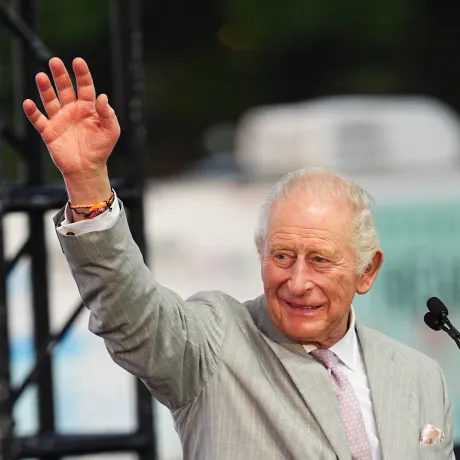
King Charles III has expressed deep sorrow over the transatlantic slave trade, describing it as a shameful chapter of history, while stopping short of issuing a formal apology or endorsing reparations to affected communities.
The British monarch made the remarks on Tuesday while addressing Commonwealth leaders at the opening of the Commonwealth Heads of Government Meeting (CHOGM) in Antigua and Barbuda, where demands for historical accountability and reparatory justice have remained prominent.
“The transatlantic trade in enslaved persons still casts a shadow over these islands and other members of our Commonwealth,” Charles said.
He added that the historical injustice continued to trouble him personally, describing it as a period that filled his heart with “horror” and his soul with “the most profound personal sorrow”.

The King acknowledged that the consequences of slavery continued to affect communities across the Caribbean and other Commonwealth countries, emphasising the importance of learning from historical injustices.
“We cannot change the actions of those who came before us,” he said. “We can, however, learn from the past.”
Charles said his growing understanding of slavery, through listening, learning and examining its historical consequences, had strengthened his determination to support efforts aimed at addressing past wrongs.
He expressed commitment to developing modern partnerships that would provide practical opportunities for communities affected by historical disadvantage.
However, his address did not include a formal apology for Britain’s involvement in the transatlantic slave trade or an explicit endorsement of financial reparations.
REPARATIONS DEBATE CONTINUES
The King’s remarks come as Caribbean leaders and campaigners continue to push Britain to acknowledge its historical role in slavery and support reparatory justice initiatives.
The issue has featured prominently in discussions surrounding the Commonwealth summit, which brings together leaders from 56 member countries, many of them former British colonies.
British Prime Minister Andy Burnham has indicated willingness to discuss a formal apology for slavery, representing a shift in the government’s longstanding position, although he has rejected demands for financial reparations.
Burnham has also proposed debt restructuring for vulnerable Commonwealth countries and announced £40 million in infrastructure support for the Caribbean over the next three years.
Campaigners, however, insist that expressions of regret must be accompanied by concrete measures to address the lasting consequences of slavery.
RELATED NEWS
King Charles celebrates strong UK-US friendship
King Charles III to visit US despite calls for delay amid Iran war
Ukraine and Russia report cyberattacks on emergency alert apps sending false nuclear warnings
Protesters gathered outside the summit venue on Tuesday, displaying placards demanding acknowledgement of historical wrongdoing and reparatory justice.
One demonstrator, Shana Michelle of Antigua, argued that the effects of colonialism remained visible in Caribbean societies.
“Technically, we’re free, but mentally a lot of us aren’t,” she said, pointing to lingering cultural attitudes and historical inequalities.
She stressed that acknowledging the wrongdoing was an essential starting point for meaningful repair.
CALLS FOR PRACTICAL ACTION
Charles highlighted education, employment opportunities, increased trade among Commonwealth countries and climate resilience as areas where cooperation could help tackle contemporary inequalities.
He also referred to the role of the Royal Navy in ending the international slave trade, arguing that history demonstrated the possibility of overcoming injustice.
“History also teaches us that evil need not have the last word,” he said.
The Commonwealth summit is expected to continue discussions on economic cooperation, climate change, sustainable development and the future of relations among member states.
The debate over slavery and reparations, however, remains a sensitive issue, particularly among Caribbean nations seeking recognition and tangible responses to the historical exploitation of their populations.