The loudest headline is not always the story with the greatest impact. Nigeria current affairs covers developing events and decisions shaping public life, from economic pressures and election activity to security and government accountability. Understanding how these issues connect gives each headline more context.
It can be hard to follow the news when political disputes, security reports and economic changes arrive in a constant stream. This guide explains what current affairs means and how to read the issues behind the headlines, without losing sight of the people affected by them.
We’ll look at the economy, the political activity surrounding the 2027 elections, insecurity and the role of governance and public accountability. Together, these themes show why a government decision or public controversy matters beyond the day’s news cycle.
Key Takeaways
- Read economic headlines alongside household pressures and policy decisions to understand what growth or currency changes mean in daily life.
- Track election developments as part of a wider story about political competition, rules and public choices.
- Separate security updates from the broader questions they raise about public safety and regional cooperation.
- Look beyond political statements: accountability depends on how decisions are made, explained and followed through.
Table of Contents
Economic growth and efforts to stabilise the naira
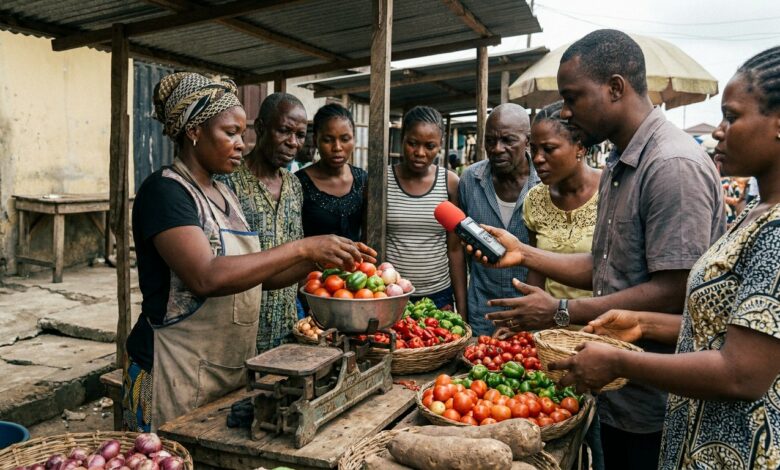
Economic headlines connect national reforms with household costs and business decisions. The 2026 budget, minimum wage and poverty figures show why policy choices matter.

Economic reforms and the naira
Economic reforms are government measures intended to change how the economy operates and respond to financial pressures. Under President Bola Tinubu, efforts to stabilise the naira sit alongside wider debates about growth and affordability. Nigeria’s national minimum wage is ₦70,000 per month under the National Minimum Wage (Amendment) Act, signed on 29 July 2024. That figure gives workers and employers a concrete reference point when assessing incomes against living costs.
Business and economic developments
Business and economic developments include public spending, investment and activity across key industries. Nigeria’s 2026 federal budget was ₦68.32 trillion, and President Tinubu signed the 2026 Appropriation Act into law on 17 April 2026. The economy is projected to grow steadily, while foreign investment has increased. Nigeria is also expanding its oil and gas sector, and demand for its LNG exports is rising. These developments can influence jobs, government priorities and business confidence.
Electricity, power tariffs and fuel supply
Electricity supply, power tariffs and fuel availability are practical parts of the economic news cycle. Conditions vary: electricity access and fuel availability depend on local supply, while a power bill reflects usage and the applicable tariff. These factors affect operating costs and daily routines. News reports are most useful when they identify the location and explain what has changed.
Poverty figures show why national growth does not tell the whole story. About 40% of Nigerians, or 83 million people, lived below the poverty line; another 25%, or 53 million, were at risk of poverty. For readers, these figures put reforms into context: economic progress is also judged by whether incomes and essential services become more accessible. Tracking wages, public spending and business activity helps connect policy announcements with household vulnerability.
Political activity ahead of the 2027 general elections
Nigeria’s political calendar is turning towards the 2027 general elections. Election dates, party activity and the rules governing the process shape the national conversation. Following these developments helps readers distinguish formal decisions from political claims and campaign rhetoric.
The revised timetable issued on 27 February 2026 scheduled Nigeria’s 2027 presidential and National Assembly elections for 16 January 2027. The Electoral Act 2026 was signed into law on 18 February 2026. These milestones frame political activity ahead of the vote. Parties and candidates will compete for public support, while election coverage will examine campaign messages, alliances and questions about how the process is conducted.
Nigeria’s 2023 presidential election offers recent context. The country held the vote on 25 February 2023, and Bola Tinubu was elected president that year. Understanding that result helps readers place today’s political debate within the current administration’s term. It also clarifies why policy decisions, party criticism and public reactions feature prominently as political attention shifts towards 2027.
The June 12, 1993 presidential election remains a significant point in Nigeria’s electoral history. Ibrahim Babangida annulled that election, making the episode central to discussions about political accountability and electoral legitimacy. Comparing that history with the scheduled 2027 vote gives readers context for why election rules and public trust matter. The comparison should not blur distinct events: each election has its own circumstances and political consequences.
Travel advice depends on the destination and the conditions affecting it. Visa requirements vary with a traveller’s nationality and purpose, while transport conditions depend on the route and locality. No single travel or transport description applies uniformly across Nigeria. Read advisories and journey updates in relation to your destination, rather than assuming conditions are identical nationwide.
Insecurity and West African regional cooperation
Insecurity is a major issue in Nigeria’s public affairs, affecting safety, communities and government priorities. Insurgency, kidnapping and banditry are among the country’s security challenges. Each has different causes and consequences, so useful reports identify the threat, location and response. These details help readers distinguish an isolated incident from wider security pressures.
Boko Haram has shaped Nigeria’s security history for years. The group began unleashing terrorist attacks on the Nigerian state in 2009. That history helps explain why reports about insurgency often include both immediate operations and questions about longer-term prevention. Kidnapping and banditry add other pressures, and their effects can differ between communities. Avoid treating every incident as evidence of the same threat.
Recent security updates also describe responses and outcomes. Nigeria’s National Security Adviser said the Federal Government secured 2,512 terrorism convictions in nine years. In Niger State, troops rescued 16 abducted victims. These examples concern different measures: convictions show court outcomes, whilst a rescue reports an operation and its immediate result. Reading them distinctly gives a clearer picture than combining them into one broad claim of progress.
Regional cooperation matters because security concerns can affect neighbouring countries as well as Nigeria. Nigeria’s membership in the Economic Community of West African States (ECOWAS) makes regional relations relevant to discussions of shared challenges. Cooperation can include exchanging information, coordinating priorities and discussing cross-border responses. Its practical value depends on what governments agree to do and how they carry out those decisions.
When following West African news, identify the actors and the type of action reported. A troop operation, a court conviction and a regional meeting are distinct developments. Nigeria’s ECOWAS membership provides useful context, but does not explain the outcome of a security event on its own. Look for the location, stated threat, response and reported result in each account.
That distinction keeps security coverage grounded in evidence. The 2009 start of Boko Haram attacks, the reported convictions and the Niger State rescue describe separate parts of the issue. Together, they show why Nigeria’s security news spans history, law enforcement and regional relations. They do not, on their own, establish that one measure resolved the wider challenges.
Nigerian governance and political accountability
Governance describes how public authority is exercised and scrutinised. Nigeria’s current system of government is defined under the 1999 Constitution. Accountability means examining who made a decision, what authority they used, and what followed. This approach shifts coverage beyond political statements towards decisions, public responsibilities and their consequences. It also helps readers assess whether officials explain their actions clearly.
Nigeria’s National Assembly provides a central setting for national political debate. The House of Representatives has 360 members, while the Senate has 109 senators. Their roles make legislative decisions a key part of governance news. To assess a report, identify the policy or action under discussion, the institution involved, and the explanation offered. Those details help separate an announcement from scrutiny of its impact.
Government is not only federal. Nigeria has 36 states, one Federal Capital Territory and 774 local governments. This structure matters because public decisions and services involve different levels of authority. A report about a state government, for example, should not be treated as a federal decision. Identifying the responsible level helps readers understand who can answer questions about a policy or its delivery.
Nigeria’s democratic history also shapes current debates about accountability. The country returned to democratic governance in 1999 after periods of military rule, including a first military coup in January 1966. That history gives public scrutiny broader significance: citizens and institutions assess how power is exercised under civilian government. The key question is not simply who holds office, but how decisions are explained and reviewed.
To follow governance news, trace four points: the decision-maker, the stated authority, the action and its reported outcome. Nigeria’s constitutional system provides the framework, with the National Assembly, state institutions and local governments all part of the wider picture. This approach helps distinguish allegations from established actions and political criticism from evidence of implementation. It also keeps attention on whether officials address the substance of public concerns.
New Daily Prime
New Daily Prime covers news shaping Nigeria’s economy, elections, security and governance. Its reporting brings developing events into view. Organisations can also use sponsored news articles and social media brand mentions to communicate with audiences. Repoy is among its offerings.
Turn to New Daily Prime for context on public decisions, political developments and security reports, rather than headlines in isolation. Organisations seeking media visibility can use sponsored articles and social media brand mentions for different communication needs.
Keep asking what decisions mean for people
A useful next step is to follow how public decisions affect daily life, not only how officials present them. A considered reading of Nigeria’s current affairs looks for the evidence behind a claim, the people responsible and what happens after an announcement. This helps distinguish an immediate headline from a change with lasting consequences.
As developments emerge, keep the key questions in view: who is affected, what has changed and how will the outcome be judged? These questions bring clarity to fast-moving political and economic stories and help readers engage thoughtfully with public debate.
For continued reporting and context on developments shaping Nigeria, turn to New Daily Prime. Contact New Daily Prime today to discuss your enquiry. Stay curious, follow the facts, and keep contributing to an informed public conversation.
Frequently Asked Questions
What are the top news stories in Nigeria today?
The leading stories change as events unfold, but Nigeria’s current affairs often centre on decisions affecting public life. To understand a headline, identify who made the announcement, what action followed and who may be affected. A government statement, a court ruling and a party’s campaign claim, for example, are different kinds of news. Recognising the distinction helps put breaking updates into context.
What is the current state of Nigeria’s economy, inflation, and GDP growth?
Nigeria’s economic picture combines projected steady growth with pressure on household purchasing power. GDP growth measures changes in economic output, while inflation tracks changes in prices; neither indicator stands in for the other. For a useful comparison, note the period each figure covers and whether it is an estimate or a published result. This makes economic claims easier to interpret without conflating growth with affordability.
What are the latest naira exchange rates and fuel prices in Nigeria?
Exchange rates and fuel prices change with market conditions, so a useful update needs a date, transaction context and location. A quoted naira rate should identify the market or channel it describes; a fuel price should clarify the product and where it applies. Without those details, figures can mislead. Compare like with like, and treat older quotations as snapshots rather than current prices.
What are the latest government policies and federal budget priorities in Nigeria?
Federal priorities appear in enacted policies and budget decisions, but an allocation alone does not show what has been delivered. Read budget coverage by distinguishing proposed spending, approved funding, releases and implementation. Then look for the responsible ministry or agency and the stated purpose of the expenditure. This helps separate a government commitment from evidence that a programme or public service has reached its intended beneficiaries.
What are the current security developments across Nigeria’s states?
Security developments vary by state and incident, so read reports with their location and date in view. Check whether an update concerns an operation, an arrest, a court process or a public advisory; each describes a different stage of response. Note what authorities have actually reported, rather than treating an allegation or early account as a confirmed outcome.
What are the latest developments in Nigeria’s healthcare and education sectors?
A polio vaccination drive in Katsina State is planned to begin on November 7, 2026, targeting 2.7 million children across 28 Local Government Areas. The NCDC says a ₦10 billion intervention fund covers multiple disease threats, not only Ebola.