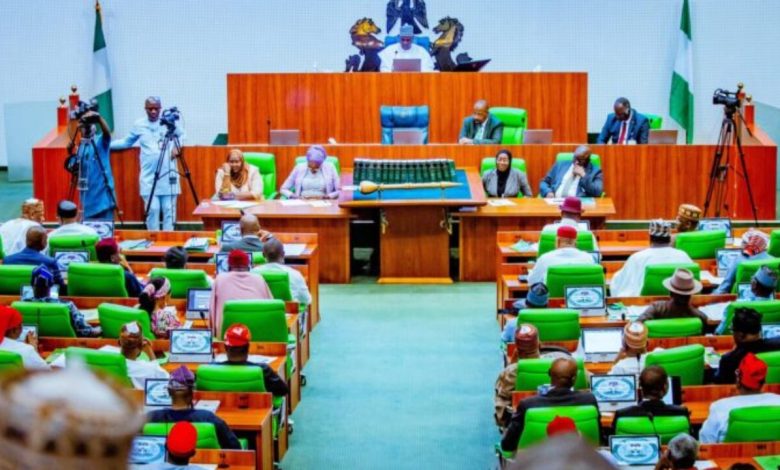
A proposed government bailout for indebted farmers has run into fresh scrutiny at the House of Representatives, subsequent to the allegations that nearly ₦2 trillion released through agricultural intervention schemes was diverted into property purchases and businesses unrelated to farming.
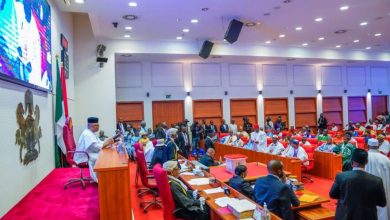
Lawmakers have suspended debate on the proposed loan waiver until they examine an investigation already completed by a House ad hoc committee. The decision places the fate of genuine farmers seeking relief alongside a more troubling question: who received the public funds, and what did they spend the money on?
The controversy surfaced during deliberations on a motion sponsored by Inuwa Garba, who called on the Federal Government to cancel outstanding agricultural loans owed by eligible beneficiaries. He cited rising costs of farm inputs, insecurity, flooding, drought, pest attacks and other difficulties that have reduced farmers’ earnings and weakened their ability to repay.
Garba maintained that many borrowers were struggling because of circumstances beyond their control. He warned that continued debt recovery, including accumulated interest and penalties, could push struggling farmers into deeper financial distress and discourage future production.

However, Bamidele Salam, Chairman of the House Committee on Public Accounts, opposed a blanket cancellation. He cited findings from the Auditor-General of the Federation alleging that about ₦1.1 trillion disbursed under the Central Bank of Nigeria’s Anchor Borrowers’ Programme had been abused.
Salam accused some beneficiaries of using the facilities to acquire properties in Abuja, Lagos and Dubai rather than finance agricultural activities.
He also alleged that ₦795 billion in loans associated with the Bank of Agriculture had been diverted, leaving the institution virtually unable to fulfil its mandate of financing farmers.
“If we then come as a parliament and recommend a holistic waiving of all loans given out to persons who are purportedly to be farmers, we will be setting a very, very dangerous precedent,” Salam told the House.
The Deputy Chief Whip, Ayokunle Isiaka, supported a more selective approach. He acknowledged that genuine farmers could have suffered losses through natural disasters and other emergencies, but called for an investigation to separate them from beneficiaries who deliberately misused public funds.
Awaji-Inombek Dagomie Abiante also questioned the wisdom of cancelling the debts without first establishing how the facilities were spent. He drew attention to the Nigerian Agricultural Insurance Corporation, which provides cover against certain farming risks.
RELATED NEWD:
The stakes extend beyond the borrowers. The CBN introduced the Anchor Borrowers’ Programme in 2015 to connect smallholder farmers with agricultural processors and improve access to finance. By the first half of 2021, the bank reported that the scheme had financed 3.56 million farmers cultivating about 4.25 million hectares.
A separate Auditor-General’s report published in 2025 also identified ₦629.04 billion in outstanding Anchor Borrowers’ loans as of December 2022. That figure concerns unrecovered loans and should not be confused with the ₦1.1 trillion diversion allegation raised during Wednesday’s debate.
Chairman of the House Ad Hoc Committee on Agricultural Loans, Aminu Jamo, informed lawmakers that his panel had concluded its investigation and was ready to submit its report.
Speaker Tajudeen Abbas consequently suspended further debate until the committee presents its findings on Tuesday. He said lawmakers should examine the existing report before commissioning another investigation.
The report could determine whether government should grant relief to all eligible borrowers, restrict it to farmers who can demonstrate genuine losses, or pursue recovery from those found to have misused the facilities.
The distinction is crucial. A blanket waiver could reward the misuse of public funds, while indiscriminate debt recovery could punish farmers whose crops and livelihoods were destroyed by circumstances beyond their control.
The House must establish who deserves relief before public money is written off.
For More News Updates, Visit New Daily Prime News