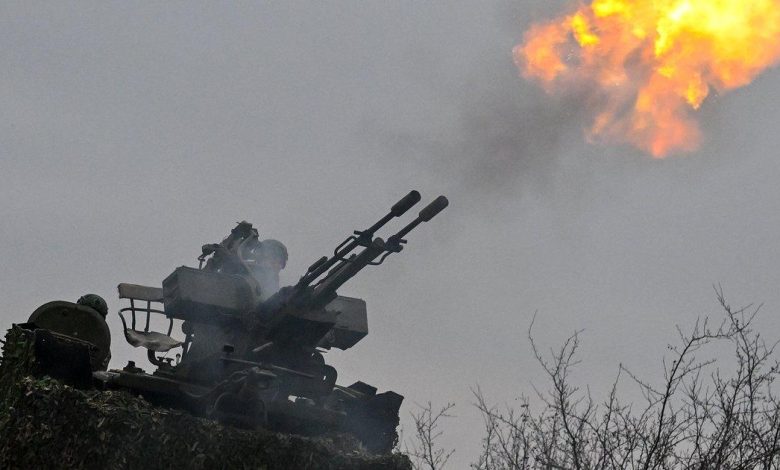
Russia has claimed that its air defence systems intercepted and destroyed 1,246 Ukrainian drones overnight, as attacks across Russian and Ukrainian territory left civilians dead or injured and raised fresh concerns about the growing scale of the war.
The Russian Defence Ministry announced the figure on Saturday, 28 November 2026, saying its forces had intercepted fixed-wing drones across more than a dozen regions, including the area surrounding Moscow.
The figure is one of the highest overnight interception totals reported by Russia since its full-scale invasion of Ukraine began in February 2022.
However, the claim has not been independently verified.


Russian authorities have not provided a complete account of how many drones were launched, how many reached their targets or whether every reported interception was successful.
The latest developments come as both countries increasingly rely on unmanned aircraft to target locations beyond the main battlefronts.
Moscow reports hundreds of incoming drones
Moscow Mayor Sergei Sobyanin said 462 drones approached the wider Moscow region between Friday evening and Saturday morning.
Of these, 123 were reportedly destroyed as they approached the capital.
The mayor said Russian air defence systems intercepted most of the incoming aircraft before they could reach the city.
However, he did not provide a comprehensive assessment of damage caused by the reported attacks.
The Russian Defence Ministry’s larger figure of 1,246 refers to interceptions across several regions rather than Moscow alone.
The regions reportedly affected included Bryansk, Belgorod, Kursk, Rostov, Volgograd, Samara and Krasnodar, as well as the Moscow region.
The geographical spread reflects the increasing reach of drone warfare, with attacks extending hundreds of kilometres beyond the immediate areas of ground fighting.
Nine injured as drone strikes bus in Bryansk
Despite Russia’s reported interception operation, regional authorities confirmed injuries following attacks on civilian locations.
In the Bryansk region, officials said a drone struck a company bus in the village of Klimovo, injuring nine people.
Russian authorities attributed the attack to Ukraine.
Separately, officials in the Samara region reported an attempted attack on industrial facilities.
Governor Vyacheslav Fyodorishchev said the incident caused no deaths or injuries.
The full extent of damage across other regions was not immediately established.
The attacks highlight the risks facing civilians as military operations increasingly involve long-range unmanned aircraft.
Read related news for new daily prime
14 feared trapped as Russian drone strike hits Ukraine’s Kyiv region
Poland accuses Russia of provocation after suspected airspace breach
Ukraine reportedly strikes Crimea bridge as Russian attacks hit Kyiv infrastructure
Drone row exposes gap in Carrington privacy before Pochettino;s Anfield test
Ukraine reports fresh Russian drone attacks
Ukraine also reported widespread aerial attacks during the same period.
According to Ukraine’s air force, Russian forces launched 162 attack drones overnight, of which 141 were shot down or otherwise suppressed.
Regional authorities reported injuries in several locations.
In the Dnipropetrovsk region, officials said Russian drone strikes injured five people, including a child.
Another person was reported injured during an attack on Bila Tserkva, near Kyiv.
Ukrainian authorities also reported deaths from an earlier Russian strike in Nizhyn, in the northern Chernihiv region.
According to Ukraine’s State Emergency Service, seven people were killed and seven others injured when an enterprise was attacked.
The Associated Press reported those deaths alongside two fatalities in Russian-occupied Zaporizhzhia, where Russian-installed authorities said a Ukrainian drone struck a hospital vehicle.
A nurse and a driver were reportedly killed in that incident, while two other people were injured.
The opposing accounts illustrate the continuing civilian toll of the war.
Why the 1,246-drone claim needs verification
Russia’s reported interception of 1,246 Ukrainian drones would represent an exceptionally large overnight operation.
However, military claims made during wartime require careful assessment.
The Russian Defence Ministry has not released independently verified evidence establishing the destruction of every drone included in its total.
It has also not disclosed a complete breakdown of drones launched, intercepted and those that may have reached their targets.
Ukraine’s figures concerning Russian drone attacks also originate from its military authorities.
Neither side’s claims should automatically be treated as independently established facts.
The distinction matters because the number of drones intercepted does not necessarily reveal the number originally launched or the effectiveness of the entire defensive operation.
Similarly, a successful interception does not always eliminate the danger to civilians, as falling debris can still cause injuries and damage.
Drone warfare extends beyond the front line
The expanding use of drones has changed how Russia and Ukraine conduct military operations.
Both countries have increasingly employed unmanned aircraft to strike military equipment, industrial sites, transport networks and energy infrastructure.
These attacks can reach locations far from the immediate battlefield.
New Daily Prime previously reported on a Russian drone strike in Ukraine’s Kyiv region that left people feared trapped beneath a damaged residential building.
The newspaper also covered a Russian cargo ship damaged in a drone attack in the Baltic Sea, highlighting concerns about the conflict extending into surrounding maritime areas.
The incidents show how drone warfare increasingly affects infrastructure and locations outside conventional ground combat zones.
However, each incident must be assessed separately, and responsibility should not be assumed without credible evidence.
Growing concerns across Europe
The war has also raised wider security concerns among European countries.
NATO members bordering Ukraine and Russia have increased their attention to airspace security amid reports of drones and other military objects entering neighbouring territory.
As New Daily Prime reported earlier this month, Poland accused Russia of provocation following suspected violations of its airspace.
The incident raised questions about the risks of military activity extending beyond Ukraine’s borders.
The latest overnight attacks add to those concerns, although there is no verified evidence that the reported operation against Russian territory directly threatened a NATO country.
Humanitarian consequences continue to grow
Beyond military claims and interception figures, civilians continue to bear the consequences of the conflict.
Homes, workplaces, transport vehicles and other civilian facilities have been damaged during repeated attacks.
Emergency workers face difficult conditions while rescuing people from destroyed buildings and treating those injured.
The continuing strikes also place pressure on public services and infrastructure.
For Ukrainians living in areas frequently targeted by drones, the threat of another overnight attack remains a daily concern.
Civilians in Russian regions affected by cross-border attacks face similar risks.
International humanitarian law requires parties to distinguish between military objectives and civilians and to take precautions to minimise civilian harm.
What happens next?
The latest attacks come as Russia’s full-scale war in Ukraine approaches its fifth anniversary.
Despite international diplomatic efforts, the conflict continues without a comprehensive peace agreement.
Russia and Ukraine remain engaged in military operations while pursuing different positions on territorial control and security arrangements.
The increasing use of drones presents further challenges for air defence systems and civilian protection.
The Russian Defence Ministry’s reported interception of 1,246 Ukrainian drones is significant because of its scale.
However, the actual number of drones launched, the effectiveness of the reported interceptions and the full extent of damage remain difficult to establish independently.
For civilians on both sides, the immediate concern is not the number of drones claimed to have been intercepted, but whether further attacks can be prevented and lives protected.