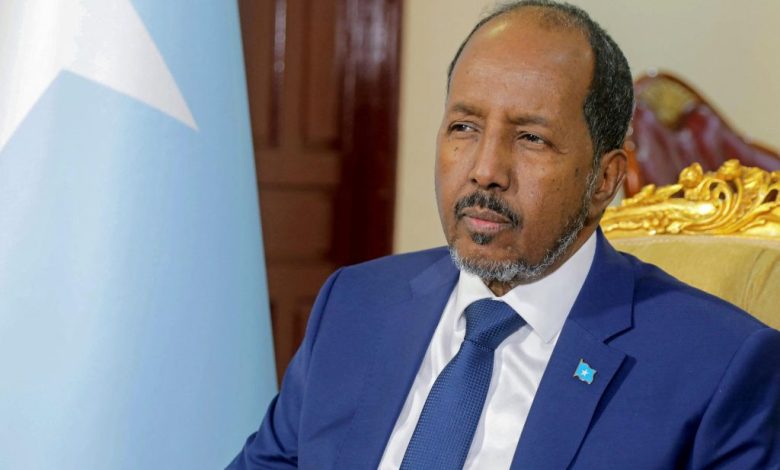
Somalia has ordered the United Arab Emirates (UAE) ambassador to leave the country within 72 hours, escalating a diplomatic dispute over alleged interference in its internal affairs and violations of national sovereignty.
The decision, announced on Thursday, November 19, 2026, also includes the recall of Somalia’s ambassador to the UAE for consultations.
Somalia’s Information Minister, Abdifatah Kasim Mohamud, announced the measures following a cabinet meeting chaired by Prime Minister Hamza Abdi Barre in Mogadishu.
The government accused the Gulf nation of undermining Somalia’s sovereignty, territorial integrity, security and national unity, describing its alleged actions as an open invasion.

SOMALIA WARNS AGAINST FOREIGN INTERFERENCE
Announcing the decision, Mohamud called on Somalis to unite against what the government considers an infringement on the country’s independence.
“Measures will be taken against anyone who cooperates with UAE in the invasion against Somalia,” he said in a broadcast on the state-run news agency.
He further urged citizens to defend their country against what he described as an attack on Somalia’s sovereignty, security, territory and unity.
However, the minister did not provide specific details of the alleged violations that prompted the ambassador’s expulsion.
The decision followed accusations by President Hassan Sheikh Mohamud that the UAE had been supporting regional administrations and armed forces operating outside the authority of the federal government.
Speaking on Tuesday, the Somali president alleged that Abu Dhabi had signed agreements concerning strategic ports in Berbera, Bosaso and Kismayo with regional administrations without the approval of Mogadishu.
He also accused the UAE of establishing military bases and supporting security forces outside Somalia’s national command structure.
UAE PUSHES BACK AGAINST MOGADISHU’S ACCUSATIONS
The UAE has consistently denied interfering in Somalia’s internal affairs, maintaining that it has supported the country’s security and development.
Anwar Gargash, diplomatic adviser to UAE President Sheikh Mohamed bin Zayed Al Nahyan, criticised the Somali president in a post on X following his accusations.
Gargash accused Mohamud of placing personal political calculations ahead of Somalia’s national interests.
He also defended the UAE’s longstanding support for Somalia and its people.
The comments came before Thursday’s expulsion announcement and were not an immediate response to the ambassador’s removal.
The UAE had not issued an immediate formal response to the latest decision as of Thursday.
DISPUTE OVER STRATEGIC PORTS AND MILITARY AGREEMENTS
The latest confrontation represents another significant deterioration in relations between the two countries, which have experienced growing disagreements since January 2026.
Earlier this year, Somalia announced the cancellation of its agreements with the UAE covering port operations, government institutions, defence and security cooperation.
The move followed accusations that Abu Dhabi’s activities were undermining Somalia’s sovereignty and political unity.
However, authorities in Somaliland, Puntland and Jubbaland rejected Mogadishu’s decision, arguing that the federal government lacked the authority to cancel agreements involving their respective territories.
The strategic importance of the ports has added another dimension to the dispute.
Berbera, Bosaso and Kismayo provide access to important maritime routes connecting the Horn of Africa with the Gulf of Aden and the wider Indian Ocean.
The UAE has invested heavily in port infrastructure and maintained economic and security relationships with several Somali regional administrations.
READ RELATED NEWS
Puntland offensive deals blow to Islamic State in Somalia
UK, UAE deepen strategic partnership
Trump, Xi and Putin meet face to face for first time in China ahead of historic talks
SOMALIA SAYS DIPLOMATIC RELATIONS REMAIN POSSIBLE
Despite the escalating confrontation, Somalia has indicated that it remains open to maintaining relations with the UAE, provided they are based on mutual respect and recognition of its territorial integrity.
President Mohamud has maintained that his government is defending Somalia’s national interests rather than targeting the Emirati people.
The Somali government has also emphasised its intention to pursue lawful measures to protect its sovereignty.
The dispute comes at a challenging period for Somalia, which continues to face internal political divisions, security threats and disagreements over electoral arrangements.
The federal government is also battling the al-Shabab militant group, which remains a major security threat despite years of military operations supported by international partners.
The latest diplomatic confrontation could therefore affect Somalia’s security partnerships, economic cooperation and relationships with Gulf countries.
Although neither government has announced a complete breakdown of diplomatic relations, the expulsion order signals a serious deterioration in bilateral ties.