Nigerian banks and telecommunications operators could be missing critical warning signs of digital fraud because suspicious activities detected by one institution are not always visible to another, the United Bank for Africa (UBA) has warned, calling for real-time intelligence sharing among financial institutions, telcoms, regulators and law enforcement agencies.
The bank said closer cooperation across the sectors could help intercept fraudulent transactions before criminals exploit weaknesses in banking platforms, mobile networks and customers’ personal information to steal funds.
The call was made during a panel session titled The Changing Face of Digital Fraud: Staying Ahead of Emerging Threats, organised as part of UBA’s 2026 Fraud Awareness Week under the theme, Fraud Dynamics: Staying One Step Ahead.
The hybrid event, held at UBA’s headquarters in Lagos on Friday, November 20, brought together representatives of financial institutions, telecommunications companies, regulators and law enforcement agencies to examine emerging fraud techniques and possible responses.


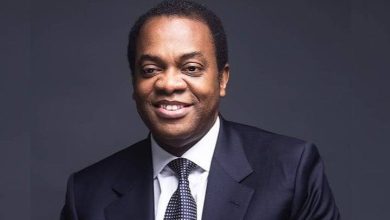
UBA’s Group Managing Director and Chief Executive Officer, Oliver Alawuba, represented by the Group Deputy Managing Director, Chukwuma Nweke, said isolated fraud-monitoring systems could leave institutions vulnerable when criminals combine different methods to compromise customers’ accounts.
He illustrated the problem with a scenario involving a suspicious SIM replacement followed by an unusual bank transfer.
“Consider a suspicious SIM change followed by an unusual transfer. The telecommunications provider will see the first warning sign, while the bank sees the second. Sharing intelligence promptly can help us act in time to protect customers,” he said.
The example highlights how a fraud attempt may unfold across multiple service providers. A telecommunications operator could detect an unauthorised SIM replacement, while a bank may subsequently register an unusual transfer request. If the two institutions cannot exchange relevant information quickly, the opportunity to block the transaction could be lost.
RELATED NEWS:
SIM swaps, phishing and compromised accounts
UBA identified phishing emails, fraudulent text messages, account takeovers, SIM-related fraud and the misuse of digital banking channels among the threats confronting financial institutions and their customers.
SIM swap fraud is particularly dangerous because criminals who successfully take control of a victim’s telephone number may receive one-time passwords (OTPs) used to authenticate certain banking transactions.
Sunday Alani, Revenue Assurance and Fraud Management Manager at Globacom, highlighted the vulnerability associated with OTPs delivered through telephone numbers.
“If I can swap your SIM, then truly I’m in charge. The OTP that the bank sends to authorise the transaction comes to me,” he said.
His explanation underscores why the security of customers’ mobile numbers is increasingly intertwined with the protection of their bank accounts, particularly where SMS-based authentication is involved.
The discussion also highlighted the human dimension of financial fraud, with criminals frequently manipulating victims into disclosing confidential information or approving transactions themselves.
Wemimo Oluwalade, Managing Director of WSC Technologies Limited, who delivered the keynote address, said fraud had evolved beyond isolated financial transactions into a threat involving multiple weaknesses across organisations.
A single incident, he explained, could involve stolen identities, social engineering, compromised devices, mule accounts, insider assistance and weak vendor controls.
“The question we should ask ourselves is: how do we verify what is real? Fraudsters see the entire chain, and they build their designs around the blind spots,” he said.
Police identify insider compromise as major concern
ACP Ty Mahmud of the Nigeria Police Special Fraud Unit identified the exploitation of trust as a major factor in financial fraud, noting that internal compromise accounts for about 70 per cent of cases handled by the specialised fraud units.
“In every situation, fraudsters first attack the people, not the system,” he said.
The observation draws attention to the risks posed by human vulnerability, including insider involvement, compromised credentials and manipulation, even where institutions deploy sophisticated security systems.
UBA’s Group Chief Internal Auditor, Eugene Inotu, who hosted the event, said employees must actively identify, prevent and report suspicious activities rather than treat fraud awareness as a routine exercise.
“The best fraud incident is the one we prevent, not the one we successfully investigate,” he said.
He also cautioned customers against unsolicited calls, suspicious messages and counterfeit websites impersonating financial institutions, advising them to report such communications through verified channels.
The panel, moderated by Oluwatosin Obadimu, Manager, Industry Fraud Desk at the Nigeria Inter-Bank Settlement System (NIBSS), also featured Aina Amah, Chairperson of the Association of Chief Audit Executives of Banks in Nigeria (ACAEBIN).
The participants called for stronger collaboration, improved technology and more effective intelligence exchange to counter increasingly sophisticated fraud schemes.
Beyond technological investments, the discussions pointed to the need for faster communication between institutions that control different parts of the digital transaction chain. A bank may protect its platform, but a compromised telephone number, manipulated customer or infiltrated service provider could still create an opening for criminals.
UBA operates across 20 African countries and in the United Kingdom, United States, France and the United Arab Emirates, serving more than 45 million customers globally.
For More News Updates, Visit New Daily Prime News