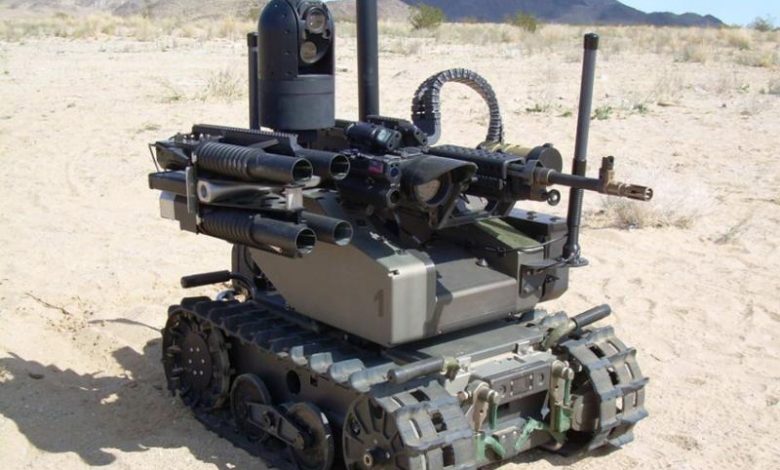
United Nations member states have begun discussions in Geneva on establishing international restrictions on autonomous weapons capable of selecting and attacking targets without direct human intervention, as concerns grow over the increasing use of artificial intelligence in modern warfare.
The discussions opened on Monday, November 16, during the seventh Review Conference of the Convention on Certain Conventional Weapons (CCW), which runs until November 20.
The five-day meeting will consider whether governments should begin formal negotiations towards a legally binding agreement regulating or prohibiting lethal autonomous weapon systems, commonly described as killer robots.
In a video message to the conference, UN Secretary-General António Guterres urged governments to establish international rules to address the growing threat posed by autonomous weapons.


“New technologies, including autonomous weapon systems, present new humanitarian, legal, ethical and security challenges,” Guterres said.
He further urged governments to act before the technology becomes more widely deployed, saying: “I urge you to seize this moment. Take action to prevent the use and spread of these merciless weapons.”
GROWING CONCERNS OVER AI-POWERED WARFARE
The rapid development of artificial intelligence has accelerated the production of military equipment, including drones, robots, tanks and submarines capable of carrying out increasingly complex operations with limited human intervention.
These technologies have raised concerns about accountability, civilian protection and the possibility of machines making independent decisions over human life.
The UN High Commissioner for Human Rights, Volker Türk, has called on governments to urgently agree on legally binding international rules governing the technology.
“A machine must never have the power to decide whether a human being survives or dies,” Türk warned.
He also called for prohibitions on autonomous weapons designed to target humans and systems whose operations cannot be adequately understood, predicted or controlled by human operators.
The International Committee of the Red Cross (ICRC) has similarly warned against allowing machines to determine the use of lethal force.
Its president, Mirjana Spoljaric, said: “States must act to ensure the future of warfare is not handed over to machines.”
READ RELATED NEWS
United States of Biafra alleges DSS abducted defence secretary Gen Rabbi
Trump, Putin and Xi to hold historic three-way meeting in China
US. RUSSIA AND ISRAEL OPPOSE BINDING RESTRICTIONS
The proposed agreement faces significant diplomatic obstacles, particularly from countries with advanced military capabilities.
The United States, Russia and Israel oppose legally binding restrictions, arguing that existing international humanitarian law provides an adequate framework for regulating warfare.
Washington favours non-binding guidelines and has proposed a five-year mandate, reflecting its preference for a less restrictive international framework.
Russia has also previously resisted proposals for a binding agreement. Its Foreign Ministry spokeswoman, Maria Zakharova, described negotiations on restrictive or prohibitive measures as premature.
The negotiations also face a procedural challenge because decisions under the Convention on Certain Conventional Weapons are generally reached by consensus. This means that disagreements among participating countries could prevent governments from reaching an agreement, even if most members support stronger international restrictions on autonomous weapons.
However, seven countries — Austria, Belgium, Brazil, Ireland, Mexico, New Zealand and Panama — have submitted a proposal calling for negotiations towards a new international agreement.
The United Kingdom, Germany and France have also proposed negotiations on an instrument that would leave open whether the eventual agreement should be legally binding.
HUMAN RIGHTS GROUPS DEMAND URGENT ACTION
Human rights organisations have warned that the absence of clear international regulations could increase the dangers associated with autonomous military technology.
Human Rights Watch has been particularly critical of weapons capable of independently identifying and attacking targets.
They are therefore urging governments to establish clear limits on the development and deployment of weapons that operate without meaningful human control.