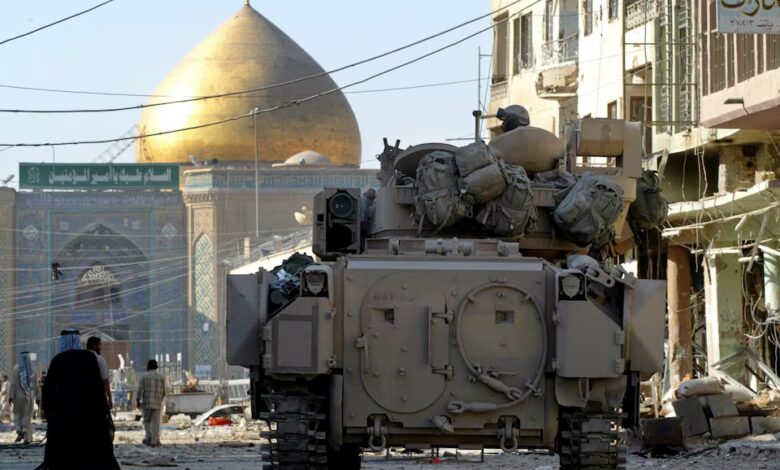
The United States is set to withdraw its remaining forces from Iraq by Wednesday, September 30, ending more than two decades of American military involvement in the country and creating a significant shift in the Middle East’s security landscape.
The withdrawal, agreed between Washington and Baghdad in 2024, is being carried out by President Donald Trump’s administration at a particularly sensitive time, as the United States is engaged in a wider confrontation with Iran.
The departure is being celebrated by Iran and its allies in Iraq, who regard the end of the American military presence as a major victory. However, Iraqi security officials and analysts have warned that the withdrawal could increase Iran’s influence while creating opportunities for Islamic State militants to regroup.
Jasim al-Bahadli, an Iraqi security analyst specialising in Iran-aligned armed groups, said Iran could gain strategically from the departure.


READ RELATED STORY
US, Iran set for indirect talks through Qatar as Strait of Hormuz crisis continues
Thiaw remains grounded despite Senegal’s performance against Iraq
Mbappé inspires France to comfortable victory over Iraq
“Iran stands to benefit strategically from the coalition’s departure because it removes a military presence that for years acted as a counterweight to Tehran’s influence in Iraq,” he told Reuters.
He added that pro-Iranian militia groups could seek to use the withdrawal to increase their influence over security and political decision-making.
The United States invaded Iraq in 2003 to overthrow Saddam Hussein, beginning a conflict that resulted in the deaths of around 4,500 American service members over more than two decades.
US forces formally withdrew from Iraq in 2011, but returned less than three years later after Islamic State captured large areas of Iraq and Syria. American forces subsequently supported Iraqi and Kurdish forces in the campaign against the militant group, which lost its territorial strongholds between 2017 and 2019.
The latest withdrawal therefore marks another major turning point in Iraq’s post-war history.
A NEW SECURITY TEST FOR IRAQ
For some Iraqis, however, the end of the American presence has raised concerns about whether national security forces are prepared to assume greater responsibility.
Abdulrahman al-Zobaie, a Sunni tribal leader in Fallujah, said Iraqis wanted full sovereignty but remained concerned about the timing of the withdrawal.
“We believe Iraq is still not fully ready to take over the security file at this time,” he told Reuters.
He warned that the departure could create a security vacuum, a concern that has become particularly significant because powerful armed groups remain active inside Iraq.
Iran-backed factions, meanwhile, have openly welcomed the US departure.
Abu Mojtaba al-Yasiri, a commander in the Islamic Resistance in Iraq, an umbrella group representing Iran-backed armed factions, described the withdrawal as a “historic victory” for Iraqi resistance groups.
Iran has also portrayed the departure as a success. Amir Hayat Moqaddam, deputy chairman of Iran’s parliamentary National Security Commission, said “lasting security will prevail in Iraq” once American forces leave the country and the wider region.
The US presence in Iraq has repeatedly been caught in the rivalry between Washington and Tehran. In 2020, the United States killed Iranian commander Qasem Soleimani in a strike near Baghdad airport, triggering heightened tensions and attacks by Iran-aligned groups against American interests in Iraq.
During the current US-Iran conflict, Iraq has again found itself caught between the two powers. Reuters reported that seven of the 18 US service members listed as killed in the conflict were in Iraq, with the most recent death involving an Army sergeant killed during the controlled detonation of a drone near Erbil in July.
The withdrawal will leave Iraqi forces with primary responsibility for the country’s security while Baghdad attempts to maintain relationships with both Washington and Tehran.
For Iraq, September 30 will therefore represent more than the departure of foreign troops. It will mark the end of a military chapter that began with the 2003 invasion and the beginning of a new test of Iraq’s ability to manage its security while balancing competing regional powers.
The coming months will show whether the withdrawal strengthens Iraq’s sovereignty without creating openings for Iran-aligned factions or Islamic State to expand their influence.