The international community remains fixated on a phantom: Gaza’s “Day After.” While Washington, Cairo, and Doha debate elaborate governance frameworks and the “Board of Peace,” these plans share a fatal flaw—they lack a viable “buyer” on the ground.
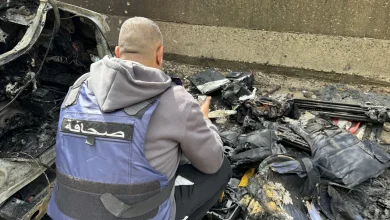
This diplomatic theatre has been eclipsed by the US-Israeli aggression against Iran that began on 28th February. Since then, Gaza has been sidelined globally, yet the genocide—begun in October 2023—has never stopped. Even before the Iran escalation, the 10th October ceasefire was a hollow promise; Israel violated the agreement over 2,400 times through near-daily air raids and shelling.
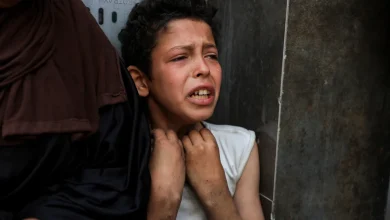
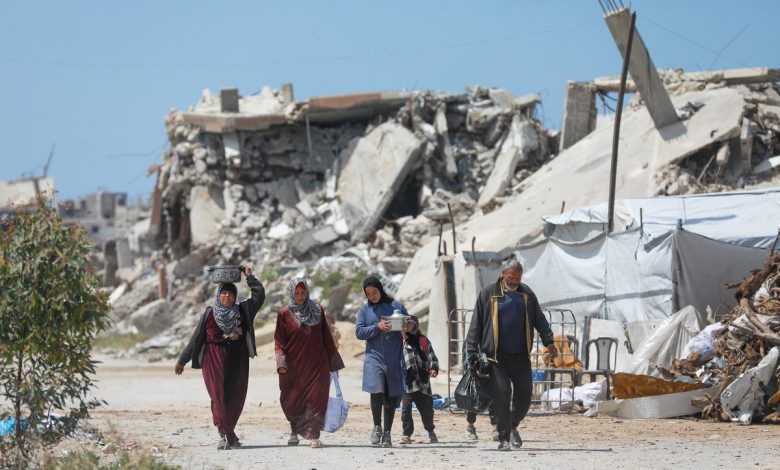
Since that supposed de-escalation, nearly 1,000 Palestinian civilians have been killed, pushing the total death toll past 72,300. This grim reality proves the “Day After” is not a sincere peace plan, but a cynical mask for a permanent, lethal status quo. Far from transitioning to Phase II, the current impasse suggests the ceasefire was merely a tactical suspension of a conflict Israel refuses to end. With the occupation intact and violations occurring daily, Gaza is not moving toward a post-war era. Instead, it is being forced into a state of managed catastrophe, where “peace” serves as a placeholder for the next phase of destruction.

The “Day After” blueprints—specifically the Trump-led Board of Peace and the National Transitional Committee (NTC)—envision technocratic governance for Gaza but face a wall of refusal. For the Israeli government, any plan offering a pathway to Palestinian sovereignty is a non-starter; Netanyahu’s coalition instead prioritises “forward defence” and indefinite military hegemony. Conversely, the Palestinian Authority (PA) remains wary of being “parachuted” into the ruins on the back of Israeli tanks, a move that would permanently strip them of national legitimacy.
Progress without justice: why Saif Al-Islam Gaddafi’s killing is unlikely to reach a courtroom
The vacuum is further complicated by the survival of the Resistance on the ground. Despite the fanfare surrounding the Board of Peace’s “Phase II,” Hamas has explicitly rejected any form of international guardianship, viewing the NTC not as a governing partner, but as a Trojan horse for disarmament. Meanwhile, the wealthy Arab states—the intended financiers of a reconstruction effort now estimated to cost $71.4 billion—have failed to commit any tangible funds. Their hesitance is rooted in a grim economic reality: the regional losses they have accumulated, and continue to accumulate, from the spillover of the war on Iran have depleted the very sovereign wealth once earmarked for Gaza.
Without a “buyer” willing to assume the immense security and political risks of governing a site of ongoing genocide, the various “roadmaps” coming out of Washington and Brussels serve as little more than academic exercises in a theater of the absurd. The international community continues to pitch governance models to a phantom audience, while the reality on the ground remains one of systematic destruction, leaving Gaza caught in a loop where “reconstruction” is discussed as a future hope but never funded as a present necessity.
The “Day After” illusion is further sustained by the inflammatory rhetoric of Nickolay Mladenov, the High Representative for the Board of Peace. In his recent April 2026 briefings, Mladenov has essentially weaponised Gaza’s reconstruction, explicitly linking the release of the $71.4 billion in aid to the immediate and total disarmament of Palestinian factions. By framing the situation as a binary choice—disarm or continue to suffer—Mladenov has abandoned the role of a neutral mediator.
Hamas has responded by accusing Mladenov of siding with the Israeli occupation and ignoring the thousands of ceasefire violations that have occurred since October 2026 effectively freezing the process in Phase II. By prioritizing the “decommissioning of weapons” over the immediate cessation of the genocide and the lifting of the blockade, Mladenov’s framework has become a symbol of international bias rather than a bridge to peace. This disconnect is why the “Day After” has no buyer: the brokers are selling a plan that demands the surrender of the victims while the aggressor continues its military operations with impunity.
Sensing that the Resistance groups are not convinced by his frameworks, Mladenov has recently attempted to soften his public tone while maintaining his rigid demands. In an interview with Reuters on 20th April, he admitted that negotiations with Hamas are “not easy,” yet he struck a jarringly optimistic note, claiming he is “optimistic that we will be able to come up with an arrangement that works for all sides and, most importantly, works for the people in Gaza.” Since neither Israel—which continues its strikes—nor the Resistance—which has rejected international guardianship—has publicly shifted their positions, Mladenov’s forward-looking posture appears increasingly detached from the ground reality.
Western politicians lie, millions die: The architecture of manufactured consent
In recent high-level meetings in Cairo (ending 17th April), Hamas negotiators, led by Khalil al-Hayya, delivered a firm list of prerequisites to the Egyptian mediators. They made it clear that they will not consider any decommissioning of weapons without:
A definitive and irreversible plan toward a sovereign Palestinian State.
The complete and immediate lifting of the 19-year blockade.
A full Israeli withdrawal to the pre-October lines (specifically removing the “Yellow Line” military zones).
The prior implementation of all Phase I humanitarian commitments, including the reopening of all commercial crossings and the restoration of Gaza’s power plant.
By insisting on these core national rights as a baseline, the Resistance has effectively neutralized Mladenov’s “aid-for-arms” trade-off, exposing the Board of Peace as a seller with a product that the actual stakeholders refuse to buy.
Ultimately, the “Day After” is failing because it has lost its primary architect. Donald Trump, once the loudest champion of these regional “deals,” is now completely bogged down by the escalating war on Iran, a conflict that is siphoning away the political capital and attention once directed toward Gaza. His schedule for next month confirms this pivot: a rescheduled state visit to China (May 14-15) and a high-stakes reception for the UK’s King Charles later this month, both of which were delayed specifically by his war on Iran.
With Trump preoccupied by a naval blockade in the Strait of Hormuz and a domestic battle over war powers, Gaza has been relegated to a secondary theatre. This lack of American bandwidth means the “Board of Peace” is effectively a rudderless ship. For the people on the ground, this means the “Day After” is not just a geopolitical myth, but a casualty of a larger regional fire that the White House is currently more interested in fuelling than extinguishing.
The views expressed in this article belong to the author and do not necessarily reflect the editorial policy of Middle East Monitor.
🚨BREAKING: Watch The Video Clip Here ➤