From Rotimi Asher, Lagos
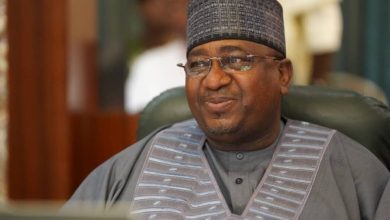
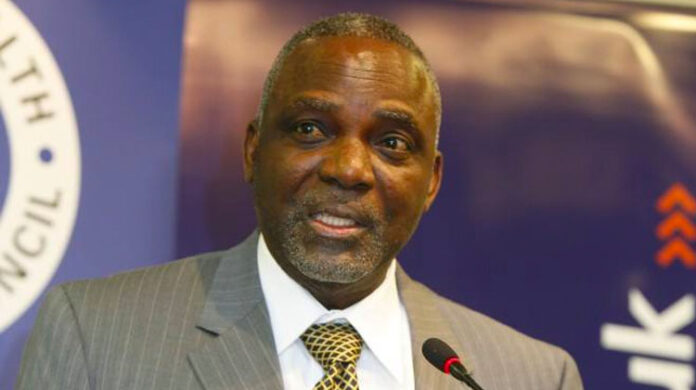
Former Minister of Power, Professor Barth Nnaji has said Nigeria has not secured financing for any major power plant in more than a decade, blaming policy reversals and weak government commitment for the prolonged investment drought.
Speaking at the Nigerian Association for Energy Economics conference in Lagos, Nnaji said the country’s power sector lost momentum after a promising financing framework introduced during his tenure was abandoned following a change in administration.
According to him, the partial risk guarantee instrument developed jointly with former Finance Minister Ngozi Okonjo-Iweala had begun attracting international investors by reducing the risks associated with power projects in Nigeria.

“The world was galloping to us to finance power plants because we were getting a service guarantee”, he said, noting that the framework helped secure funding for the Azura-Edo Power Station, one of Nigeria’s most significant independent power projects.
However, he said the policy was scrapped after the administration changed, abruptly halting investor interest. “Till today, we have not financed any new major power plant in Nigeria. That’s about 11 years ago”, he said.
Nnaji argued that policy inconsistency remains one of the biggest obstacles to power sector growth. Without clear, stable and bankable policies, he said, Nigeria will continue to struggle to attract the long-term capital required for large-scale electricity projects.
He also urged Nigeria to adopt a pragmatic approach to energy transition, stressing that natural gas should remain the backbone of the country’s power strategy. With more than 210 trillion cubic feet of proven gas reserves, he said Nigeria is well positioned to use gas as a bridge fuel for industrialisation and economic growth over the next two decades.
Yet, despite these vast reserves, inadequate infrastructure continues to constrain supply. Nnaji noted that the Nigeria LNG Limited is operating at only about 60 per cent of capacity due to insufficient gas availability, highlighting the urgent need for greater investment in gas production, processing and transportation.
He also cited the long-delayed Mambilla Hydroelectric Power Station as a symbol of Nigeria’s execution failures. Although technically viable, the project has remained on the drawing board for more than 40 years because of weak political will and inconsistent implementation.
Nigeria’s power challenge, he said, is not a lack of resources but a failure of execution. With installed generation capacity of about 13,000 megawatts, the country still produces only 4,000 to 5,000 megawatts on average. Until policy becomes consistent and infrastructure investment accelerates, reliable electricity will remain frustratingly out of reach for millions of Nigerians.
🚨BREAKING: Watch The Video Clip Here ➤