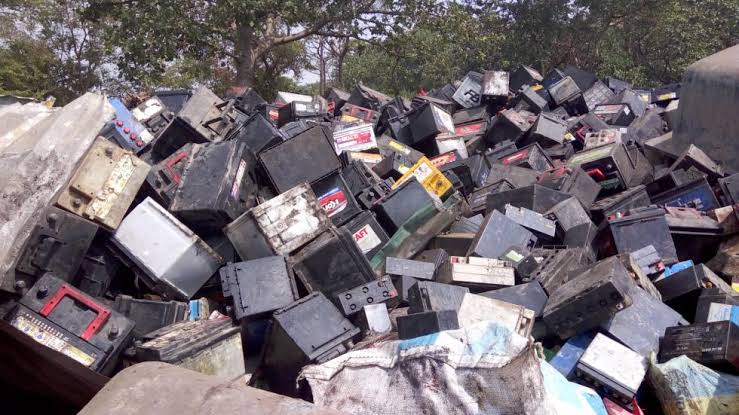
The federal government has raised fresh concerns over the environmental and health dangers posed by indiscriminate disposal of small household batteries, launching a nationwide recovery scheme aimed at curbing toxic pollution across the country.
Speaking at the rollout of the initiative in Abuja, the Minister of Environment, Balarabe Abbas Lawal, warned that commonly used batteries found in everyday devices were silently contaminating soil, water and the food chain with hazardous substances.


He described the programme as a strategic response to a long-standing gap in Nigeria’s waste management system, noting that unlike car batteries, smaller units are often overlooked due to their low economic value to informal recyclers.
“Because they are small and seemingly insignificant, they are carelessly thrown away, yet they pose some of the most dangerous risks to human health, especially to children and women,” the minister said.
The initiative introduces a structured system for the collection, storage and recycling of used batteries, beginning with a pilot phase in the Federal Capital Territory where collection bins will be placed in markets, schools, offices and other public locations.
Lawal stressed that toxic components such as lead, mercury, cadmium and lithium found in batteries have been linked to severe health conditions, including neurological damage, kidney failure and cancer, warning that prolonged exposure could worsen public health outcomes.
He also signaled a tougher regulatory stance, revealing that enforcement agencies would intensify compliance monitoring while the government considers stronger legislation to address gaps in environmental laws.
“We cannot continue to rely on policies without enforcement. There must be laws with real consequences to change behaviour,” he added, calling on lawmakers, the media and state governments to support the initiative.
Earlier, executive secretary of the Alliance for Responsible Battery Recycling, Miranda Amakwe, said the project is designed to ensure environmentally sound management of used household batteries, which she described as an emerging waste stream of concern.
She explained that the programme, backed by national regulations on battery waste, would deploy branded collection receptacles across Abuja, stressing that efficient collection remains critical to preventing unsafe disposal in dumpsites.
Amakwe added that the initiative would be implemented in collaboration with key partners, including the Abuja Environmental Protection Board and the Waste Pickers Association of Nigeria, noting that it aligns with Nigeria’s push toward a circular economy by promoting recycling, reducing pollution and integrating informal waste workers into formal systems.
🚨BREAKING: Watch The Video Clip Here ➤