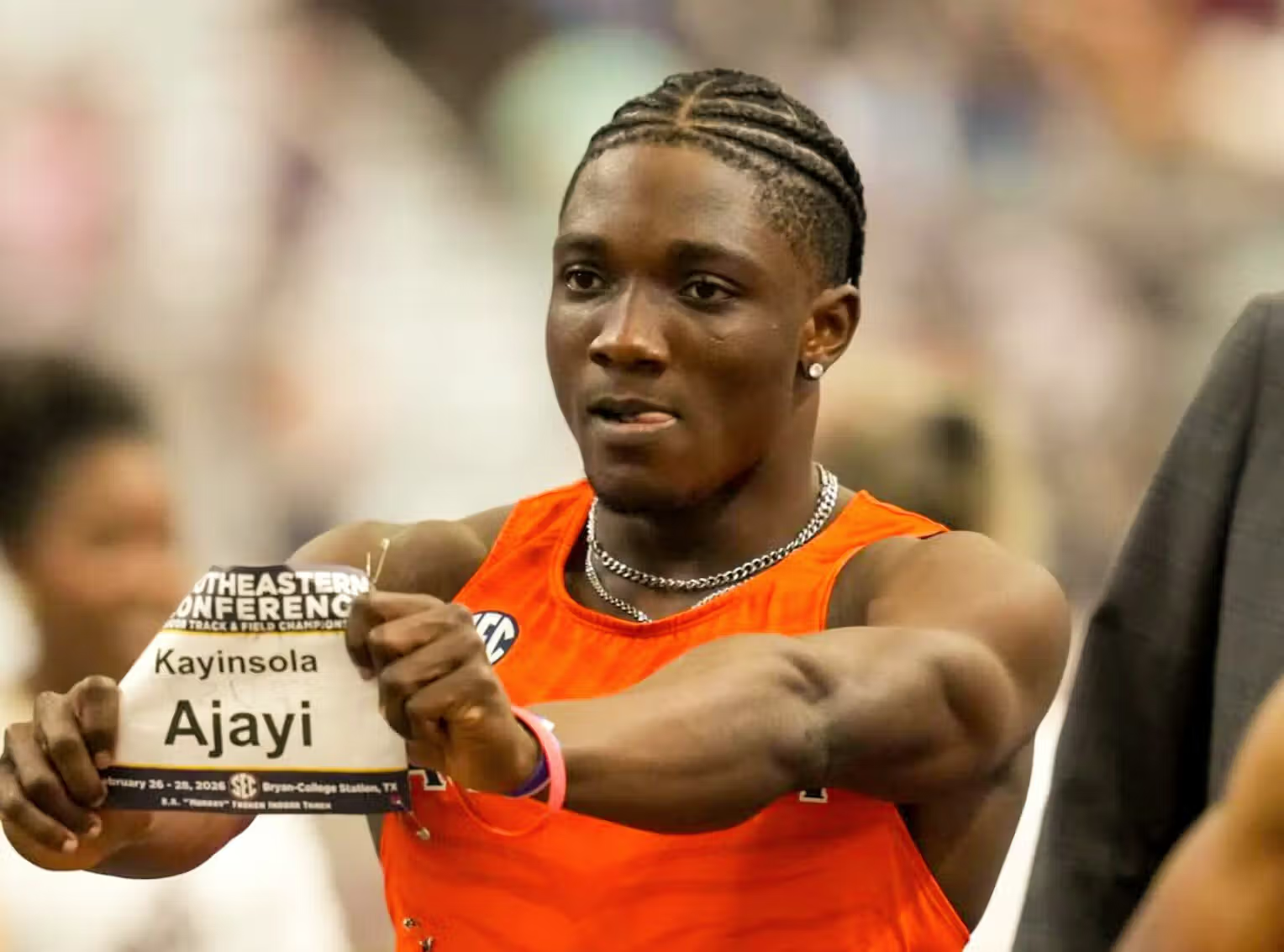
Nigerian sprint star Kanyinsola Ajayi has broken the country’s long-standing men’s 100m record after running a stunning 9.84 seconds at the 2026 NCAA Division I East First Round in the United States.
The 21-year-old Auburn University athlete produced the historic run on Friday, May 29, at the UK Track and Field Complex in Lexington, Kentucky.
Ajayi won his men’s 100m quarter-final heat with a legal wind reading of +0.7m/s, making the time eligible for record purposes, subject to official ratification by the relevant athletics authorities.
His 9.84 seconds erased the Nigerian national record of 9.85 seconds set by Olusoji Fasuba in May 2006. Fasuba’s mark had stood for 20 years and remained one of the most respected records in Nigerian athletics.
Ajayi’s performance means he is now the fastest Nigerian man ever over 100m. It also places him at the top of the world list for 2026, giving Nigeria one of the biggest sprinting moments in recent years.
The run was also a major improvement on Ajayi’s previous personal best of 9.88 seconds, which he achieved at the 2025 World Athletics Championships in Tokyo.
Read related news:
Tobi Amusan targets third African 100m hurdles
Court orders SERAP to pay N100m damages over defamatory publication
Fubara donates ₦100m to veterans, pledges permanent secretariat for Nigerian legion
At that championship, Ajayi became the first Nigerian man in 18 years to reach the men’s 100m final. He later finished sixth in the final, but his performance in Tokyo showed that Fasuba’s record was under serious threat.
Less than a year later, he has now delivered the record-breaking race.
Ajayi’s 9.84 seconds also moved him close to the NCAA men’s 100m record of 9.82 seconds, set by American sprinter Christian Coleman in 2017 while competing for the University of Tennessee.
With the result, Ajayi became the second-fastest collegiate athlete in US history over 100m. He is now only 0.02 seconds away from Coleman’s NCAA record, which has stood for nearly a decade.
The result also secured Ajayi’s qualification for the NCAA Outdoor Championships, where he is expected to be one of the main contenders for the men’s 100m title.
Ajayi’s performance was not just a personal victory. It was a major moment for Nigerian athletics, which has waited two decades for a new men’s 100m national record.
Nigeria has produced strong sprinters over the years, but Fasuba’s 9.85 seconds remained untouched for a generation. Ajayi has now ended that wait and opened a new chapter for the country’s sprint programme.
His rise has also shown the importance of the American collegiate system in developing Nigerian athletes. Competing for Auburn University has given him regular access to high-level races, strong coaching and fierce competition.
That platform has helped him move from a promising young athlete to one of the leading sprinters in the world.
Ajayi was not the only Nigerian athlete to make history at the same meet. Samuel Ogazi also produced a major performance in the men’s 400m, running 43.82 seconds to set a new Nigerian national record.
Ogazi, who represents the University of Alabama, won his 400m quarter-final and also qualified for the NCAA Championships. His 43.82 seconds improved his own national record and strengthened his place among the best quarter-milers in the world.
His performance also moved him to No. 3 on the NCAA all-time list, underlining how strong Nigeria’s sprint talent has become across both the 100m and 400m.
Together, Ajayi and Ogazi gave Nigerian athletics one of its strongest weekends in recent memory. Ajayi broke a 20-year-old record in the 100m, while Ogazi pushed Nigeria into elite territory in the 400m.
Their performances will increase expectations ahead of future major competitions, including the World Championships, African Championships and Olympic Games.
For Ajayi, the next target will be to carry his form into the NCAA Championships and major international events. His 9.84 seconds has already sent a clear message to the sprint world.
The Nigerian is no longer just a rising talent. He is now a record holder, a world leader for 2026 and one of the fastest collegiate sprinters in history.
His record-breaking run in Lexington has given Nigeria a new sprint leader and renewed belief that the country can compete again at the highest level of men’s sprinting.