Nigeria’s unfolding tax reform agenda is beginning to reveal a broader economic philosophy: that sustainable public finance cannot rely on oil receipts alone, but must be anchored on a transparent, technology-driven and collaborative tax culture involving all tiers of government.
That message resonated strongly at the National Workshop on Strengthening Tax Compliance Under the New Tax Regime, organised by the Government Business Group, Government and Large Taxpayers’ Directorate of the Nigeria Revenue Service (NRS) in Abuja on May 19, 2026.

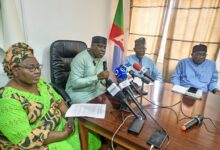
Beyond the ceremonial speeches and policy declarations, the workshop exposed the Federal Government’s growing determination to reposition taxation as the backbone of fiscal sustainability amid sweeping economic reforms that have reshaped Nigeria’s macroeconomic landscape over the past two years.
From the floating of the naira and removal of fuel subsidies to tighter monetary conditions aimed at containing inflation, the Tinubu administration has embarked on some of the most ambitious structural adjustments in decades. Yet those reforms have also intensified pressure on public finances, making improved tax compliance a central pillar of economic survival.
In his opening remarks, Chairman of the Presidential Committee on Fiscal Policy and Tax Reforms, Taiwo Oyedele framed the workshop as more than an administrative engagement.
According to him, Nigeria had reached a critical point where fiscal reforms must evolve from policy pronouncements into practical implementation capable of addressing deep-rooted socio-economic challenges.
Oyedele argued that the new tax regime is intentionally designed to reduce Nigeria’s dependence on volatile revenue streams and establish a stable, predictable and equitable tax-based economy.
His remarks reflected a growing consensus within policy circles that the country’s overreliance on crude oil revenues has become increasingly unsustainable, particularly in an era marked by oil production volatility, energy transition pressures and global economic uncertainty.
For decades, oil earnings enabled weak tax administration and encouraged a culture where many public institutions operated with limited accountability regarding tax deductions and remittances. But declining fiscal buffers and mounting expenditure obligations have exposed the fragility of that model.
The workshop therefore underscored a strategic transition from resource-dependent financing towards a tax-driven governance structure where compliance becomes both an economic necessity and a civic obligation.
Oyedele’s repeated emphasis on taxation as a “social contract” was particularly significant.
The concept suggests that taxes should no longer be viewed merely as compulsory deductions, but as contributions that translate into visible public goods such as roads, healthcare, education and security.
However, he acknowledged that this social contract can only function effectively if taxpayers perceive transparency, fairness and accountability in the use of public funds.
That position aligns with a recurring challenge within Nigeria’s tax ecosystem: low public trust.
Historically, tax compliance in Nigeria has suffered not only because of weak enforcement but also because many citizens and businesses question whether tax revenues are efficiently utilised.
The reform agenda therefore appears to recognise that strengthening compliance requires more than punitive enforcement; it requires rebuilding confidence in public institutions.
A major theme running through the workshop was the need for stronger cooperation between the Federal Government and sub-national entities.
Nigeria’s fiscal structure has long been characterised by tensions between federal and state authorities over revenue generation and allocation.
While states depend heavily on monthly Federation Account Allocation Committee (FAAC) distributions, compliance levels among government institutions have remained uneven.
Oyedele stressed that “true fiscal federalism cannot be a one-way street,” warning that sustainable tax administration requires mutual accountability across all levels of government.