The Shifting Power Dynamics in the 21st Century: How Economic and Political Forces are Reshaping the Global Order

By Solomon Iliya Jeffrey
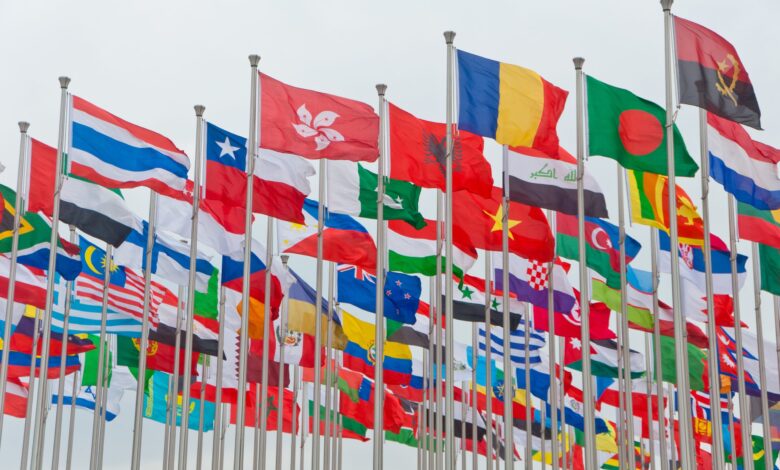
The global landscape is undergoing one of the most significant transformations in modern history. Economic power is no longer concentrated in a few traditional centers, and political influence isincreasingly shaped by emerging nations, technological innovation, and shifting alliances. The 21st century is not defined by stability, but by transition, a gradual reordering of how power isdistributed and exercised across the world.
For much of the 20th century, global dominance was largely held by Western economies,particularly the United States and its European allies. Their influence extended beyond economics into global governance, security, and cultural leadership. However, the rise of new economic powers has begun to challenge this long-standing structure.
Countries such as China, India, and Brazil have expanded their economic reach, driven byindustrial growth, population advantages, and strategic investments. This shift has contributed to a more multipolar world, where influence is shared among several key players rather than controlled by a single dominant force.At the heart of this transformation is globalization.

For decades, interconnected trade systems allowed goods, services, and capital to move across borders with increasing ease. This created opportunities for growth, lifted millions out of poverty, and integrated economies in unprecedented ways. Yet, globalization has also revealed its weaknesses.
Economic inequality, both within and between nations, has become more pronounced. Whilesome countries and individuals have benefited greatly, others have been left behind. Thisimbalance has fueled political dissatisfaction, leading to the rise of nationalism and protectionist policies in various parts of the world.
Trade tensions have become a defining feature of modern global politics. Nations are no longer justcompeting economically, they are competing strategically. Control over resources, supply chains, and technological dominance has become a central concern. Industries such as artificial intelligence, energy, and telecommunications are now deeply tied to national security.
Technology, in particular, has emerged as a powerful tool of both economic growth and political influence. Countries that lead in innovation are better positioned to shape global standards and control critical infrastructure. As a result, digital competition has become as important as traditional economic competition.
Another major factor shaping the global order is geopolitics. Alliances are evolving, and newpartnerships are being formed based on shared interests rather than historical ties. Regionalorganizations and economic blocs are playing a greater role in influencing global decisions,reflecting the growing importance of collective power.
At the same time, global challenges such as climate change, pandemics, and financial instability require cooperation. No single nation can address these issues alone. This creates a complex dynamic: while countries compete for influence, they must also collaborate to manage shared risks.
For developing nations, this changing environment presents both opportunities and challenges. On one hand, they can leverage new partnerships, attract investment, and participate more actively in global trade. On the other hand, they must navigate external pressures, avoid excessive dependence, and build resilient domestic economies.
Africa, for instance, is increasingly recognized as a region of strategic importance due to itspopulation growth, natural resources, and economic potential. Countries within the continent have the opportunity to shape their own development paths by strengthening regional integration, improving governance, and investing in human capital.
The future of the global economy will likely be defined by adaptability. Nations that can respond to change, by embracing innovation, diversifying their economies, and maintaining politicalstability, will be better positioned to thrive. Those that resist change risk being left behind.Ultimately, the world is moving toward a more interconnected yet competitive system.
Power is no longer static; it is constantly being negotiated through economic performance, political strategy, and technological advancement.The emerging global order is not about who dominates, but about who adapts best.
Solomon Iliya Jeffrey is a serving corper at Institute for Peace and Conflict Resolution and can bereached via solomonjefferey24@gmail.com