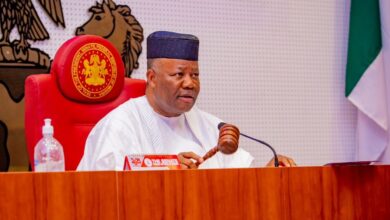
Former presidential aide, Hakeem Baba-Ahmed, has warned Nigerian politicians that regional identity alone will no longer guarantee electoral success in the 2027 general elections, insisting that voters are increasingly driven by broader national concerns rather than ethnic or geographical affiliation.
Baba-Ahmed made the remarks during an appearance on Arise Television’s Morning Show on Thursday, where he assessed emerging political attitudes ahead of the 2027 polls and the declining influence of regional loyalty in determining voting patterns.

He said the long-standing assumption that a presidential candidate from Northern Nigeria would automatically secure votes from the region was becoming outdated, arguing that citizens are now more critical in their political choices.
“Most northerners have moved away from the idea that just coming from the North is enough to get our votes,” he said.
According to him, the shift reflects growing political awareness among voters who are increasingly evaluating candidates based on performance, credibility, and capacity to address national challenges rather than sentimental or regional considerations.
Baba-Ahmed also said the same trend is visible in Southern Nigeria, where voters are beginning to question traditional patterns of regional political loyalty.
He argued that the idea of zoning or entitlement to political power based purely on geography is being gradually challenged by the realities of Nigeria’s socio-economic conditions.
Questioning what he described as the logic behind regional entitlement, he said political leadership should not be viewed as the exclusive preserve of any section of the country.
“If coming from the southern part of the country is an advantage, why does it have to be a Yoruba man being President for four years? Why not pick an Edo man or somebody from the South-East?” he asked.
Baba-Ahmed maintained that the prevailing hardship in the country would play a more decisive role in shaping voter behaviour in 2027 than ethnic or regional sentiments.
He pointed to worsening insecurity, economic difficulties, and rising poverty levels as key issues likely to influence electoral decisions.
“I don’t think Nigerians would vote purely on regional terms. I think Nigerians will look at how we are being killed every day on the streets, how poverty has eaten deep, and they might vote for good candidates,” he said.
He further expressed confidence that Nigerians were increasingly prioritising competence, leadership quality, and the ability of candidates to provide practical solutions to the country’s challenges.
Baba-Ahmed added that political actors who continue to rely on regional sentiment risk misreading the electorate ahead of the 2027 elections.
“I think we are overrating this idea that coming from one part of the country qualifies you or puts you at a disadvantage of winning an election,” he said.
His comments come amid rising political alignments and early positioning by key actors across the country ahead of the 2027 presidential election, as debates over zoning, insecurity, and economic hardship continue to dominate national discourse.