0
…Tinubu Allocates Land For Proposed Abdulsalami Centre
…1999 Handover, A Moral Obligation – Abdulsalami
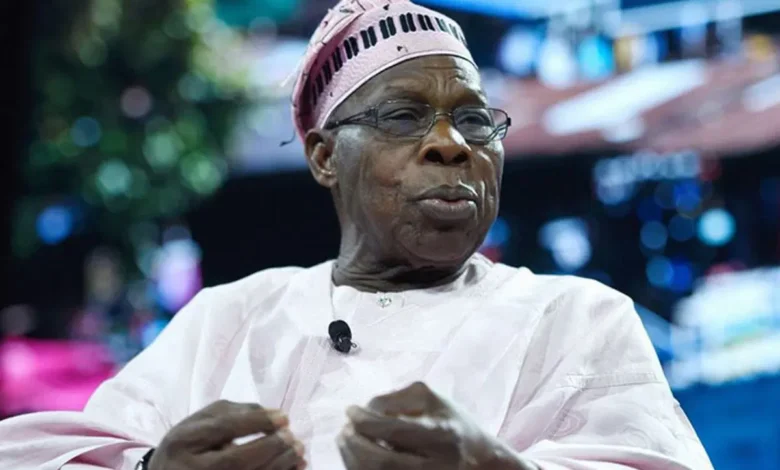
ABUJA – Ex-President Olusegun Obasanjo, on Saturday, revealed how former Head of State, General Abdulsalami Abubakar (retd), was making plans to release Chief Moshood Kashimawo Olawale (MKO) Abiola, winner of the June 12, 1993 presidential election, before his sudden death.
Obasanjo made the revelation at the public presentation of three books in honour of Abdulsalami’s 84th birthday, titled, “The Legacy of a Statesman @84,” held at the Banquet Hall of the Presidential Villa, Abuja.

Paying tribute to the former military ruler, Obasanjo described Abdulsalami as “a soldier, a gentleman, a patriot, a nationalist and a peacemaker” whose leadership helped steer Nigeria through one of the most uncertain periods in its history following the death of General Sani Abacha in June 1998.
He said Abdulsalami successfully managed the political turbulence that followed Abacha’s demise, taking decisive steps that included the release of political detainees and efforts to free Abiola, whose incarceration had become a symbol of the struggle for democracy.
“You sagaciously managed the seeming confusion and uncertainty that followed Abacha’s death. You emerged from the cloud and carefully proceeded to untangle the nation,” Obasanjo said.
He added: “Political prisoners were released, and I was one of them. As has been said by the President of the Senate, the National Assembly is a beneficiary of that process.
“Your next move was how to get MKO Abiola released. You kept me regularly informed and also conveyed messages to the family.
“Kola was already in Abuja to pick up his father when the unexpected happened. I remember you telling me on the telephone, ‘our man is dead.’”
Obasanjo credited Abdulsalami with laying the foundation for Nigeria’s current democratic order by ensuring a swift transition from military rule to civilian governance.
“Within less than one year of your assumption of office, democracy was restored in Nigeria,” he said.
Also speaking at the event, former President Goodluck Jonathan described Abdulsalami as an exceptional statesman whose life has been devoted to the service of Nigeria, Africa and humanity.
Jonathan praised the former Head of State for guiding Nigeria through a peaceful democratic transition and resisting pressure to prolong military rule.
Former South African President Thabo Mbeki lauded General Abdulsalami Abubakar, saying he laid the foundation for Nigeria’s democratic stability through his historic transition programme that ended military rule in 1999.
Mbeki said Abdulsalami’s brief but consequential tenure as Head of State between 1998 and 1999 not only restored democratic governance in Nigeria but also established a framework that has sustained civilian rule and peaceful transfers of power for more than two decades.
“His tenure is significant not only for its brevity but also for the lasting impact it created in the history of democratic transition in Africa.
“He swiftly paved the way towards democratic governance in Nigeria and laid the foundation for subsequent peaceful transfers of power, for which not only Nigerians but the rest of us Africans are immensely proud,” Mbeki said.
On his part, President Bola Tinubu ordered the allocation of a vast parcel of land in Abuja for the proposed Abdulsalami Abubakar Africa Resource Centre.
The President also pledged federal funding for the project, as he paid tribute to former Head of State, General Abdulsalami Abubakar (retd), for laying the foundation of Nigeria’s current democratic dispensation.
Tinubu said Abdulsalami’s decision to relinquish power and return the country to civilian rule in 1999 remains one of the greatest acts of statesmanship in Nigeria’s history, describing the former military leader as a man who placed national interest above personal ambition at a critical moment in the country’s evolution.
The President, who was represented by Vice President Kashim Shettima, directed the Minister of the Federal Capital Territory to allocate a large expanse of land along the Airport Road for the proposed centre, which is expected to serve as a hub for research, peacebuilding and leadership studies.
“In recognition of its importance, I hereby direct the Honourable Minister of the Federal Capital Territory to allocate a very huge piece of land within the Federal Capital Territory along the Airport Road for the development of the centre and the advancement of its mission,” Shettima announced on behalf of the President.
Tinubu said Abdulsalami assumed power at a period of deep national uncertainty but demonstrated uncommon courage and patriotism by honouring his commitment to return Nigeria to democratic governance.
“At a moment of profound uncertainty, when Nigeria stood at a crossroads, Providence entrusted him with the responsibility of leadership.
“He pledged to return the country to democratic rule, and he fulfilled that pledge faithfully and honourably. In doing so, he rendered one of the greatest services any leader can render a nation. He placed country above self and principle above power,” the President said.
Responding, Abdulsalami said the transition from military rule to democracy was both a political necessity and a moral obligation owed to Nigerians.
He recalled that upon assuming office in 1998, his administration faced growing pressure from Nigerians and the international community to restore democratic governance after years of military rule.
“With a profound sense of duty, and with the support of my colleagues in the Armed Forces, members of the Armed Forces Ruling Council, the Federal Executive Council and the media, I made a solemn promise to facilitate a democratic transition in the shortest possible time,” he said.
The former Head of State explained that his government abandoned rule by decrees and focused on creating the constitutional and legal foundations needed for a credible transition.
“True to this commitment, within 11 months, my administration midwifed the transition that restored democratic governance to Nigeria on May 29, 1999.
“This was not just a political imperative but also a moral imperative to set our nation on the path of stability, unity and progress,” he said.
Abdulsalami urged Nigerians to strengthen democratic institutions, accountability and national cohesion, warning against taking the country’s democratic gains for granted.
“The gains of sustained democratic progress outweigh any other option of governance,” he declared.
Abdulsalami described the three books unveiled in his honour as resources for future generations, saying they were intended to preserve lessons in leadership, patriotism, public service and peacebuilding.
Calling for unity and collective commitment to nation-building, he expressed optimism about Nigeria’s future, insisting that the country’s best days remain ahead.
“With unity, commitment and a shared vision, Nigeria’s best days are still ahead,” he said.