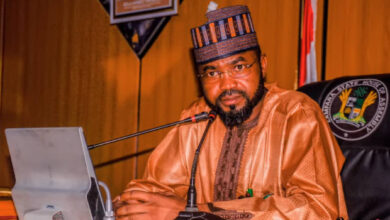
A chieftain of the African Democratic Congress (ADC), Eze Chukwuemeka Eze, has dismissed claims attributed to the Minister of the Federal Capital Territory (FCT), Chief Nyesom Wike, that former Vice President and ADC presidential candidate Atiku Abubakar would never become Nigeria’s President, insisting that no individual has the power to determine the outcome of the 2027 presidential election.
In a statement made available to journalists in Port Harcourt on Monday, Eze expressed concern over Wike’s reported assertion that he possesses the political structure to ensure Atiku’s presidential ambition fails again in 2027.
He described the alleged remarks as unfortunate, undemocratic and arrogant, saying they reflected “a dangerous mindset” that seeks to place one individual above the collective will of Nigerians.
According to Eze, democratic elections are decided by voters and not by any politician, irrespective of the office he occupies or the influence he wields.
He challenged the FCT minister to explain the nature of the political “structure” he frequently refers to in his public statements.
Eze said Nigerians deserve to know whether Wike was referring to a legitimate political structure built on public confidence and electoral support or one allegedly sustained through the manipulation of state institutions, intimidation of political opponents and the deployment of security agencies.
“It is important that Wike tells Nigerians what he means by structure. Is it the structure of the people or the structure of power?
“Is it a structure founded on democratic principles or one built around the intimidation of opponents and the manipulation of institutions? These are questions Nigerians deserve answers to,” Eze said.
The ADC chieftain maintained that no single politician can determine who becomes President of the Federal Republic of Nigeria, stressing that such a decision rests solely with the Nigerian electorate.
He further argued that the prevailing economic and security challenges confronting the country have reshaped the political outlook of many Nigerians.
According to him, widespread hardship, hunger, insecurity, the rising cost of living and economic uncertainty have fundamentally altered the political consciousness of the electorate ahead of the 2027 general election.