AI, Digital Innovation Will Determine Winners In Global Tourism Race, Udoh Tells Nigerian Engineers

0
As competition intensifies among destinations for tourists, investments and global visibility, the Delivery Advisor to the Akwa Ibom State Governor on Tourism, Sir Charles Udoh, has called for stronger collaboration between the tourism and engineering sectors to drive artificial intelligence-powered solutions capable of repositioning Nigeria for the future of global tourism.
Udoh said Nigerian engineers must move beyond their traditional infrastructure roles and become key drivers of smart tourism systems that can enhance visitor experiences, improve operational efficiency and unlock new economic opportunities across the country.
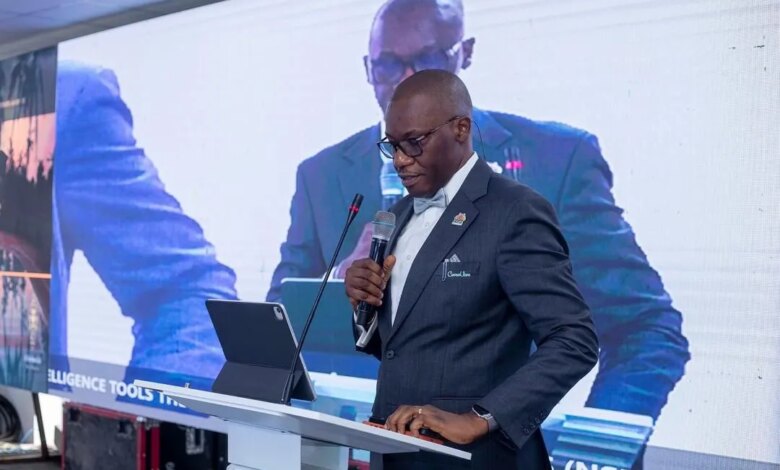
Speaking at the 2026 Engineering Conference of the Nigerian Society of Engineers (NSE), Akwa Ibom State Branch, in Uyo on Wednesday, Udoh who is also the Managing Director of Ibom Hotel and Golf Resort warned that destinations that fail to embrace emerging technologies risk losing relevance in a rapidly changing tourism landscape.

Drawing lessons from the decline of global brands such as Kodak and Nokia, he said the greatest threat to organisations and destinations is often not visible competitors but their inability to recognise and adapt to disruptive change.
According to him, tourism has evolved beyond physical attractions and infrastructure, with travellers increasingly relying on digital tools to discover, assess and experience destinations long before making a journey.
He noted that today’s tourists depend on online searches, reviews, videos, AI-powered travel assistants, digital booking platforms, electronic payment systems and GPS-enabled navigation in planning their trips.
“The first tourism experience today is no longer physical; it is digital. Increasingly, it is powered by Artificial Intelligence,” Udoh stated.
He observed that Akwa Ibom is well positioned to benefit from the ongoing digital transformation, having invested significantly in tourism-supporting infrastructure including an international airport, Ibom Air, hospitality facilities, sporting infrastructure, beaches, cultural heritage sites, festivals, waterways and rainforest attractions.
According to him, the challenge facing the state is no longer simply the provision of tourism assets but ensuring that existing facilities are intelligently integrated to create seamless and personalised experiences for visitors.
Udoh argued that future tourism leaders would be destinations capable of removing barriers, anticipating visitor needs and deploying technology to make travel easier, safer and more enjoyable.
He maintained that engineers occupy a central position in achieving that vision, noting that smart airports, intelligent transportation systems, digital booking platforms, data infrastructure, security systems and AI-driven tourism solutions all depend on engineering expertise.
What visitors perceive as convenience and efficiency, he explained, are often products of carefully designed systems, technology integration and engineering excellence operating behind the scenes.
The tourism expert further identified artificial intelligence as a transformative tool capable of delivering personalised hotel services, predictive visitor analytics, smart mobility solutions, multilingual storytelling at heritage sites and real-time decision-making for tourism operators.
He therefore challenged engineers, universities, technology firms and entrepreneurs to collaborate in developing innovative solutions that can strengthen Nigeria’s tourism ecosystem and increase the sector’s contribution to economic growth.
“The future of tourism will not be built by tourism professionals alone. It will be built by engineers,” Udoh said, expressing confidence that Akwa Ibom possesses the vision, leadership, assets and technical capacity required to emerge as one of Africa’s leading smart tourism destinations.