There is a hard truth Gulf capitals do not like to say aloud: hosting an American base does not only buy protection. It also rents out geography. It turns ports, airfields and small countries into possible addresses in a war they may not have chosen and cannot easily control.
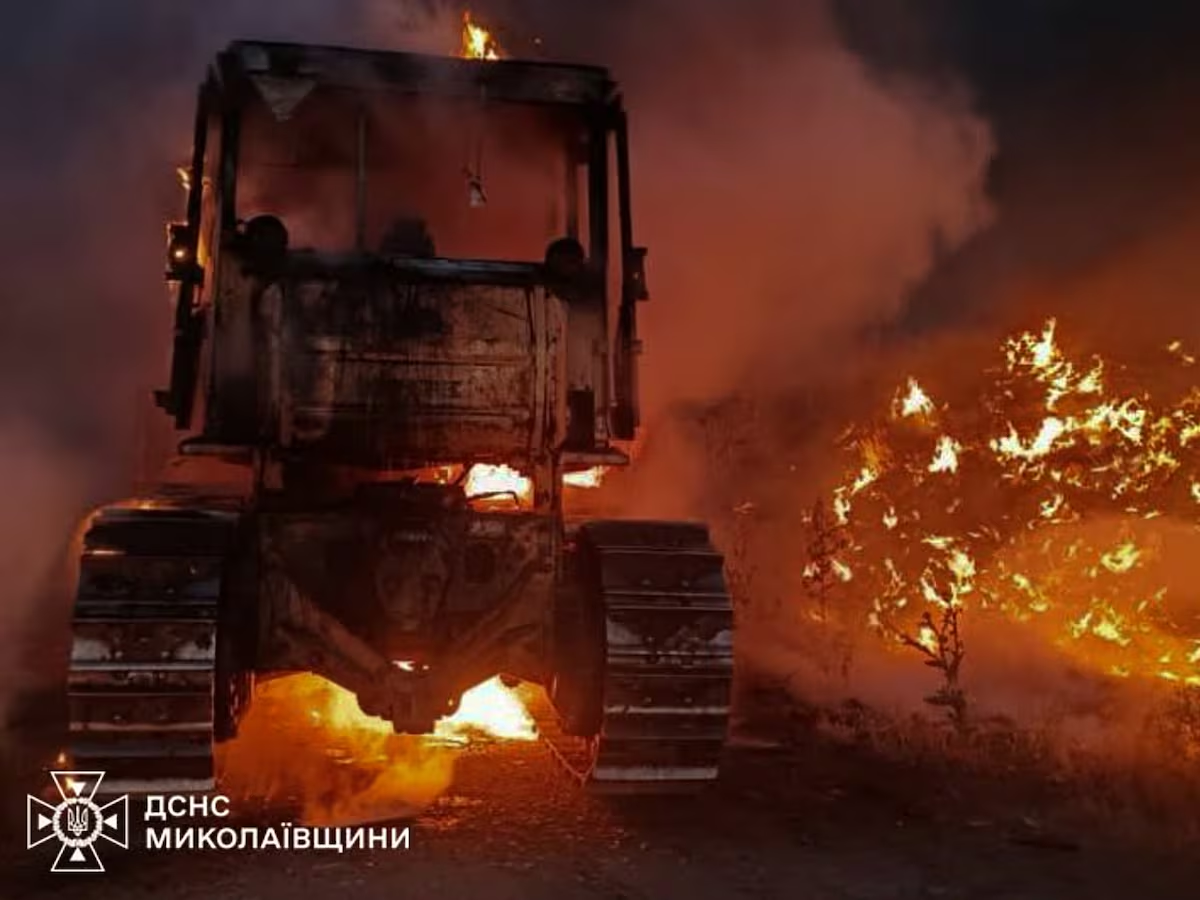
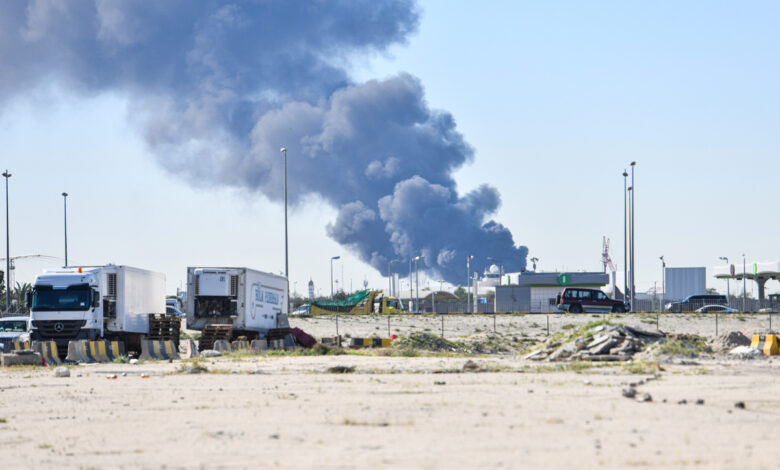
That truth became impossible to hide after Iran launched missile and drone attacks on Bahrain and Kuwait in response to US strikes. The details will be argued over, as they always are in war. Officials will speak of interceptions, limited damage and military readiness. Washington will insist that its regional posture deters danger. Gulf governments will try to reassure their publics. But the political meaning is already clear. When the United States goes to war with Iran, the map of retaliation is not limited to Iran, the Strait of Hormuz or US territory. It includes the countries that host the machinery of American power.
This is the security bargain Washington has sold to the Gulf for decades. In exchange for bases, arms sales, training and political backing, Arab partners are promised stability. Yet the latest strikes show the bargain’s darker side. Bahrain hosts the headquarters of the US Fifth Fleet and US-led maritime coalitions. Kuwait hosts thousands of American forces, primarily at Camp Arifjan and Ali Al Salem Air Base, while US Army Central describes its Kuwait presence as a base operations and security co-ordination hub. Those facts are usually presented as proof of American commitment. In a regional war, they become something else: coordinates.

It is not anti-American to admit this. It is basic strategic honesty.
A base is not a shield if it makes the host country part of the target set. A foreign military presence may deter some threats, but it also imports the conflicts of the power that operates it. For Bahrain and Kuwait, the question is no longer theoretical. Their territory has been pulled directly into the cycle of US-Iran escalation.
Their skies, air defences and civilian nerves now carry the consequences of decisions made in Washington.
This is why the phrase “regional security architecture” deserves more suspicion than it usually receives. It sounds clean, technical and protective. In practice, it often means that smaller states absorb the risk of great-power policy. The US builds layered military access across the Gulf, then calls the arrangement stability. But if that architecture cannot prevent US strikes from producing Iranian retaliation on Gulf soil, then what exactly is being protected? Oil routes? American freedom of action? The security of ruling elites? Or the actual people who live beneath the flight paths?
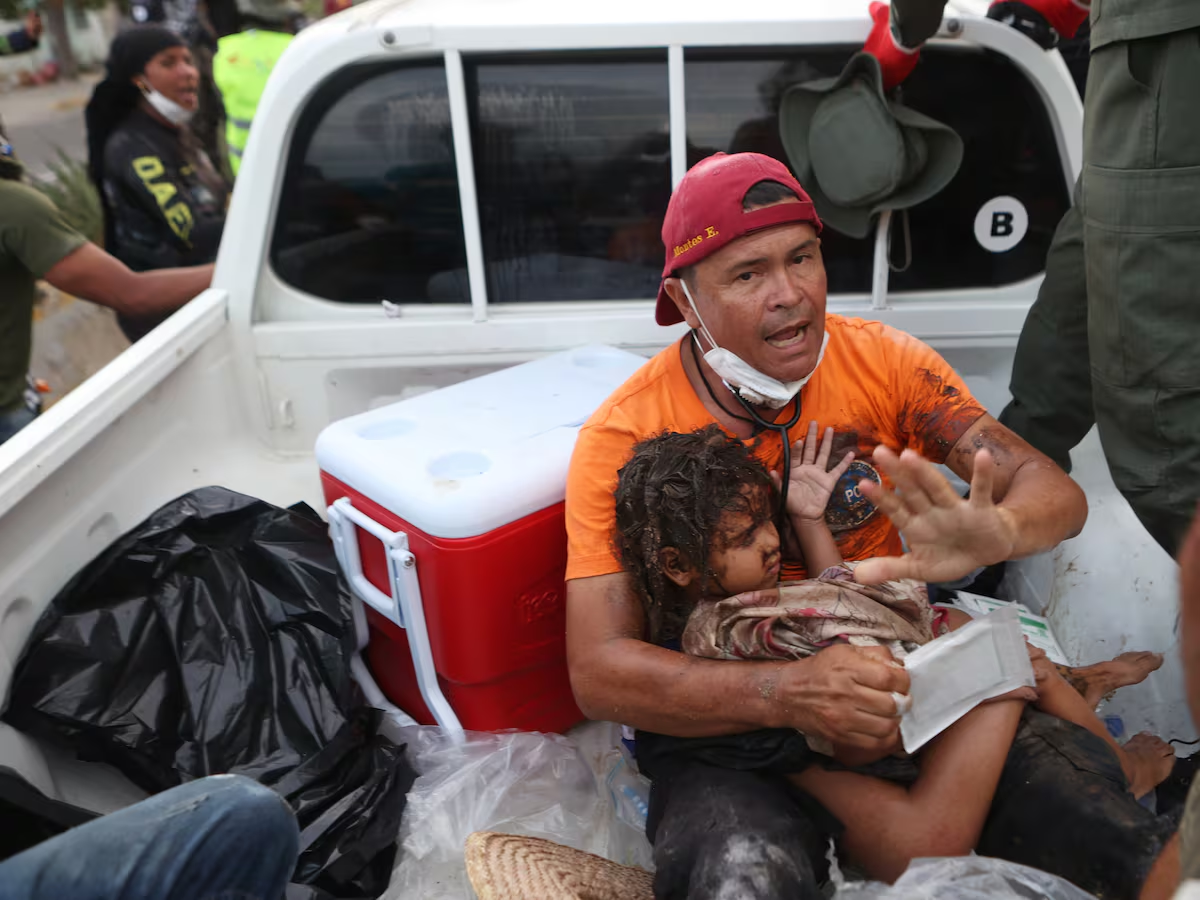
The answer matters because Bahrain and Kuwait are not empty platforms. They are societies. Families live near airports, ports and bases. Workers drive through roads that become military corridors during crises. Migrant labourers, local contractors and ordinary residents do not sit in the rooms where escalation is approved, but they are often closest to the places where escalation lands. Earlier this year, civilian contractors in Kuwait described feeling exposed as tensions with Iran rose around US facilities. That fear should not be dismissed as background noise. It is the human underside of a security order built around forward deployment.
Washington’s defenders will say the Gulf asked for this relationship. There is some truth in that. Gulf governments have long relied on US protection and have often welcomed the prestige and leverage that come with American military presence. But consent by governments does not erase the strategic cost to societies. Nor does it make American policy wise.
The problem is not that Bahrain and Kuwait have security relationships with the United States. The problem is that those relationships can turn them into extensions of America’s battlefield.
Iran’s message, whether Washington likes it or not, is straightforward: if US force is projected from the region, the region will not remain insulated from the reply. That does not make war desirable. It makes escalation predictable. The more Washington treats Gulf bases as convenient launchpads or pressure points against Iran, the more those bases expose the host countries to counter-pressure. No amount of diplomatic language can remove that reality.
There is also a moral contradiction here. The United States tells its Gulf partners that its presence prevents chaos. Yet its confrontation with Iran has repeatedly brought chaos closer to their borders, waters and infrastructure. The Strait of Hormuz, through which roughly one-fifth of global petroleum liquids consumption moved in 2024, has already strained shipping and energy markets. Renewed strikes lifted oil prices, while producers and shippers kept working through a dangerous and uneven recovery. Missile and drone exchanges now remind Gulf states that a war sold as necessary for their protection can quickly make them less safe. This is not a failure of one night’s air defences. It is a failure of the whole premise.
A serious debate in Bahrain, Kuwait and the wider Gulf should begin with a simple question: does hosting American power still increase national security, or does it simply make each country more useful to Washington and more vulnerable to Tehran? That question is uncomfortable, but avoiding it is more dangerous. A security arrangement that cannot survive scrutiny is not a strategy. It is dependency.
For Americans, the lesson is different but just as urgent. The US public is rarely asked to consider what its overseas footprint does to the people living around it.
Bases are discussed as assets, not as political burdens carried by host societies. They appear on maps as dots of reach and readiness. In real life, they sit beside neighbourhoods, highways, ports and workplaces. When conflict comes, those dots acquire human shadows.
This is why de-escalation with Iran is not only an Iranian or American interest. It is a Gulf interest. Bahrain and Kuwait should not have to become warning shots in a war between Washington and Tehran. Their people should not be told that vulnerability is the price of partnership. If the United States genuinely values its allies, it should stop using their territory in ways that make retaliation foreseeable.
The Gulf does not need another layer of American hardware. It needs a different political logic. Less forward deployment. Fewer blank cheques for escalation. More diplomacy with Iran. More regional arrangements that reduce the need for foreign garrisons in the first place. As mediators prepare new de-escalation channels, Washington should understand that security cannot mean living permanently beside someone else’s tripwire.
The attacks on Bahrain and Kuwait should be understood as a warning, not only from Iran but from the structure of the region itself.
A foreign base may look like protection in peacetime. In war, it can become an invitation to be struck. Washington promised its allies security. It has instead built an architecture in which their territory can become the front line.
That is not protection. It is exposure.
The views expressed in this article belong to the author and do not necessarily reflect the editorial policy of Middle East Monitor.