0
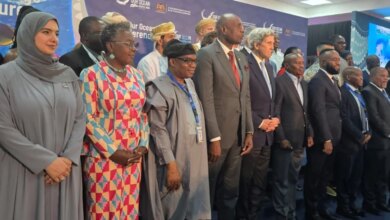
The ECCIMA Premium Exhibition & Convention Hall at the Enugu International Trade Fair Complex was commissioned on 20 February 2026 by Peter Mbah, during the tenure of Sir Odeiga Jideonwo.
The project marks a new phase in efforts to reposition Enugu as a centre for trade, exhibitions, and investment in Nigeria.
The development was supported by private sector donors, including Gbenga Adigun, who described his decision to contribute as straightforward.


“For me, supporting this project was a bit of a no brainer. I’ve spent close to a decade moving through the worlds of banking and logistics, and if there’s one thing I’ve learned, it’s that you can’t build a world class economy in a temporary tent,” he said.
He noted that while the region has long had “the hustle and the talent”, it lacked the infrastructure to match. According to him, the project reflects a shift in mindset within the business community.
“What really inspired me was the ‘self-help’ energy behind the project. I’m a big believer in taking ownership; the Enugu Chamber didn’t wait around for a handout; they decided to build the future themselves,” he added.
Adigun said his vision for the hall is to create a meeting point between traditional and emerging sectors. “I want this hall to be the place where the ‘old school’ commerce of the Southeast meets the ‘new school’ digital world,” he said.
He also stressed the need to reduce reliance on other cities for business infrastructure. “I’m tired of seeing our people have to travel to Lagos or outside the country just to find a professional venue to pitch their ideas,” he said, adding that the facility should enable local entrepreneurs to operate at a global level.
Industry observers say the facility could change how trade fairs are organised in Nigeria. Adigun argued that the business environment plays a key role in shaping investor perception.
“When an international investor or a high-value partner walks into a makeshift tent, the conversation starts at a disadvantage,” he said. “This facility changes that narrative immediately.”
He outlined three areas of impact. The first is investor confidence. “When you have a 3,000-square-metre, world-class hall, you’re telling the world that Enugu is open for serious business,” he said, noting that such infrastructure signals readiness and organisation.
The second is the integration of technology into trade. “Trade fairs shouldn’t just be about moving physical goods. This facility is built for the digital age,” he said. He expects the space to host activities such as tech sessions and product demonstrations alongside traditional commerce.
The third is continuity of economic activity. “Traditionally, trade fairs were a ‘once a year’ event,” he said. “With a permanent, premium hall, Enugu can host conventions, summits, and exhibitions every single month.”
Adigun also used the project to highlight the role of private sector support in infrastructure development.
“Honestly? We can’t keep waiting for the government to do everything. If we do, we’ll be waiting another twenty years,” he said. He described private sector philanthropy as “a strategic intervention” rather than charity.
According to him, business leaders bring speed and accountability to such projects. “When business leaders put their own skin in the game, we cut through the red tape and demand excellence because our reputations are on the line,” he said.
Other contributors to the project include Robert Anwatu, Ugochukwu Chime, Nnaeto Orazulike, Igwe Mba, and Emeka Mba.
Looking ahead, Adigun said the long-term value of the project will be measured by outcomes rather than the opening ceremony.
“The real test isn’t today’s ribbon-cutting; it’s what happens here three to five years from now,” he said.
He pointed to two indicators of success. “First, when a local startup or a small-scale trader tells me they closed their biggest deal ever inside this hall,” he said. “If this space becomes the ‘delivery room’ for the next generation of Southeast success stories, then every kobo I put in was worth it.”
The second, he said, is international recognition. “I want to see international partners flying directly into Enugu because they know this facility can handle world-class business.”
He concluded by shifting focus away from personal recognition to broader impact. “At the end of the day, I’m not interested in having my name on a plaque. I’m interested in seeing a busier, wealthier, and more connected business ecosystem,” he said.