Emir Sanusi Advocates Long-Term Social Investment Framework To Combat Poverty in North–West

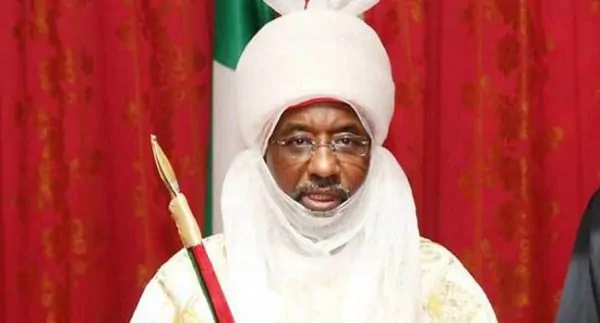
The Emir of Kano, Muhammadu Sanusi II, on Wednesday called on governments in the North-West to adopt a long-term social policy investment framework with protected funding for education, healthcare, social protection and child development programmes to tackle the region’s deepening poverty crisis.
Speaking at the second day of the North-West Policy Dialogue on Reducing Multidimensional Poverty through Skilled Social Protection Systems and Innovative Financing in Kano, Sanusi warned that short-term interventions and periodic palliatives would not deliver sustainable results in a region grappling with high poverty rates, poor health outcomes, malnutrition and low educational attainment.


The former Central Bank governor said the North-West needed “a serious, integrated and sustained social policy architecture” that would endure beyond political administrations and provide support for vulnerable groups, including women, children, persons with disabilities and displaced populations.
He urged state governments to establish dedicated budget lines for social safety nets, early childhood development, girls’ education, youth skills acquisition and adult literacy programmes, stressing that investments in human capital remained the most effective route out of poverty.
Sanusi also advocated the deployment of innovative financing mechanisms, including Islamic social finance instruments such as Zakat, Waqf and Sukuk, to complement government resources and ensure sustainable funding for poverty reduction programmes.
“The North-West requires states that plan across electoral cycles, build institutions rather than programmes and make decisions today knowing that the full benefits will be felt by future generations,” he said.
Vice President Kashim Shettima, represented by the Deputy President of the Senate, Barau Jibrin, said social protection had become a critical pillar of the Federal Government’s development agenda, noting that poverty was no longer defined solely by lack of income but also by limited access to education, healthcare and opportunities.
He said the region’s development challenges, including high rates of out-of-school children, maternal mortality, child malnutrition and insecurity, required coordinated action and sustainable financing.
Shettima called on participants to ensure that the dialogue produced a clear financing framework, implementation timelines and accountability mechanisms capable of supporting initiatives such as the proposed Universal Child Benefit scheme for vulnerable households.
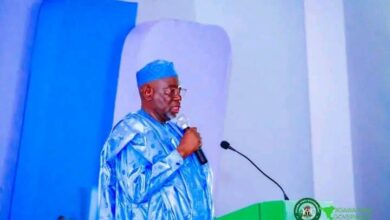
Also speaking, Chairman of the North-West Governors’ Forum and Governor of Katsina State, Dikko Radda, represented by his deputy, Faruk Lawal, said the region must prioritise investments in education, healthcare, nutrition, agriculture and social protection to reduce multidimensional poverty.
According to him, poverty reduction should be seen as a strategic investment in peace, stability and economic growth rather than merely a social obligation.
Development partners at the event reaffirmed their commitment to supporting efforts aimed at lifting millions of people out of poverty across the region.
The European Union Ambassador to Nigeria, Gautier Mignot, said the EU and its member states would continue to support initiatives targeted at eradicating extreme poverty, while UNICEF Nigeria Representative, Wafaa Saeed, stressed the need for increased domestic financing, stronger private sector participation and inclusive policies to bridge inequalities affecting children and vulnerable communities.