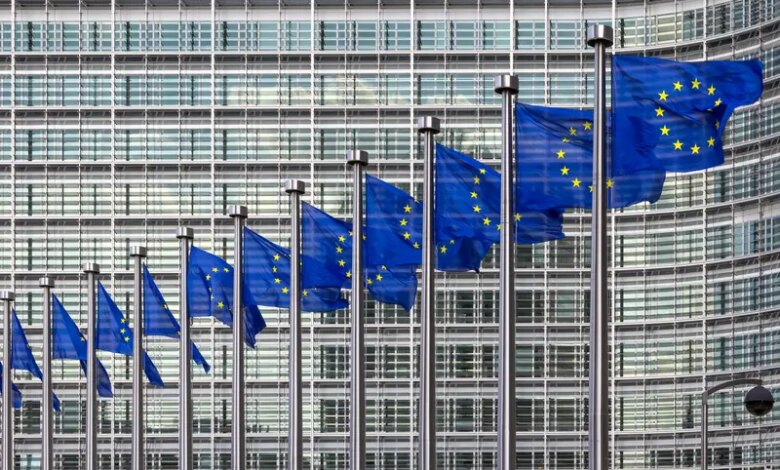
The European Union has announced restrictive measures against two Iranians and one entity for disrupting maritime operations in the Strait of Hormuz.
The sanctions were approved on Monday under the extended legal framework targeting those involved in Iran’s actions impeding the freedom of movement in the Middle East.
They affect the Islamic Revolutionary Guard Corps Navy’s Hormozgan Provincial Command, which screens vessels and determines which ones are allowed to sail through Hormuz.
Also listed is Mohammad Akbarzadeh, IRGC Navy’s Deputy Commander for Political Affairs. The spokesperson is accused of threatening to use missiles or drones against vessels.

The second individual is Hamid Hosseini, a member of Iran’s Chamber of Commerce and a representative of its Oil, Gas and Petrochemical Products Exporters’ Union.
Hosseini is designated for aiding Tehran’s “actions impeding lawful transit passage and freedom of navigation,” by promoting the policy of paying fees to Iranian authorities for safe crossing.
The EU said the obstruction of naval traffic contravenes international law and infringes upon established rights of both transit and innocent passage through international straits.
In May, the EU widened the scope of sanctions over Iran’s military support of regional armed groups and Russia’s war against Ukraine to include activities threatening Middle East navigation.
The latest restrictive measures increase the number of those affected by the amended framework to 26 natural/legal persons and 27 entities from different countries.
They are subject to an asset freeze and prohibited from receiving funds or economic resources, directly or indirectly. A travel ban to the EU applies to all natural persons listed.