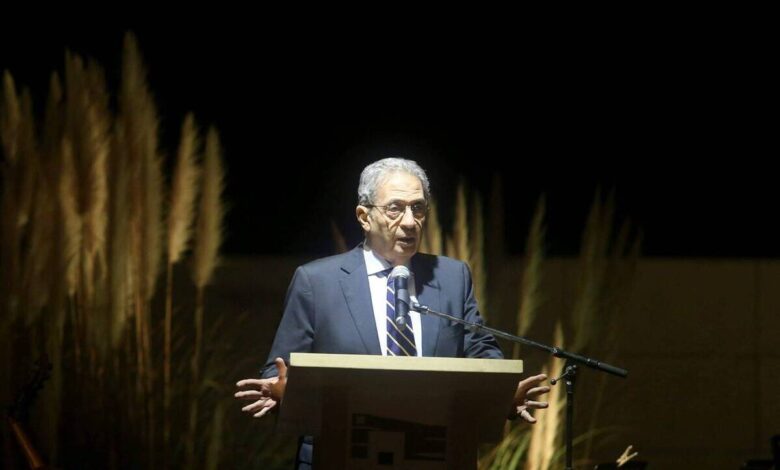
Former Arab League Secretary-General Amr Moussa has responded to criticism from some Gulf officials and commentators, saying his remarks praising Iran’s “smart resilience” were about its confrontation with the United States, not support for attacks on Gulf states.
Speaking on the Maw’ed Ma’a Lamis podcast hosted by Egyptian presenter Lamis El Hadidi, Moussa rejected claims that all Gulf countries were angry with him because he had not clearly condemned Iranian attacks on Gulf states.
He said: “It is not true that all Gulf countries share this view. There may have been some offensive comments on social media, but the main criticism came from figures such as journalist Abdulrahman Al-Rashed and senior diplomatic adviser to the UAE President Anwar Gargash. Their criticism was measured and reflected opinions that deserve respect.”

Moussa added that Al-Rashed had begun one of his articles by saying: “Your Excellency, you know how much we appreciate you.” He said he respected both men and looked forward to discussing the issue with them when they next met.
READ: Iran warns it is ready for war if US fails to honour agreement
Addressing his description of Iran’s wartime performance as “smart resilience”, Moussa said he was referring to Iran’s ability to withstand pressure from “a major power, the United States, and its follower”, referring to Israel. He said this was the main point of his remarks.
However, he stressed: “Any attack on any Arab Gulf state is an attack on all of us. This has always been my position, and I have never retreated from it.”
Moussa also said he had no dispute with the Gulf states, but acknowledged there could be differences of opinion that should not undermine mutual respect or longstanding ties.
He added that there should always be room for differing views while preserving the bonds of brotherhood between Arab countries.
OPINION: Ceasefire, the Memorandum of Understanding, and intermittent exchanges of fire: Can Iran and the US negotiate a permanent peace treaty?