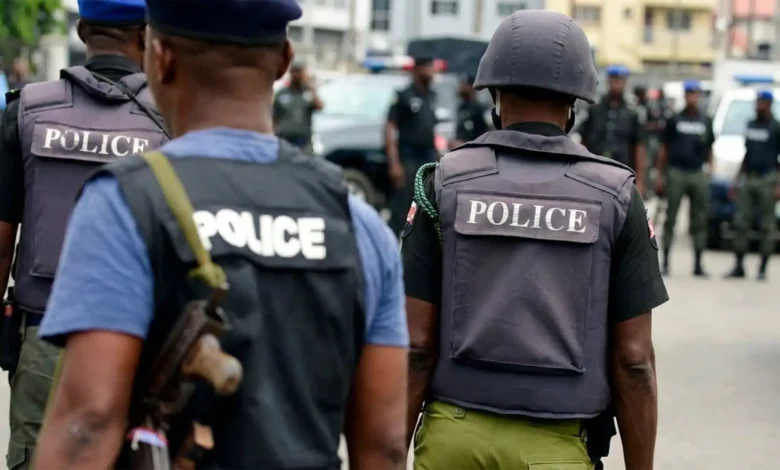
Retired military and police chiefs have expressed divergent views on the powers governors should wield under the proposed state police arrangement.
According to Punch, the former security chiefs warned that while decentralised policing could improve security, strong safeguards must be put in place to prevent abuse.
Naijaonpoint reports that the comments came amid renewed calls by state governors for greater constitutional authority over security operations within their states and guaranteed funding for proposed State Police Services.
The governors’ position was contained in a report of a strategic meeting involving state Attorneys-General, legal experts and senior security officials convened by the Nigeria Governors’ Forum (NGF) Secretariat in Abuja.


The debate also followed President Bola Tinubu’s transmission of the Constitution Alteration Bill seeking the creation of state police to the National Assembly.
Senate President, Godswill Akpabio, on Tuesday, urged senators to ensure full attendance as the Senate prepares to consider the proposed amendment.
The bill is expected to be debated when the Senate reconvenes today.
Commenting on the proposal, retired Brigadier General, Peter Aro, said state police should be treated as a deliberate security reform and not a political project.
He said governors should be given enough powers to respond to local security challenges, but within clearly defined constitutional limits.
According to him, decentralised policing would only succeed if operational control, funding and oversight mechanisms are properly structured.
Aro said, “State police should not be treated as a political slogan but as a structured security reform. By design, they are an extension of state authority, funded and managed at that level, with clear responsibility for local safety. This will make each state invest in reliable surveillance systems and ICT infrastructure so that security becomes intelligence-driven rather than reactive.
“This also allows a federal command-and-control centre to integrate data from all states, giving the Federal Government real-time visibility of threats nationwide, something that is largely missing in the current system where weak intelligence flow and poor coordination often delay response.”
The retired military officer maintained that state police should have broad powers over internal security operations, including intelligence gathering, investigations and community policing.
“State police should handle internal security challenges, including terrorism within their jurisdictions, while respecting clear constitutional boundaries. Matters relating to presidential and National Assembly elections must remain exclusively federal to preserve neutrality. Arrest, investigation, intelligence gathering and community security should rest with the states,” he stated.
However, he warned that mechanisms must be created to prevent politically motivated prosecutions.
“Where cases become sensitive or politically controversial, a neutral judicial-security panel or jury should review them before prosecution to prevent abuse of power. Some aspects of the Exclusive Legislative List can be ceded where security demands it, but safeguards must remain firm.
“Governors must be told to be decisive in the use of these powers, not to turn state security into a system of negotiation with terrorists and bandits. State police can strengthen Nigeria, but only if power is clearly defined, properly supervised and never allowed to become a tool for political misuse,” he added.
A retired Assistant Inspector-General of Police, Ali Amodu, in his own take, said governors should naturally have significant influence over state police because they would bear the burden of funding and maintaining the service.
“The recommendation made to the National Assembly made two points: one for the Federal Police Service and one for the State Police Service. The one the governors will have a say in, as provided by the Constitution, which recognises them as chief security officers of their states, is the State Police Service.
“That is the one they will have control over. But when I say control, it is not a question of hijacking anything. They will be responsible for the maintenance, the funding and everything associated with it. It will be the responsibility of the state governors to fund the police in the state, provide the equipment and make them functional in the interest of the people resident in the state,” he said.
Amodu acknowledged concerns that governors could seek excessive control over state police but insisted that Nigeria’s worsening security situation required urgent action rather than endless debate.
“I think what people are trying to guard against is a situation where governors may want more control over the policing system in their states. But I have said time without number, let us commence, let us start it. The challenges we are facing now are so enormous that we should not be scared of the governor trying to have control.
“Any governor, what he will have behind his mind, is how to effectively utilise the police in the state to deal with insecurity. That is what is facing us now and that is why everybody is in support of the creation of state police.
“Let us start it. It is when we start it that we begin to see where adjustments are needed. Any system that has advantages also has disadvantages. Those disadvantages will always be there, but as we go along, we are going to correct them and get going. What is important now is that we need effective security more than ever before, so we should not be afraid,” he added.
Also speaking, retired Brigadier-General, George Edim, argued that governors should be trusted with greater security responsibilities in line with democratic principles.