0
Stella Omona
The Federal Government has announced a sharp decline in the number of repeat offenders in Nigerian correctional facilities, with recidivism dropping from 11,616 cases in 2023 to 1,382 in 2025, a development it attributed to intensified rehabilitation and reformation programmes.
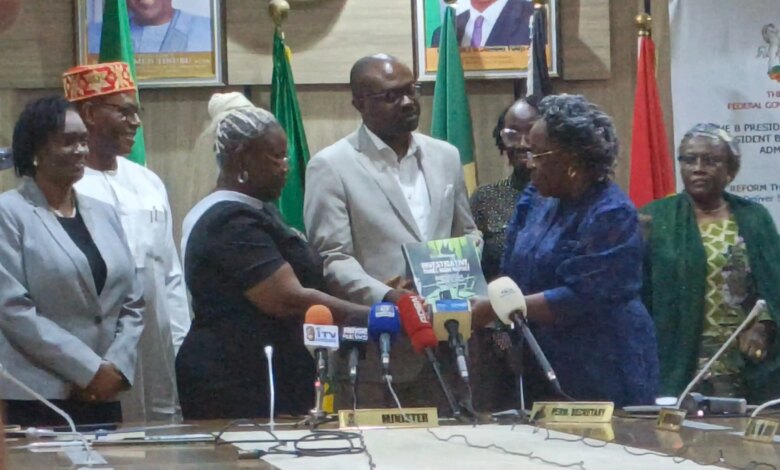
Minister of Interior, Dr. Olubunmi Tunji-Ojo, disclosed this on Wednesday during the presentation of an investigative report on the Nigerian Correctional Service (NCoS), describing the figures as evidence that ongoing reforms were yielding measurable results.
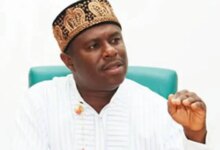
According to the minister, the number of repeat offenders fell from 11,616 in 2023 to 3,156 in 2024 before declining further to 1,382 in 2025.
“Recidivism was 11,616 when we came in in 2023, but in 2025 it came down to 1,382. It means our reformation programmes are bearing fruits,” Tunji-Ojo said.
Despite the progress, he maintained that the government’s target remained the complete elimination of repeat offending.
“For us, not until recidivism gets to zero can we say we have succeeded,” he added.
The minister also revealed that 15,632 inmates were admitted into custodial centres in May 2026, while 14,190 inmates were released under various terms of imprisonment during the same period.
Tunji-Ojo assured stakeholders that the investigative report would not be abandoned, announcing plans to establish an implementation framework supported by a monitoring and evaluation committee.
“This report will not gather dust on the shelves. We are going to be very aggressive in terms of implementation,” he said.
As part of efforts to improve correctional infrastructure, the minister disclosed that the Federal Government was already working on relocating several custodial centres that have been overtaken by urban development.
He identified the Suleja Custodial Centre, built in 1914, and the Ikoyi facility, constructed in 1955, as failing to meet international standards, particularly the requirement for a 100-metre buffer zone around correctional facilities.
Other centres in Enugu, Abakaliki, Ibadan and Lagos were also marked for relocation because of their proximity to markets, residential areas and government offices.
Tunji-Ojo called on state governments to collaborate with the Federal Government in addressing correctional challenges, noting that the majority of inmates are being held for state-related offences.
“When we share the assets, we should also think of sharing the liabilities. About 90 per cent of these inmates are state offenders, not federal offenders, and 67 per cent are awaiting trial,” he said.
The minister further disclosed that President Bola Tinubu had approved a 50 per cent increase in inmates’ feeding allowances, with implementation already underway.
He urged civil society organisations and Nigerians to monitor the process and hold correctional authorities accountable for ensuring improved welfare for inmates.
Permanent Secretary in the Ministry of Interior, Dr. Magdalene Ajani, said the investigative panel visited 86 custodial centres across 23 states during its assignment.
Controller-General of Corrections, Sylvester Ndidi Nwakuche, described the panel’s work as a demonstration of transparency and accountability rather than an attempt to apportion blame.
The presentation of the report followed a stakeholders’ engagement held in March, during which Tunji-Ojo vowed to sanction any correctional personnel found guilty of violating inmates’ rights.
The probe was initiated following the 2024 controversy involving cross-dresser Idris Okuneye, popularly known as Bobrisky.
An Assistant Controller-General found culpable during the investigation has since been removed from office.
Meanwhile, the Nigerian Correctional Service said it currently operates 18 study centres of the National Open University of Nigeria within custodial facilities and plans to expand the programme to correctional centres nationwide.