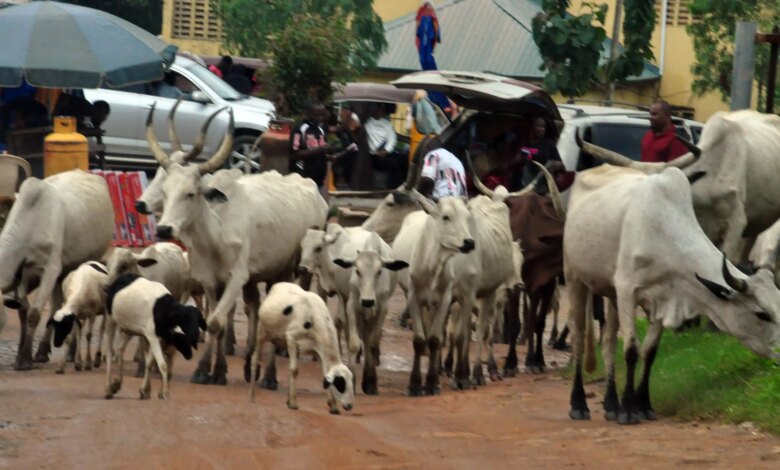
The Federal Government has announced plans to phase out open grazing across Nigeria as part of efforts to modernize the livestock sector and improve productivity.
Naijaonpoint reports that the Minister of Livestock Development, Idi Maiha, disclosed that the government has identified 470 gazetted grazing reserves that will be rehabilitated and used for the settlement of pastoralists.
The initiative is expected to reduce the movement of cattle on roads and in major cities such as Abuja and Lagos.
Speaking on the implementation of the National Dairy Policy Framework, the minister said relocating herders to designated grazing reserves would make it easier for authorities to monitor animal health, improve livestock breeds and strengthen disease control measures.
According to him, the government is encouraging pastoralists to adopt a settled lifestyle rather than moving cattle over long distances.
He explained that once herders are based in specific reserves, government support programmes aimed at improving livestock production can be carried out more effectively.
Maiha also revealed that authorities plan to introduce a tracking system for cattle through electronic tagging.
Under the arrangement, animals that move beyond approved boundaries can be detected quickly, helping owners and authorities locate them and reduce cases of loss or theft.
The minister noted that open grazing is becoming increasingly difficult to sustain, adding that the long-distance movement of cattle contributes to low productivity in the livestock sector and limits the country’s ability to meet its dairy needs.
He said Nigeria’s milk production remains far below that of several other African countries. While cows in Nigeria produce an average of between 1.2 and 2 litres of milk daily, countries such as record much higher yields.
Maiha attributed the low output to poor livestock genetics, inadequate feeding methods and weak disease management systems.
He explained that although Nigeria has an estimated 270 million ruminants, including cattle, sheep, goats and camels, the country has not achieved large-scale improvement in livestock breeding.
According to the minister, many countries have improved their livestock through deliberate breeding programmes, while Nigeria continues to rely largely on traditional cattle breeds with lower production capacity.