0
Itode Akari
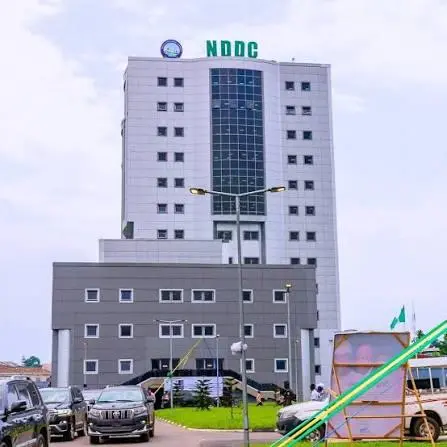
PORT HARCOURT – A former Minister of Petroleum Resources and Foreign Affairs, Henry Odein Ajumogobia, has called for a stronger and more empowered Niger Delta Development Commission to effectively coordinate and drive development across the Niger Delta region.
Ajumogobia made the call while delivering the keynote address at the NDDC Law and Development Summit in Port Harcourt on Wednesday, where he stressed the need to strengthen the commission’s capacity as the leading development agency in Nigeria’s oil-producing region.


He noted that the NDDC was originally established as the central coordinating institution for development interventions in the Niger Delta but has yet to fully realize that mandate.
Ajumogobia emphasized that the NDDC rather than functioning as the coordinating hub, the commission has become one layer in a crowded institutional environment where responsibilities are unclear and dispersed, leading to duplication of efforts and fragmented interventions that leave oil-producing communities underdeveloped.
He argued that repositioning the NDDC to effectively coordinate development partners would reduce overlaps, improve accountability, and accelerate sustainable development in the region.
Ajumogobia said, “Its limitations are not merely administrative; they are structural.
The NDDC operates within a fragmented governance architecture characterised by overlapping mandates among federal institutions, state governments, private sector actors, corporate social responsibility initiatives, and programmes.”
Speaking at the summit, the Chairman of the Chiedu Ebie, described law as the foundation of development, stressing that it goes beyond rules and restrictions to serve as a practical instrument for shaping society.
He noted that in its highest form, law drives social engineering, economic transformation, institutional strengthening, environmental sustainability, and the protection of citizens’ rights and freedoms.
Ebie stressed, “It is foundational. Law is not merely a set of rules and restrictions. In its highest expression, law is a living instrument of social engineering, economic transformation, institutional strengthening, environmental sustainability, and the protection of the rights and liberties of the people it serves.”
He described the summit themed, “The Role of Law in Driving Sustainable Development in the Niger Delta,” as both timely and transformative, noting that for the Niger Delta—despite its vast natural wealth—the persistent gap between resource abundance and community underdevelopment makes the discussion more urgent than theoretical.
Ebie said these realities reflect live experiences that require a legal framework that is bold, responsive, and fit for purpose, capable of meeting the developmental aspirations of the people.
He further stated that within the Niger Delta Development Commission, innovative and creative approaches have been adopted to address the region’s complex challenges, stressing that while actions remain within legal boundaries, they are not limited by rigid or narrow interpretations of the law.
“We have repositioned the Commission’s operations, strengthened internal governance, and accelerated our development programmes with a renewed sense of urgency and purpose.”
In his opening remarks, the NDDC Managing Director, Dr Samuel Ogbuku, observed that “sustainable development for the Niger Delta region is not just about infrastructure and brick-and-mortar; it entails a balanced integration of economic growth, social inclusion, and environmental protection for the region’s long-term well-being.”
He stated, “In keeping faith with the statutory mandate of the Commission, this current Board and Management, since our assumption of duty, have, in our determination to make a real difference in the lives of our people, made very deliberate, conscious, and intentional efforts to reposition the Commission from Transactions to Transformation.
“When we came on board, we discovered that the Commission’s internal processes required administrative recalibration to carry out the ambitious reforms we needed.
“We engaged world-renowned KPMG Advisory, who reviewed our processes and developed new Corporate Governance policies that now form the bedrock of our internal governance.
“We have also reformed our procurement system and processes, making them more transparent and less opaque. As of today, the NDDC has almost 90 per cent of its processes digitalised. We have implemented mechanisms for contractors and stakeholders to sign and execute their contracts electronically from the comfort of their homes and offices, with minimal physical contact.”
“In line with consolidating the reforms we have made and are continuing to make, we recognise the need to further strengthen the legal and institutional frameworks that guide our operations.
“It is for that reason that we have convened this Law and Development Summit, with the aim of bringing together legal experts, development partners, sustainability professionals and indeed key stakeholders.”
Earlier, the NDDC Director of Legal Services, Sir Victor Arenyeka, remarked that the NDDC was a creation of law and that its activities were largely regulated not only by its Establishment Act but also by a range of other relevant laws, rules, and regulations.
He explained, “The Summit seeks to provide a strategic platform for policymakers, legal practitioners, development experts, traditional institutions, environmental advocates, academia, civil society organisations, and stakeholders within and outside the Niger Delta to critically examine how law, governance, policy implementation, and institutional accountability can serve as effective tools for sustainable regional transformation.