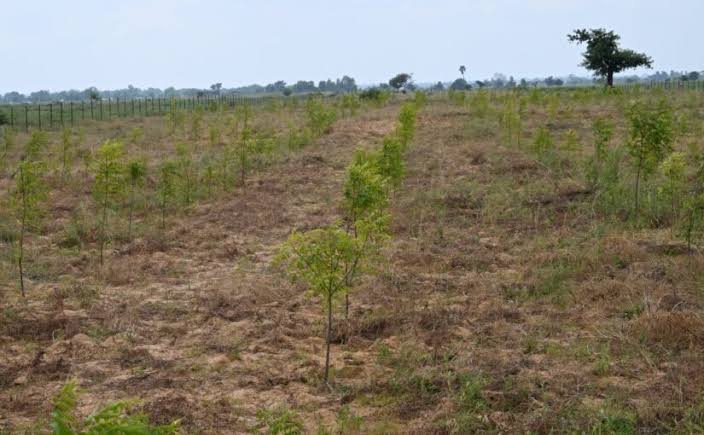
Gombe State has restored more than 1,000 hectares of degraded land through climate resilience and environmental restoration initiatives implemented under the Agro-Climatic Resilience in Semi-Arid Landscapes (ACReSAL) Project and related interventions.

Richard James, Overseeing Director of Information under ACReSAL, disclosed this on Friday in a special commentary marking the 2026 World Environment Day themed “Climate Action.”
He said the achievement represents a major milestone in the state’s efforts to tackle environmental degradation, desertification, and climate-related challenges that have long undermined agriculture, livelihoods, and infrastructure.
According to him, Gombe, which lies within Nigeria’s semi-arid belt, has for decades battled soil erosion, declining vegetation cover, and water scarcity, but sustained interventions are beginning to reverse the trend.
“More than 1,000 hectares of degraded land have been reclaimed and restored, while three major erosion sites stretching nearly 50 kilometres have been brought under control,” James said.
He listed the erosion control sites as the Gombe State University gully erosion site, the Federal College of Education gully erosion site, and the ongoing Government Girls’ Mega College Doma erosion project.
James said the interventions have protected homes, schools, farmlands, roads, and public infrastructure worth billions of naira from further environmental destruction.
He also highlighted progress under the state’s afforestation programme, noting that the Gombe Goes Green Initiative, also known as the 3G Project, has led to the planting of more than five million trees since 2019.
According to him, the initiative has mobilised traditional rulers, youth groups, women’s associations, schools, civil society organisations, and local communities in a broad-based effort to combat desertification and restore degraded ecosystems.
Beyond land restoration, James said Gombe has also recorded gains in waste management under ACReSAL, including the conversion of a former dumpsite into a waste-to-wealth facility that supports recycling and resource recovery.