Greece reopens country’s only surviving Byzantine palace after over 40 years of restoration work

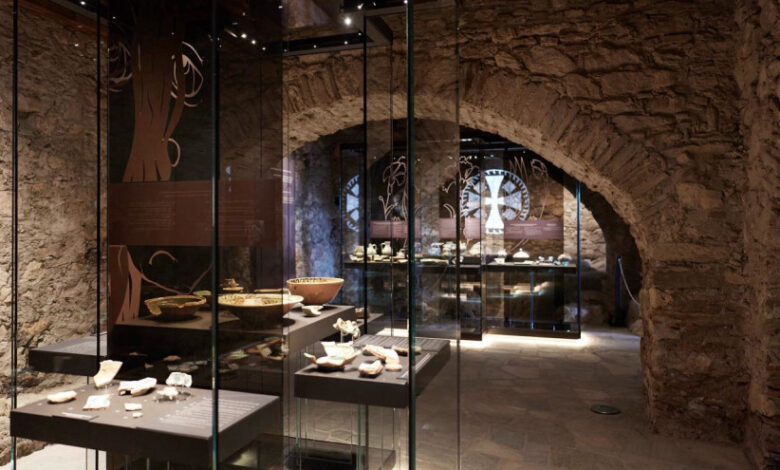
Greece has reopened the Palace of the Despots in Mystras after 42 years of restoration and preservation work, the Greek Culture Ministry announced in late May.
The Palace of the Despots, the only surviving Byzantine palace complex in Greece, dates back to they 14th century and served as the seat of the Despotate of Mystras, a province of the Byzantine Empire.
It is the 30th museum selected since 2019 by the ministry as part of its plan for the permanent protection and preservation of UNESCO World Heritage Sites in the country, with a focus on three main goals: protection from climate change, accessibility, and the integration of digital technology.
The archaeological site has been on UNESCO’s list since 1989.


Greek Prime Minister Kyriakos Mitsotakis inaugurated the site in a formal ceremony alongside Culture Minister Lina Mendoni, and many other local and government officials.
“Today, the only surviving Byzantine palace complex in Greece reopens its gates, restored, legible and functional in terms of exhibitions,” Mendoni said during the reopening ceremony. “The Palace is the most important secular monuments of the Castle City.”
“Its complex building history vividly captures the transition from the Frankish to Byzantine rule and the evolution of the Despotate of the Morea.”
Accessibility, fighting climate change
Renovations of the site included preserving and reinforcing visitor pathways to maximize accessibility and installing an elevator in the palace structure itself, integrating a modern fire suppression and water supply system to defend against possible wildfires, and the conservation of churches within the ancient city.
“Today is of particular importance for Laconia and the Peloponnese, as not only is another restoration project being inaugurated,” said Mendoni in her speech, “A place of national historical memory and identity, a cultural asset of universal value and a timeless core of culture is being returned to society.”
The years of restoration and renovation will allow “Greek and foreign visitors to approach history experientially and to recognize the timeless importance of Greek culture and the historical continuity of Hellenism,” she added.
Featured exhibits that can be visited
Since 2022, the ancient city has included elements of Greece’s “Biodiversity and Archaeological Sites” program, which highlights the natural environment as an integral part of the historical landscape.
Additionally, Mystras will be home to a permanent physical and digital exhibition titled “Hegemonic Narratives” which presents the role of the imperial families in the administration and intellectual heyday of Mystras.
Tours of the palace include visiting two temporary exhibitions.
The first, titled “In the Princess’s Court,” sheds light on the timeless reception and fascination that Mystras held for the European intelligentsia, from the 15th to the early 20th centuries.
The second, titled “A Depiction of Glorious Garment,” focuses on clothing as a symbol of power and social identity.
It includes handmade garments that would have been worn in the Palaeologan court, inspired by Byzantine iconography, which were created by the monastic brotherhood of Pantanassa and with the assistance of the Greek National Opera’s costume department.