0
ABUJA – When terrorists attacked communities in Borno, bandits overran villages in Zamfara, kidnappers established camps in forests stretching across Kaduna and Niger, and armed groups struck rural communities in Benue and Plateau, a familiar question echoed across Nigeria’s security landscape: why does a country of more than 230 million people continue to rely almost exclusively on a centrally controlled police force headquartered in Abuja?
Last week, that decades-old debate entered a new phase. The Senate’s approval of constitutional amendments creating state police marks one of the most significant security reforms since Nigeria returned to democratic rule in 1999.
Supporters describe it as a game-changing intervention capable of transforming intelligence gathering, rapid response operations and local security management. Critics warn that it could become a dangerous tool in the hands of powerful governors and political actors.


Beyond the politics, however, lies a more urgent question: what exactly will change in Nigeria’s counterterrorism strategy if state police eventually become operational?
Security analysts say the answer could determine whether Nigeria finally gains the upper hand against insurgents, bandits and kidnappers or merely adds another layer to an already complex security architecture.
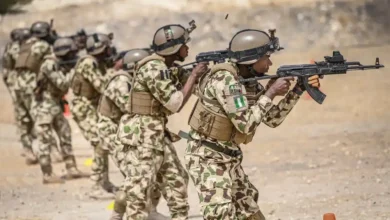
For years, Nigeria’s counterterrorism operations have been driven largely by the military, supported by federal police formations and intelligence agencies. While these institutions have recorded significant victories against extremist groups, insecurity has continued to spread across vast rural territories.
Many experts argue that one major weakness has been the absence of a locally embedded policing structure capable of generating actionable intelligence before attacks occur.
Retired military officers interviewed for this report believe state police could alter that equation.
According to retired Brigadier-General Bashir Adewinbi, successful counterterrorism campaigns depend less on firepower and more on intelligence.
“Modern counterterrorism is intelligence-driven. The military can only act effectively when information reaches commanders on time.
Most terrorists, kidnappers and bandits operate within communities. Local policing structures are naturally better positioned to identify suspicious movements before attacks happen,” he said.
He explained that federal police officers frequently posted from distant parts of the country often lack familiarity with local languages, terrain and social networks.
“A police officer posted from another region may take months or years to understand the local environment. State police officers recruited from local communities already possess that knowledge. That alone can significantly improve intelligence gathering.”
This view is shared by many counterinsurgency specialists who have long argued that defeating non-state armed groups requires community-based security structures.
For residents of communities frequently attacked by terrorists and bandits, the promise of faster response times may be one of the biggest advantages.
Across Nigeria’s vast rural areas, security emergencies often unfold faster than federal authorities can react.
Residents in parts of Zamfara, Katsina, Niger, Benue and Plateau have repeatedly complained that security forces sometimes arrive hours after attacks have occurred.
Security consultant, Dr. Kabiru Adamu, believes state police could help close that gap.
“One of the greatest advantages is proximity. State police commands would be physically closer to affected communities. That means quicker deployment, faster intelligence processing and more immediate interventions,” he said.
According to him, many kidnappings become prolonged because the first few hours after an abduction are often lost.
“In counterterrorism and anti-kidnapping operations, speed is critical. The sooner security forces respond, the greater the chances of success.”
Proponents of state policing also argue that local officers would possess a deeper understanding of criminal networks operating within their jurisdictions.
In many rural communities, residents know the identities of criminal informants, collaborators and logistics suppliers but often hesitate to share information with federal authorities perceived as outsiders.
A state-controlled policing structure, analysts argue, could improve trust and cooperation. Professor Jideofor Adibe, a security and governance scholar, says this represents one of the strongest arguments for decentralised policing.
“Counterterrorism is not simply about guns and military operations. It is about relationships, trust and information flow. Communities are more likely to cooperate when they feel security personnel understand their realities.”
Supporters point to successful local security initiatives already operating across Nigeria.
Groups such as the Civilian Joint Task Force in Borno, Amotekun in the South-West, Ebube Agu in the South-East and various vigilante organisations have demonstrated the effectiveness of local knowledge in combating insecurity.
The emergence of state police could formalise and professionalise many of these efforts. Yet even among supporters, significant concerns remain.
Perhaps the biggest fear is the possibility of political abuse.
FEAR OF POLITICAL ABUSE
Nigeria’s history offers cautionary lessons.
During the First Republic, regional police forces were frequently accused of serving political interests rather than public safety.
Critics worry that governors could use state police to intimidate political opponents, suppress dissent, and influence elections.
Human rights lawyer, Femi Falana, has repeatedly warned that decentralisation without strong safeguards could create new governance challenges.
“Security institutions must serve citizens, not politicians. The danger is not state police itself; the danger is creating state police without adequate constitutional protections and oversight mechanisms,” he argued.
Civil society organisations have similarly called for independent police service commissions, legislative oversight, and judicial review mechanisms to prevent abuse.
UNDERFUNDING WORRY
Another concern centres on funding.
Nigeria’s existing police force suffers from chronic underfunding, inadequate equipment and personnel shortages.
Questions therefore arise over whether many states can sustain modern police organisations.
Former Inspector-General of Police, Solomon Arase, has previously noted that effective policing requires significant financial commitments.
Experts estimate that establishing state police commands would involve recruitment, training, barracks construction, communications infrastructure, forensic facilities, intelligence systems and operational logistics.
Some analysts fear wealthier states could develop sophisticated police services while poorer states struggle to maintain basic operations.
“There is a risk of creating unequal security standards across the federation,” says governance expert, Dr. Amina Salihu.
“Citizens should not receive vastly different levels of protection simply because they live in different states.”
Counterterrorism specialists also caution that fragmented policing structures could create coordination challenges. Terrorist organisations do not respect state boundaries. Bandit groups frequently move between Zamfara, Katsina, Kaduna and Niger states. Kidnappers often operate across multiple jurisdictions.
This raises concerns about intelligence sharing and operational coordination.
Retired Assistant Inspector-General of Police, Mohammed Abubakar, believes the solution lies in clearly defined operational frameworks.
“The federal police, intelligence agencies and state police must function as partners. If information sharing breaks down, criminals will exploit those gaps.”
He advocates a national security coordination system that allows seamless communication between all law enforcement agencies. Citizens living in conflict-prone communities remain cautiously optimistic.
In Benue State, farmer associations say any reform capable of improving rural security deserves serious consideration.
“We don’t care whether it is federal police or state police,” said Terna Uji, a community leader in Guma Local Government Area.
“What matters is whether attacks stop and whether our people can return safely to their farms.”
Similar sentiments were expressed by residents in parts of Plateau and Niger states where recurring attacks have disrupted livelihoods and displaced thousands.
Many believe local policing could improve early warning systems and intelligence gathering, provided recruitment remains merit-based and professional.
For counterterrorism experts, the success of state police may ultimately depend on implementation rather than legislation.
Passing constitutional amendments is only the first step.
Recruitment standards, training curricula, accountability mechanisms, intelligence coordination, and operational independence will determine whether the reform succeeds.
Dr. Adamu argues that Nigeria must avoid treating state police as a silver bullet.
“No country defeats terrorism through a single reform. State police can strengthen the security architecture, but they must work alongside military operations, intelligence reforms, border security improvements, judicial efficiency, and economic development.”
That perspective reflects a broader consensus emerging among security professionals. State police may not eliminate terrorism overnight.
They will not automatically end banditry, kidnapping or violent extremism.
But many experts believe they could provide something Nigeria’s security system has long lacked: a permanent, locally rooted policing structure capable of detecting threats before they become tragedies.
POLITICAL STRUCTURE
Another concern has been raised by Dr Bolaji O. Akinyemi, a Christian activist and public affairs commentator, who expressed mixed feelings over the establishment of State Police, saying that such action should only be taken as part of a comprehensive restructuring that should restore true federalism.
He also maintained that there should be proper constitutional safeguard, clear jurisdictional boundaries, and independent oversight before the creation of State Police considering the nature and character of Nigerian politicians in positions of authority.
Apostle Akinyemi, the Convener of The Apostolic Round Table (ART), while expressing conditional support for the creation of State Police, maintained that his support for it is not as an isolated reform.
Speaking with Sunday Independent on fears being raised by a cross section of the public, Dr Akinyemi warned that creating State Police under the present over-centralised constitutional framework risks merely decentralising abuse, rather than strengthening security.
Akinyemi stated: “The National Assembly should ensure constitutional safeguards, including clear jurisdictional boundaries, independent oversight, merit-based recruitment, transparent funding, judicial accountability, and protection against political misuse by state governments.
“Above all, State Police should be situated within a rebalanced federation that devolves powers, responsibilities, and fiscal autonomy to the states.
“Effective policing is not simply about creating new institutions; it is about building a constitutional order that promotes accountability, justice, and local ownership of security.”
Dr Victor Mathew, a security expert, said the fears against State Police are legitimate because of it being abused by people, especially the state governors and their proxies.
Dr Mathew, the Executive Director, Kingdom Advocacy Network (KAN) and CEO, Nextstep Security Organisation, stated: “We are between the devil and the deep blue sea, but if we are to do a cost-benefit analysis of State Police, with the escalated insecurity in Nigeria today, it has become imperative to now adopt it as a state policy.
“What is required now is to creatively formulate frameworks that will make it look the same for states adopting it in areas of operations and functionality.
“I will suggest that an enabling legislation be incorporated into the bill that makes it possible for citizens who are not satisfied with the activities of State Police to petition or seek judicial intervention of the federal police to take over such cases or matters.
“I will also suggest the State Judiciary can adjudicate matters involving the activities of State Police.
“Each State House of Assembly should be empowered to incorporate laws that suit each, considering local demands and peculiarities.
“It must also make clear, specific limits of their functions. The bill should incorporate a seamless working relationship with the federal police.
“On appointment of the Commissioner of Police, such a person must have requisite security background, but should not be a retired or serving military officer.
“Such appointments must pass through the state House of Assembly for confirmation.”
Baba Aye, a veteran activist and Co-Convener, Coalition for Revolution (CORE), stated: “The current national debate around State Police, including the draft bill, which the governors came to supervise the senators to pass, confirm what we have always said: the ruling class and its repressive state apparatus cannot address the problem of insecurity.
“State Police will fare no better than the federal police structure in tackling this monster (terrorism). Much more than State Police, we need every adult Nigerian to be trained for and equipped as necessary with the arms to defend our commons, including our liberty from all state and non-state oppressors.”
Chinecherem Nelson Madubuike, the Secretary of the African Democratic Congress (ADC), Oshodi/Isolo local government area, stated: “The creation of State Police in the federation is an ideal thing to do, particularly at this point that the state of insecurity is at its peak.
“State Police, if created, will definitely require the employment of their ranks from the indigenes that know the nooks and corners of the state and will be in a better position to secure their environments.
“It will also afford the authorities to identify a zone with recurring security lapses with the view to swiftly cut it off without any recourse to the authorisation of the Federal Government.
“The only challenge in its implementation is the fact that Nigeria, as presently constituted, has not shown itself as a nation, but unfortunately, a geographical entity.”
As the country moves from constitutional debate to implementation, Nigerians will be watching closely. For communities living under the shadow of terrorism and banditry, the measure of success will not be found in legislative victories or political speeches.
It will be found in safer roads, secure farms, protected schools and peaceful villages. The ultimate test of state police will be simple: whether ordinary Nigerians begin to feel safer than they do today.