0
…Seek Swift Prosecutions, More International Collaborations
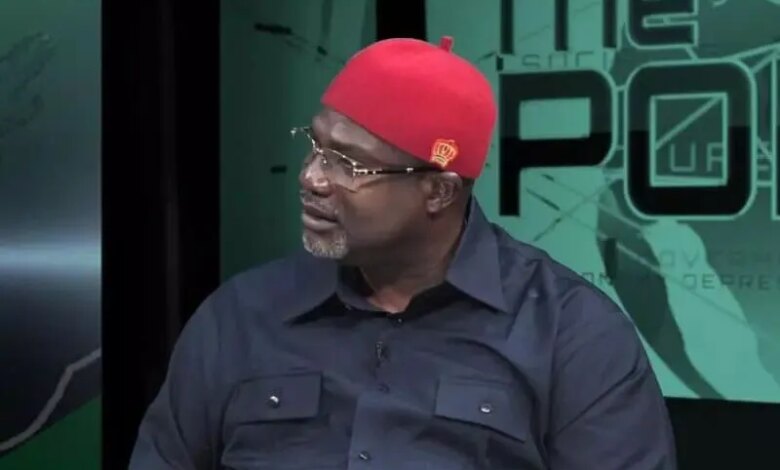
LAGOS – Chief Emeka Charles Kalu, a Labour Party chieftain, has said that the recent revelations exposing Nigerians and corporate entities involved in terrorism financing are significant and must be treated as a watershed moment in the country’s counterterrorism efforts.
Chief Kalu, President of ECK Foundation and the Director-General, Global Initiatives for Good Governance (GIGG), stated that for too long, the financial arteries feeding insurgency, banditry, and extremism have operated with alarming impunity.
Kalu, a seasoned politician and, until recently, an aspirant to the Abia North Senatorial Seat, maintained that naming and prosecuting these sponsors strike at the root, not merely the branches, of terrorism.
It would be recalled that the U.S recently revealed some people and corporate entities identified as sponsors and financiers of terrorist activities in Nigeria.
Kalu, who spoke to Sunday Independent, stressed: “However, revelations alone mean nothing without convictions.
“Nigeria’s counterterrorism financing framework, anchored on the Terrorism Prevention and Prohibition Act 2022 and NFIU regulations, is reasonably robust on paper, but chronically weak in execution.
“We have seen high-profile arrests dissipate into prosecutorial failures, plea bargains that trivialise grave offences, and suspicious case abandonments. That culture must end decisively.
“What must be added is threefold. First, financial intelligence must be weaponised, the NFIU, EFCC, and DSS must operate as a genuinely coordinated intelligence-sharing ecosystem, not competing silos.
“Second, international cooperation must be deepened; terrorism financing is transnational and requires real-time collaboration with GIABA, FATF, and allied intelligence services.
“Third, and critically, corporate accountability must be strengthened, company directors and beneficial owners behind suspicious entities must face personal criminal liability, not just institutional fines.
“Without following the money aggressively to its ultimate source and securing convictions that send unmistakable deterrent signals, these revelations risk becoming another footnote in Nigeria’s long catalogue of unfinished justice.”
Barrister Kenneth Udeze, the National Chairman, Action Alliance (AA), stated: “Yes, recent revelations of Nigerians and companies financing terrorism can impact the counterterrorism war, but mainly as a double-edged sword.
“On the positive side, exposure increases pressure for arrests, asset seizures, and financial tracking. It disrupts funding networks that sustain Boko Haram/ISWAP operations. Public accountability may also deter other enablers.
“However, impact depends on prosecution and enforcement. Past cases which show revelations without convictions change little. Terror groups adapt quickly to new funding routes.”
According to him, what needs to be added are faster, transparent trials, protection for whistleblowers, stronger banking/FinTech monitoring; and cutting illicit gold/cash smuggling.
Udeze stressed: “Without enforcement and border controls, revelations alone won’t end the war.”
Dr Victor Mathew, a security expert and human rights promoter, stated that it is very ludicrous and disturbing that part of the counter terrorism strategy of government, which is tracking the financial component of terrorism,
has been missing.
Dr Mathew, the Executive Director, Kingdom Advocacy Network (KAN) and CEO, Nextstep Security Organisation, stated: “Terrorism financing is the life blood of this nefarious enterprise.
“Like everything in life, terrorism financing is the oxygen of terrorism. The Nigerian government has employed both kinetic and non-kinetic approaches without taking out those in Nigeria and their collaborators abroad, it is indeed a missing link and the sooner it is addressed the better.
“To me, it is indicative of not being sincere with the fight against terrorism. Like I have said in the past, an industry has been created around this and there are many people benefiting from it and that’s the reason it won’t go away easily.
“I wonder what institutions like the DSS, NIA, Defence Intelligence, etc, are doing in this regard.
“We are yet to hear from our institutions or persons financing terrorism from the government, we only heard from a foreign government.”
Bishop Herbert Ekechukwu, a Christian leader, an economist and public affairs analyst, stated that the impact of the revelation will result to financial disruption to the terrorists and choking their funding channels
Dr Ekechukwu, who advocated for access freezes and sanctions, noted that the Security and Exchange Commission (SEC) and Nigerian Sanctions Committee (NSC) have ordered immediate freezing of assets of 10 individuals and companies plus travel bans and embargos.
He recalled that the capital market operators were told to freeze all related assets without prior notice.
Ekechukwu added: “Intelligence focus is now shifted to financial choke points. Investigations found Bureaux de Change (BDCs) current accounts and NGOs corporate accounts linked to terrorism funding. Kidnappers use third party accounts to collect ransom cash.
“The lists put pressure on regulatory agencies to go after banks that shield financiers. Sanctions are administrative and preventative, they are not convictions.
“The difference lies in the political will of the government of the day to try and convict the terrorists financiers as well as the terrorists.
“30–45% of counter terrorism funds are lost to corruption. These revelations make counter terrorism more financial intelligence driven.
“Nigeria now has a multi-facet approach to fight terrorism, including sanction lists, assets freezes, and convictions.
“Sincerely speaking, the real test is converting the lists into swift prosecutions, closing loopholes in BDCs, POS, Fintech and ensuring that funds actually reach front line security without leakage.”
Tola Oresanwo, an activist, said the recent terrorism financing revelations will likely have a significant, yet incomplete, impact on Nigeria’s counterterrorism war.
Oresanwo, Director, Administration and Programmes, Centre for Anti-Corruption and Open Leadership (CACOL), stated: “They provide a crucial opportunity to disrupt financial lifelines and hold enablers accountable. The subsequent prosecution of all the named suspects will send a strong deterrent signal.
“However, these efforts alone are insufficient. To truly succeed, Nigeria must address a lack of political will, institutional corruption, and the issue of ‘repentant’ terrorists being released without trial.
“What is critically needed is transparent prosecution of all financiers, regardless of status, coupled with strengthened judicial processes and community-based intelligence gathering to rebuild public trust and cut off terrorist recruitment.”
Hon. ‘Lanre Olaide, an All Progressives Congress (APC) chieftain, stated: “The recent revelations identifying Nigerians and companies allegedly involved in terrorism financing could significantly strengthen the country’s counterterrorism efforts, if followed by decisive actions.
“Exposing financiers helps disrupt the financial networks that sustain terrorist activities, improves intelligence gathering and sends a strong deterrent message to potential sponsors.
“However, disclosure alone is not enough. What is needed is swift prosecution of offenders, stricter financial monitoring, enhanced inter-agency collaboration, stronger border security and greater international cooperation to track illicit funds.
“Public awareness and community-based intelligence gathering should also be strengthened to prevent extremist groups from accessing financial and logistical support.”
Julius Adegunna, a media executive, stated: “The revelations would amount to nothing, except there is a very strong political will to act decisively.
“I don’t believe those in government were not aware of the revelations before now, but everything has been highly politicised.
“What the government can do after the revelations of those involved in terrorism financing is simply to freeze the accounts being used, arrest the financiers and prosecute them.
“The government can also blacklist them and make sure that the Nigerian public do not do any business with them.”
Professor John Ebhomien, an economist and financial expert, stated: “The recent revelations of Nigerians and companies involved in financing terrorism have sparked serious concerns.
“The revelations can shift the counterterrorism war, but only if they lead to action beyond naming names.
On potential impact, Ebhomien said: “Exposing Nigerian individuals and companies involved in financing terror addresses a root cause.
“Terror groups in the Sahel and Northeast depend on money for arms, logistics, and recruitment.
“Prosecutions, asset freezes, and sanctions can disrupt those networks more than kinetic operations alone. It also sends a deterrent signal that financiers won’t be shielded.”
Ebhomien also suggested some actions that the government should further take. One of such actions is speedy, transparent prosecution, adding, “Court cases must be concluded, not stalled. Justice delayed keeps the money flowing.
He also suggested that security agencies should follow the money trail, stressing, “The NFIU, EFCC, and CBN need to map entire networks: banks, Bureaux de Change, trade routes, and cross-border transfers.”
Also, he stressed the need for the protection of communities, while the avenue for recruitment for the terror groups should be cut.
He stressed: “Financial disruption must pair with job creation and deradicalisation in affected areas.
“Naming financiers is the start. Convictions, asset recovery, and closing loopholes will determine if this actually weakens the terror groups.”
Jegede Kehinde, The State Secretary, African Action Congress (AAC), Lagos State chapter, stated: “The recent revelations are significant, but should be viewed as one component of a broader counterterrorism strategy.
“Success will depend on whether they result in credible investigations, fair trials, and meaningful convictions where warranted.
“Nigeria must also strengthen intelligence gathering, community policing, witness protection, judicial efficiency, and regional security collaboration.”