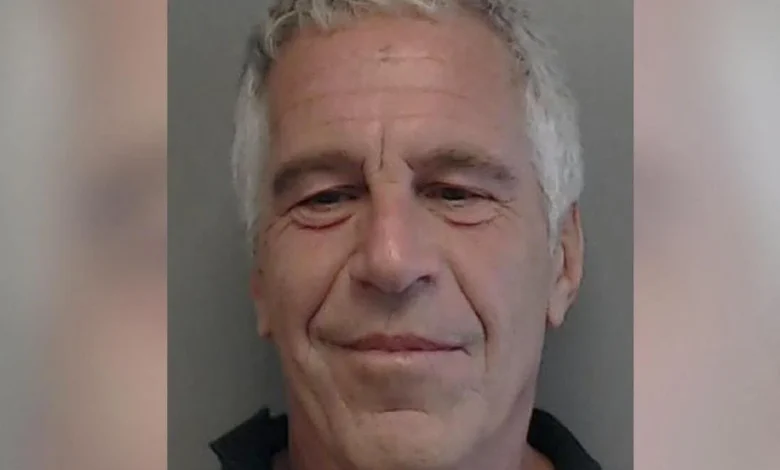
Jeffrey Epstein died in 2019, but his genetic material may live on.
E-mails and records in the Epstein files released by the Justice Department indicate that Epstein had been banking his sperm for at least several years before his death and that he did not want the cryobank to discard it if he died.
Epstein deposited his sperm with California Cryobank sometime before October 2012, and he signed a new contract in 2016.
The files contain an e-mail from 2012 notifying him of an upcoming renewal payment for his storage with California Cryobank as well as the 2016 contract with his signature.


The contract, dated May 9, 2016, laid out the terms of Epstein’s sperm storage. (The sperm remained in his ownership; this is different from sperm donation.)
The contract specified that, if he died, his sperm would fall under the control of his estate or of another legal representative. The arrangement was not publicly known until the Justice Department files were released in 2026.
It’s unclear whether Epstein’s sperm is still being preserved – and, if so, where. CooperCompanies, which has owned California Cryobank since 2021, said the bank “does not currently store any samples associated with Jeffrey Epstein” but did not answer further questions.
A representative for Epstein’s estate did not respond to multiple requests for comment.
The documents do not indicate when Epstein first banked his sperm.
He pleaded guilty in 2008 in Florida to soliciting prostitution from a minor, and he was awaiting trial on sex-trafficking charges when he died by suicide in a New York City jail in 2019.
Kimberly Mutcherson, a professor at Rutgers Law School in New Jersey who studies reproductive technology and bioethics, said that whether it was ethical for a sperm bank to accept sperm from a sex offender was a matter of debate in the fertility industry.
Some people in the field argue, Mutcherson said, that if anybody can procreate by having sex, then anybody should be able to procreate using technology – and that gatekeeping services like sperm banking based on character, criminal history or other judgments about who is fit to parent would open the door to policies that have, in practice, often been used to discriminate based on race, class and disability.
But at the same time, she added, it’s reasonable to ask “whether this is a set of circumstances where people would find the use of this person’s sperm to be particularly odious”.
Epstein left much of his money and possessions to his girlfriend, Karyna Shuliak, through a trust administered by his lawyer, Darren Indyke, and his accountant, Richard Kahn.
About 40 other people are also named as potential beneficiaries, though no one, including Shuliak, has yet received anything. A lawyer for Shuliak declined to comment.
But the trust document does not mention Epstein’s sperm.
Naomi Cahn, a law professor at the University of Virginia who specialises in trusts and estates, said that any dispute over how its terms should apply to the banked sperm would most likely be resolved under the laws of the US Virgin Islands.
Epstein’s private island was there, his estate is being administered there and the trust document specifies that its provisions should be interpreted under those laws.
Cahn said the administrators’ legal obligation was to dispense Epstein’s property in the interests of the trust and its beneficiaries. “They have a great deal of discretion so long as they exercise that discretion in good faith,” she said.
It is not clear how reproductive technology providers would respond if a beneficiary received the sperm and tried to use it to become pregnant.
Under the ethical principles generally applied in the industry, the sperm could be used posthumously if Epstein explicitly indicated he would have wanted that, said Dr Louise King, the director of reproductive bioethics at Harvard Medical School.
Mutcherson noted that providers could in some circumstances refuse to serve a particular client, as long as their decision didn’t discriminate based on a protected characteristic like race.
People close to Epstein said shortly before his death that he had dreamed of widely spreading his DNA by impregnating women at his New Mexico ranch.
Medical records and e-mails in the Justice Department files show that Epstein was concerned about his virility. He was treated for low testosterone at least briefly with a regimen that included Clomid, a drug that can increase sperm count.
In a 2017 e-mail, he sent Shuliak a link to an article about a device that could allow him to assess the quality of his sperm. Shuliak promptly ordered the device, according to a shipping confirmation e-mail dated five days later. NYTIMES