Leaders Rally Behind Mental Health Inclusion, Rights of Persons With Psychosocial Disabilities In Abuja Community

0
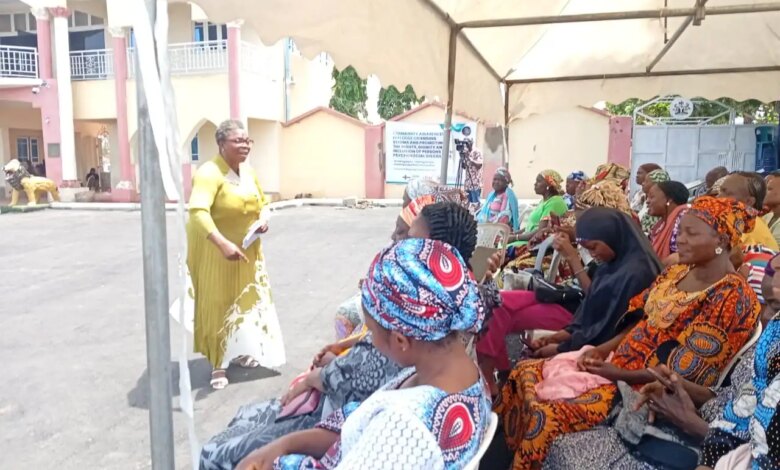
Traditional leaders, persons with psychosocial disabilities, healthcare professionals, government representatives, organisations of persons with disabilities, civil society organisations, religious leaders, security agencies and community members, including over 65 women, today gathered at the Palace of His Royal Highness, the Sakaruyi of Karu, Abuja, for a Community Dialogue on ending stigma and Discrimination against Persons with Psychosocial Disabilities.
The dialogue, implemented by Yamban-Kabati African Foundation (YKAF) a community support psychosocial cluster group under the Rights in Action (RiA) Project, funded by Ministry for foreign affairs Finland, with technical support from CBM Global Disability Inclusion, and in partnership with the Joint National Association of Persons with Disabilities (JONAPWD) and the Inclusive Friends Association (IFA), created a safe space for honest conversations on mental health, challenged harmful stereotypes, and strengthened community commitment to protecting the rights and dignity of persons with psychosocial disabilities.
For many people with psychosocial disabilities, the greatest challenge is often not the condition itself but the stigma, discrimination and exclusion they experience every day. Families frequently struggle to find appropriate support, while harmful misconceptions continue to deny many individuals opportunities to participate fully in education, employment, healthcare and community life.


Although Nigeria’s Mental Health Act provides a rights-based framework for protecting the dignity, autonomy and inclusion of persons with psychosocial disabilities, implementation remains uneven.
Findings from the Political Economy and Gender Assessment (PEGA) conducted under the Rights in Action Project reveal that many persons with psychosocial disabilities continue to face discrimination, exclusion from decision-making, limited access to affordable mental healthcare, violence, abuse and weak institutional accountability.
Women and girls with psychosocial disabilities experience even greater vulnerability because of the intersecting effects of gender inequality and disability discrimination.
Globally, the World Health Organisation estimates that one in every eight people lives with a mental health condition, many of whom experience psychosocial disabilities.
In Nigeria, however, there is no recent nationally representative dataset that accurately captures the number of persons with psychosocial disabilities, making the true scale of the issue difficult to quantify.
Available evidence nonetheless suggests that thousands of Nigerians continue to face barriers to diagnosis, treatment, community inclusion and the full enjoyment of their rights.
The absence of comprehensive national data further underscores the need for stronger investment in mental health services, inclusive data collection and evidence-based policy implementation.
Throughout the dialogue, participants reflected on common myths and misconceptions surrounding mental health, listened to compelling lived experiences shared by persons with psychosocial disabilities, discussed harmful practices, gender-based risks, family support systems and community responsibilities, and received information on available mental health services, legal protections and referral pathways.
The discussions concluded with community commitments to promote inclusion, challenge stigma and support the effective implementation of Nigeria’s Mental Health Act.
Speaking during the dialogue, the Executive Director of Yamban-Kabati African Foundation underscored the importance of changing attitudes at the community level.
“Mental health is not simply a health issue; it is a human rights issue. Every person deserves to be treated with dignity, respected for who they are, and supported to participate fully in community life. Today’s dialogue demonstrates that lasting change begins when communities choose understanding over fear, inclusion over discrimination, and action over silence.”
The dialogue reaffirmed the disability rights principle of “Nothing About Us Without Us,” ensuring that persons with psychosocial disabilities were not only participants but also central voices in conversations about their rights, lived experiences and the solutions needed to build more inclusive communities.
The Mind, Rights & Dignity (MiRiD) Project is a twelve-month advocacy and systems-strengthening initiative that seeks to strengthen awareness, accountability and the effective implementation of Nigeria’s Mental Health Act for persons with psychosocial disabilities in the Federal Capital Territory.
Through community dialogues, advocacy, media engagement and institutional collaboration, the project is working to reduce stigma, strengthen community support systems and advance the rights, dignity and inclusion of persons with psychosocial disabilities.