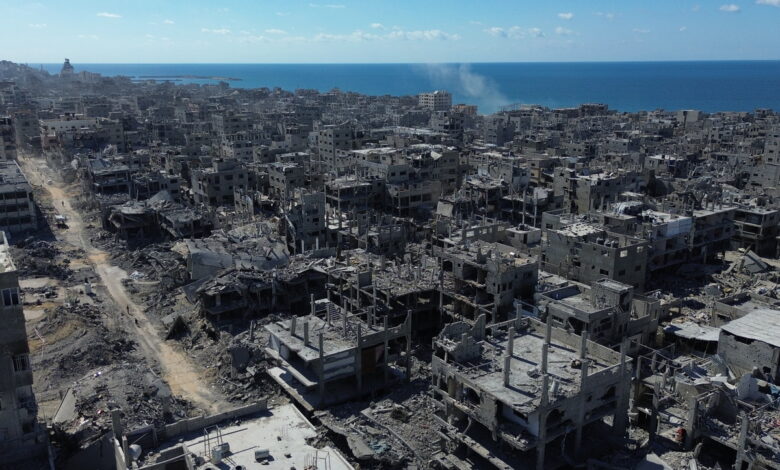
At a recent gathering of social scientists in Washington, DC, a Pakistani-American academic spoke movingly about Palestine. The vocabulary was polished, the grief sincere, the analysis appropriately grave. Then a Palestinian academic asked the question that should stalk every Pakistani and South Asian intellectual in the West: why are you so eloquent about Palestine and so silent about Pakistan? Why can you name Zionism but not Imran Khan? Why can you speak of genocide but not General Asim Munir, Trump’s favorite field marshal, presiding over Pakistan’s quasi-dictatorial order? Why does Pakistan — the country you analyze, inherit, visit, romanticize, and perform — become unspeakable precisely when it most needs speech?
To her credit, the Pakistani-American academic did not disappear into theoretical fog. She confessed the truth. It is easier now for Pakistani academics to speak about Palestine than Pakistan. Palestine may bring applause. Pakistan may bring consequences: intelligence harassment, family pressure, airport unpleasantness, poisoned trips home, calls to relatives. These are the real borders of courage. We keep quiet, she admitted in substance, because we want to travel comfortably.
The Palestinian academic smiled and offered a sentence that belongs in the museum of moral humiliation: “May your problems always be so small.”


He said this as someone whose extended family had been shattered by Gaza’s slaughter. It was not cruelty. It was diagnosis. In one sentence, he exposed an entire class: highly educated, politically fluent, morally theatrical, and terrified of inconvenience.
This is the scandal of the Pakistani and South Asian intellectual world in the West. It is not ignorance. They know. They know Khan is imprisoned. They know PTI supporters have been hounded, arrested, intimidated, erased from legitimacy, and treated as civic contamination. They know Pakistan’s public sphere has been suffocated, dissent criminalized, journalism disciplined, parliament reduced to furniture, and courts bent under pressure.
They know Washington has not merely tolerated Pakistan’s authoritarian drift but found renewed use for its uniformed managers. They know the United States prefers a reliable general to an unpredictable popular leader.
They know all of this.
And yet the silence sits there, fat and well-fed.
South Asian progressive organizations in the West have mastered the grammar of anti-fascism. Hindutva? Fluent. Trumpism? Naturally. Zionism? Increasingly. White supremacy? Of course. But when the Pakistani state persecutes the country’s most popular political leader and turns millions of mobilized citizens into suspect bodies, the language becomes suddenly delicate. We hear of “the establishment,” “polarization,” “civil-military tensions” — phrases designed by people describing arson without offending the arsonist.
READ: Hamas: Iran seeking end to war on all fronts, including Gaza
This is where Desis Rising Up and Moving (DRUM) must be named. DRUM has done serious work on immigrant justice, policing, racial capitalism, deportations, and state violence. Precisely for that reason, its silence on Pakistan is not a minor omission. It is a political failure. Many of its Pakistani members and supporters are enthusiastic Khan supporters, furious at US support for dictatorship and repression in Pakistan. They are not confused. They do not need a reading group to discover that a military-backed order crushing civilian political agency is a problem. Yet the leadership appears unwilling to say Khan’s name or confront US complicity.
This is not strategy. It is constituency management without courage.
The contrast with CAGE International is instructive. CAGE has understood what many Western Muslim and South Asian organizations still evade: the War on Terror was never only a Western project imposed on Muslim societies. It was also a regime project, eagerly implemented by Muslim states that sold their own people into surveillance, torture, rendition, disappearance, and imperial approval. CAGE names this collaboration when others find safer uses for their microphones. Its politics matters because it refuses the childish fiction that Islamophobia disappears when the torturer speaks Urdu, Arabic, Turkish, or Farsi.
Pakistani and South Asian organizations should have learned this from Aafia Siddiqui alone. Aafia is not only a story of American injustice. She is a permanent indictment of Pakistan’s security state and its obscene role in the ‘War on Terror.’ Her name should haunt every general, minister, liberal apologist, and respectable analyst who pretends Pakistan’s ruling elite guards Muslim dignity.
But even Aafia is often invoked selectively, stripped of the central question: how did she end up in American hands? Who made Pakistan a marketplace where citizens could be converted into currency for empire?
Now the same habits return around Imran Khan. The Pakistani intellectual class wants every struggle to be universal except the one that implicates its passports, families, invitations, and summer travel. It speaks of Kashmir, Palestine, caste, racism, Hindutva, Islamophobia, empire, and coloniality. Good. It should. But when Pakistan descends into coercive rule, when Khan is isolated, when supporters are crushed, when diaspora critics fear transnational repression, the moral weather suddenly changes. The sun of justice disappears behind a cloud called “it’s complicated.”
It is not complicated. It is costly. That is different.
The defenders of silence ask: why personalize the struggle around Khan? This sounds principled only until one remembers Lula, Anwar Ibrahim, Morsi, Mandela. Political prisoners become symbols not because they are flawless, but because power condenses an entire conflict into their bodies. Khan’s cell is not merely a cell. It is a message to every Pakistani who believed political agency could exceed the permission of Rawalpindi and Washington.
READ: Netanyahu meets US legal delegation amid growing international scrutiny of Israel
The irony is that Palestinians understand this better than many Pakistanis. So do South Africans. That is why voices such as Allan Boesak, Ronnie Kasrils, Susan Abulhawa, Ilan Pappé, John Esposito, Tamara Sonn, Tariq Ali, Medea Benjamin, Jeremy Corbyn, Yanis Varoufakis, Steven Friedman, Roger Waters, Noura Erakat, Katie Halper, Patrick Bond, Vijay Prashad, Omid Safi, Riffat Hassan, Fawzia Afzal-Khan, Sabreena Ghaffar-Siddiqui, Norman Finkelstein, Fatima Bhutto, Yasir Qadhi, Sami Hamdi, Mushtaq Ahmad Khan, Ammar Ali Jan, Hassaan Bokhari, Taimur Rahman, Hamza Ahmad Khan, Sana Saeed, Maria Kari, Charles Amjad-Ali, and Rashied Omar matter. Courage needs names. Young people require examples, not abstractions.
And what of the United States? Here the silence becomes still more damning. These organizations live under the government whose foreign policy sustains the authoritarian arrangements they refuse to confront. If Pakistani-American activists cannot challenge US support for coercive rule in Pakistan, what exactly is their anti-imperialism? A branding exercise? A domestic policy aesthetic? An Instagram template with borders?
The US loves Pakistan most when Pakistan is least democratic. Generals are stable; civilians are chaotic. Dictators are partners; popular leaders are risks. Trump’s embrace of Munir is not an aberration. It is empire without makeup: cruder, louder, more shameless, but structurally familiar.
The Palestinian academic’s sentence should become the test. If the price of speech is an uncomfortable airport, a nervous relative, a lost invitation, or a complicated trip home, perhaps one should hesitate before using Palestine as a moral stage on which Pakistani cowardice dresses itself as courage.
The choice is simple. Continue speaking beautifully about every injustice except the one that threatens access. Or finally say the names: Imran Khan. Asim Munir. US-backed authoritarianism. Transnational repression. Political prisoners. Pakistan’s suffocated democracy.
History is not asking for poetry. It is asking for witnesses.
And if even that is too much, silence should at least have the decency to stop calling itself strategy.
OPINION: Pakistan on the ‘Board of Peace’: A seat at the afterlife of genocide
The views expressed in this article belong to the author and do not necessarily reflect the editorial policy of Middle East Monitor.