The Director-General of the Nasarawa State Waste Management and Sanitation Authority, NASWAMSA, Hon. Dr. Mohammed Bello Isa, has highlighted the dangers inherent in indiscriminate dumping of wastes across the country.
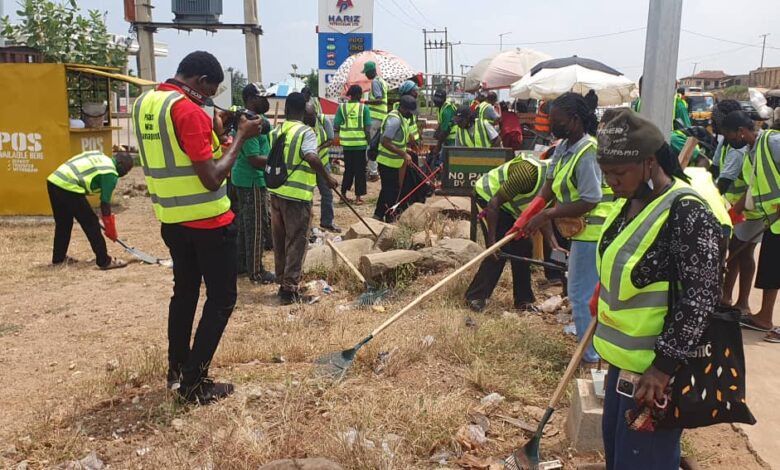
Isa, represented by Director of Waste Management, NASWAMSA, stated this at the United Nations Development Programme, UNDP backed Nasarawa State Community Cleanup and Environmental Sensitization Exercise, organised by Digital Peers International on Tuesday.
He noted that environmental cleanliness is directly linked to the health, safety, and economic wellbeing of communities, adding that poor waste disposal practices contribute significantly to environmental degradation, flooding, air and water pollution, vector-borne diseases, and other public health challenges.
According to him, “Every improperly disposed waste item has the potential to become a source of disease, environmental nuisance, and economic loss.


“The challenge of waste management cannot be left to government alone. Environmental sanitation is a shared responsibility. Every household, business owner, institution, market association, community leader, and citizen has a role to play.”
He said that citizens must embrace the principles of waste reduction, proper waste segregation, recycling and resource recovery, responsible disposal practices, and community participation in sanitation activities.
“Let us remember that a clean environment is not only a reflection of responsible citizenship but also an investment in the health and future of generations yet unborn,” he added.”
Speaking, a retired Permanent Secretary of the Federal Ministry of Environment and Chief Executive Officer, DPI, Dr. Mrs. Ibukun Odusote, said that environmental sustainability, responsible plastic use, cleaner communities, and youth-driven solutions to plastic pollution must be promoted within Nasarawa State and beyond.
The also harped on the need to build awareness, promote behavioral change, encourage innovation in plastic waste management, supporte green enterprises, and creation of sustainable opportunities for young people within the plastic value chain..