0
While the APC battles the toga of a party allegedly castrated by the erosion of internal democracy, the ADC has sadly added its own chapter after its primaries, marred by name-calling and recriminations. The NDC has now reinforced the growing perception that, beneath different banners and lofty rhetoric, many political parties share the same political DNA when it comes to the practice of internal democracy.
Not a few Nigerians thought the NDC would come to equity with clean hands on this matter. But its recently concluded primaries leave many wondering if, indeed, the apple doesn’t fall far from the tree.
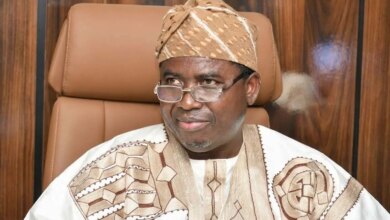
With a seemingly enviable antecedent on the floor of the Red Chamber and a firm stance on national issues, Seriake Dickson, a chief protagonist and pilot of the NDC, cuts the figure of a believable fellow, reputed to do the right thing even under pressure. Yet, the outcomes of the NDC’s primaries so far point south.

Indeed, the NDC has gone through the baptism of fire as disgruntled aspirants drag the party’s leadership all over the place over allegations of manipulation, high-handedness, unfair dealings, imposition, and the like. A good case in point is the activist-turned-politician, Aisha Yesufu, who saw the inner rot of party politics. The clear lessons from the shenanigans of the NDC’s primaries is that: all political parties in this country share a common ancestry, and that sloganeering does not alter their DNA in any form. “Mago-mago,” “wuru-wuru,” treachery, and group interests most times rise above party interests. And individual interest outside the inner caucus is no interest at all.
It appears the movement of Peter Obi and Rabiu Kwankwaso, and the emptying of their support base into the NDC, came with an extremely sharp double-edged sword. Like the impact Obi had on the Labour Party, this “free-meal” ticket brings both fortune and distress for the NDC. Yes, party membership hit record highs within a few days, but it also attracted all manner of aspirants, political jobbers, and jokers hoping to ride Obi’s euphoria to clinch the party ticket and possibly win cheaply, if history repeats itself.
Many of these wannabes will be shocked to learn that the dynamics of the 2027 election have changed. Obi’s staunch supporters may focus solely on their candidate, while others will fight for their own shirts – especially since almost everyone who rode the Obi wave to political victory promptly abandoned the Labour Party and joined other parties at the slightest provocation.
But the more serious discourse is this: how come all the parties seem to lack integrity, sincerity, and a true sense of responsibility in enshrining equity, justice, fair play, and internal democracy in Nigeria’s political space? Almost all opposition parties called the APC unprintable names and projected implosion post-primaries. Yet, like a pack of worthless cards, each has become a laughing stock – a shameful representation of what true democratic processes should be.
To say democracy is endangered in Nigeria, given the conduct of various party primaries, is to state the obvious. Political parties have become mere special-purpose vehicles, cobbled together by a few moneybags for the purpose of grabbing power by any means necessary, even if it means branding the incumbent as the devil incarnate.
Nigeria groans for a democracy where political parties are driven by sound, distinctive ideologies as the supreme guide for political engagement, and where well-researched, pragmatic, people-oriented manifestos serve as vehicles for delivering tangible, measurable dividends of democracy. Parties whose leaders are not a band of conspirators united to access the national treasury for personal aggrandizement. Parties of just men and women where power is not the goal, but an instrument for changing the socio-economic landscape of the country.
Judging by the outcomes from most of the parties on parade, the call for national mourning is not hyperbole – it is inevitable. Here lies a nation destined for greatness, yet shackled by a few whose god is their belly. Until parties reform their DNA and submit to the discipline of internal democracy, Nigeria’s ballot will remain a marketplace of betrayal, and the electorate mere spectators at the funeral of their own expectations.