Ndume Advocates 5% Budget Allocation For Renewable Energy As ECOWAS Seeks New Financing Models

0
ABUJA – Senator Ali Ndume has called on ECOWAS member states to dedicate at least five per cent of their annual budgets to rural development and renewable energy projects, arguing that investments of less than $1 million can significantly transform rural communities and stimulate economic growth.
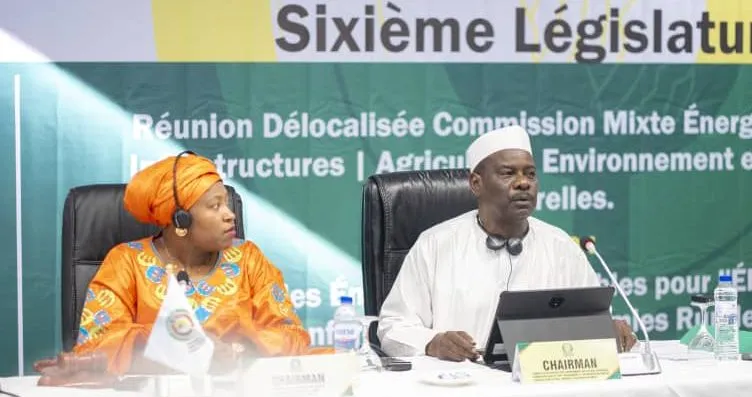
The Nigerian lawmaker made the proposal during a joint committee meeting of the ECOWAS Parliament in Dakar, where policymakers, financial institutions and energy experts examined innovative financing strategies to address West Africa’s energy deficit and expand electricity access in underserved communities.
Ndume’s intervention came amid revelations that renewable energy currently accounts for only four per cent of the energy financing portfolio of the ECOWAS Bank for Investment and Development (EBID), despite growing demand for sustainable energy solutions across the region.

Presenting a paper on innovative financing models for renewable energy, Director-General of Senegal’s National Agency for Renewable Energy (ANER), Prof. Diouma Kobor, said West Africa’s energy challenges require a shift from isolated projects to integrated and bankable investment portfolios capable of attracting private capital.
He identified rising electricity demand, dependence on imported fossil fuels, power supply instability and unequal access to electricity as major challenges confronting the region.
Kobor disclosed that Senegal is targeting 40 per cent renewable energy in its electricity mix by 2030, supported by €2.5 billion secured through its Just Energy Transition Partnership (JETP).
He advocated blended finance mechanisms that combine grants, concessional loans, commercial financing and private equity investments to reduce project risks and lower energy costs.
“We need financing structures that can mobilise private capital at scale while supporting regional energy integration,” Kobor said.
Speaking on financing renewable energy in rural areas, EBID representative Maimouna Sidibe acknowledged that the bank’s historical focus on large-scale grid infrastructure and regional interconnection projects had limited support for smaller renewable energy initiatives.
According to her, poor project preparation, weak bankability, small project sizes, regulatory barriers and limited access to guarantees continue to discourage investment in rural renewable energy projects.
“The challenge is not the absence of opportunities but making projects financeable and bankable,” Sidibe stated.
She revealed that under its 2026–2030 strategic plan, EBID intends to expand financing for solar mini-grids, off-grid systems, hybrid power plants, small hydropower projects and productive-use energy solutions designed to boost rural economic activity.
Drawing from figures presented at the meeting, Ndume noted that a solar photovoltaic programme costing approximately $7.6 million to serve 50 communities translates to less than $1 million per community.
“For less than one million dollars, you can modernise a rural area,” he said.
According to the senator, rural electrification would stimulate agriculture, improve security, create jobs and reduce migration from rural communities to urban centres.
“Once you do this, you are bringing rural development, security and agriculture. People will have no reason to leave their communities because development will come to them,” he added.
Ndume urged lawmakers across the sub-region to push for stronger financial commitments to renewable energy and rural infrastructure despite the limited legislative authority of the ECOWAS Parliament.
“We may not have teeth, but we can bite,” he said.
Also contributing to the discussions, Vice Chairman of the ECOWAS Parliament Committee on Infrastructure, Hon. Ahmed Munir, called for climate financing to support local manufacturing and industrialisation across West Africa.
Munir argued that renewable energy investments should be structured to encourage partnerships between foreign investors and local companies, ensuring technology transfer, job creation and value addition within the region.
He also advocated harmonised regional standards and stronger coordination among ECOWAS member states to maximise the impact of climate finance and renewable energy investments.
The discussions highlighted growing consensus among policymakers and development financiers that achieving universal energy access in West Africa will require innovative financing mechanisms, stronger political commitment and enhanced regional cooperation.
Stakeholders agreed that expanding renewable energy investment, particularly in rural communities, could unlock significant economic opportunities while supporting the region’s broader development and energy transition goals.