0
ABUJA – The National Economic Council (NEC), on Thursday, approved the release of N83.2 billion for flood preparedness and climate disaster mitigation across the country.
It maintained that additional resources could be deployed as the situation unfolds, hence a unanimous decision to slash the initial budgeted funds by half.
The council, chaired by Vice President Kashim Shettima at the Presidential Villa, Abuja, also moved to strengthen Nigeria’s regional development architecture by considering a proposed National Regional Development Policy (NRDP) 2026-2030 aimed at addressing longstanding development disparities across the country’s regions.


Briefing journalists after the meeting, Cross River State governor, Bassey Otu, said NEC approved N83.21 billion, representing 50 percent of the amount requested under the Anticipatory Action Task Force (AATF), established to coordinate early interventions against flooding and other climate-related disasters.
The proposal, presented by the Federal Ministry of Budget and Economic Planning, had sought approval for the disbursement of N166.42 billion through the Federation Account Allocation Committee (FAAC) mechanism to designated implementing agencies and beneficiaries.
According to Otu, the intervention marks a significant shift from the country’s traditional disaster response model, which often focuses on post-disaster relief rather than preventive action.
“I want you to know that this is the first time, as a nation, that we are taking proactive steps. Most times, we wait until floods have caused significant damage before taking action. This time, under the leadership of the chairman of the council, the vice president, we are taking proactive measures to mitigate the potential impact of flooding, which has become a recurring challenge,” he said.
He explained that NEC recognised the growing threat posed by annual flooding and agreed that government must move from a reactive to a preventive approach in tackling natural disasters.
“Council underscored the importance of the Anticipatory Action Task Force in addressing disasters and climate-related emergencies across the country. Members agreed that NEC must not always be seen reacting to disasters after they occur but should take steps to prevent or mitigate their impact,” he added.
Defending the decision to cut the proposal by 50 percent, Otu said the council was guided by the need to balance available resources with the urgency of early intervention.
“We felt it was important to begin putting measures in place. As we evaluate and assess the situation going forward, the council will certainly make additional provisions where necessary.
“You also have to look at the intervention within the context of available resources. The idea is to deploy what is currently available in a proactive manner and establish mechanisms that can reduce the impact of flooding before it occurs.
“That is essentially why the council decided to reduce the proposal by 50 percent. As we move forward and continue to evaluate the situation, more adequate provisions can be made where required,” he said.
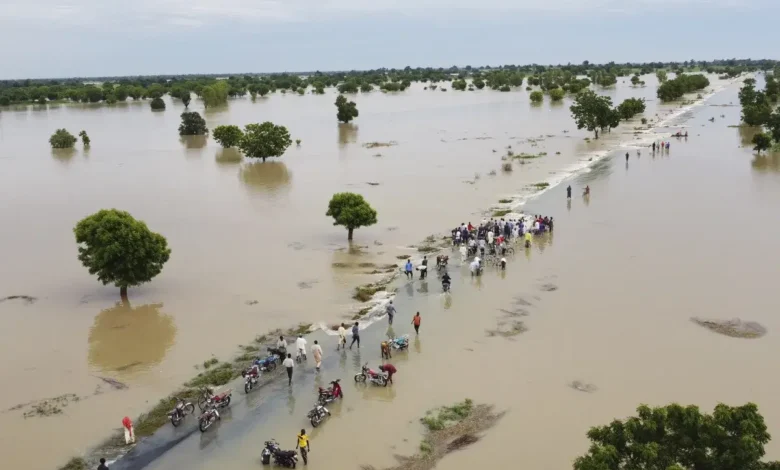
The approval comes amid forecasts of severe flooding in several parts of the country during the 2026 rainy season and growing efforts by federal and state governments to strengthen disaster preparedness and climate resilience.
In a separate presentation, NEC considered the proposed National Regional Development Policy (NRDP) 2026- 2030, presented by the Ministry of Regional Development as a framework for promoting balanced and inclusive development across Nigeria.
The council noted that the policy had become imperative in view of persistent spatial inequalities, fragmented regional interventions, alignment with the Medium-Term National Development Plan (MTNDP) 2026-2030 and the need to institutionalise global best practices in regional development planning.
According to the presentation, the policy seeks to provide strategic oversight for the formulation and implementation of regional development initiatives, coordinate development master plans for the regional development commissions in collaboration with state governments and supervise the operations of the commissions.
The framework is also expected to align regional development programmes with the Tinubu administration’s priority areas, including economic growth, food security, national security, energy development, infrastructure expansion, education, healthcare, social investment, industrialisation, innovation and the digital economy.
Among the key proposals before the council were the endorsement of the NRDP 2026-2030, approval of the Regional Development Policy Framework mechanism, support for state-level adoption of the policy and backing for the establishment of a Regional Development Bank.
At the end of deliberations, NEC directed the Minister of Regional Development to circulate the draft policy to state governors for review and input, while also mandating consultations with the Nigeria Governors’ Forum (NGF) to secure broad sub-national participation and ownership.
The council said the initiative would deepen cooperation between the federal and state governments, strengthen the operations of the regional development commissions and provide a coordinated framework for addressing development imbalances across the federation.